Blog Post Format That Converts Clients for Service Business
You’ve been staring at that blank blog post screen again, haven’t you? After years of helping service-based business owners turn their blogs into client-generating machines, I’ve seen this moment countless times. The cursor blinks mockingly while you wonder what blog post format actually works for service businesses like yours.
Here’s the truth: Most blog post formats are designed for product sales or entertainment. But service businesses need something different-something that builds trust, demonstrates expertise, and naturally guides potential clients toward picking up the phone.
The most effective blog post format for service businesses isn’t flashy or complicated. It’s what I call the Problem-Solution-Proof format, and it consistently outperforms every other structure when it comes to converting readers into clients.
Why Traditional Blog Post Format Falls Short for Service Businesses
Before we dive into what works, let’s talk about what doesn’t. Most blog posts follow the traditional journalism format: hook, information, conclusion. This works fine for news or entertainment, but service businesses have different goals.
Your potential clients aren’t looking for entertainment. They’re looking for solutions to real problems. They want to know you understand their pain points and have the expertise to solve them.
Traditional formats often bury the value too deep. By the time you get to the good stuff, half your readers have already bounced. Service clients need to see value immediately, or they’ll go find someone who gets to the point faster.
Moreover, traditional formats rarely include what service businesses need most: clear next steps. A blog post that doesn’t guide readers toward contacting you is just expensive content marketing that goes nowhere.
The Problem-Solution-Proof Blog Post Format Breakdown
This blog post format works because it mirrors exactly how your ideal clients think. They start with a problem, want to understand possible solutions, then need proof you can deliver.
Here’s how it works:
Problem Section (25% of your post): Start by clearly identifying the specific problem your ideal client faces. Don’t be generic here. The more specific you are, the more your reader thinks, “This person gets it.”
Solution Section (50% of your post): Explain how this problem gets solved. Share your methodology, approach, or framework. Give real value here-don’t hold back the good stuff.
Proof Section (25% of your post): Provide evidence that your solution works. This includes case studies, client results, testimonials, or detailed examples.
This format works because it builds trust systematically. By the time readers finish, they believe you understand their problem and can solve it.
Opening Strong: The Problem Hook
Your opening needs to grab attention immediately. Start with the specific problem your ideal client wakes up thinking about.
Instead of: “Many businesses struggle with marketing.”
Try: “You check your calendar every Monday morning and see the same thing: not enough client appointments to hit your revenue goals.”
The second version puts your reader right in the scenario. They feel understood before you’ve even introduced your solution.
Be specific about who you’re talking to and what they’re experiencing. Vague problems attract vague prospects. Specific problems attract ideal clients.
Solution Section: Where You Demonstrate Expertise
This is where most service businesses either shine or fail completely. Your solution section needs to provide real value while demonstrating your expertise.
Share your actual methodology. Don’t worry about giving away your secrets-people hire service providers for implementation, not information. Someone might read your blog post about financial planning strategies and still hire you to create their retirement plan.
Include specific steps, frameworks, or approaches you use. If you’re a marketing consultant, explain your client onboarding process. If you’re a business coach, share your goal-setting methodology.
The more detailed and valuable your solution section, the more credibility you build. Readers think, “If their free advice is this good, imagine what their paid service is like.”
Proof Elements That Build Trust and Drive Action
Your proof section separates you from every other service provider writing generic advice posts. This is where you show, don’t just tell.
Case studies work incredibly well here. You don’t need permission to share general results: “A client came to us losing $10,000 monthly to inefficient processes. After implementing our system, they saved $8,500 in the first quarter.”
Client testimonials add social proof. Even a simple quote like “Working with Sarah saved us 15 hours per week” carries more weight than any claim you could make about yourself.
Before-and-after scenarios help readers visualize results. Paint a picture of what life looks like before and after working with you.
Specific metrics matter more than vague success stories. “Increased efficiency” is forgettable. “Reduced processing time from 4 hours to 45 minutes” is memorable.
The Natural Call-to-Action Integration
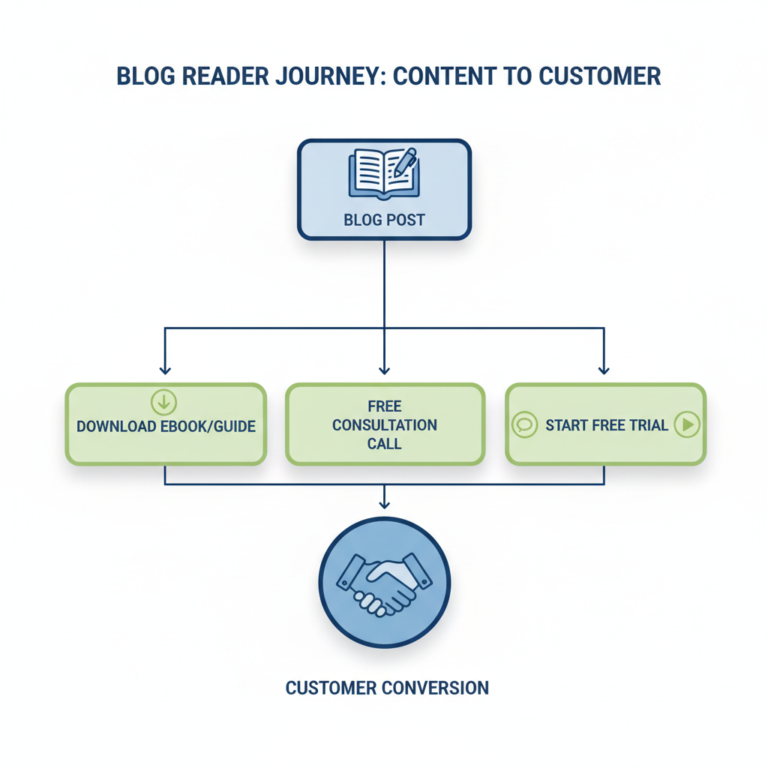
Here’s where this blog post format really shines: the call-to-action doesn’t feel forced. After reading about the problem they have, understanding your solution, and seeing proof it works, contacting you feels like the logical next step.
Your call-to-action should directly relate to the problem you’ve addressed. If your post is about streamlining operations, offer a consultation about operational efficiency. If it’s about marketing strategy, offer a marketing audit.
Make it easy to take the next step. Provide multiple contact options and be clear about what happens when they reach out.
Content Structure That Keeps Service Clients Reading
Even the best blog post format fails if people don’t actually read it. Service business clients are busy people who scan content quickly.
Use subheadings as a roadmap. Someone should be able to understand your main points just by reading your headings. This is exactly why writing blog headlines that actually get clicked matters so much.
Keep paragraphs short-no more than 150 words each. Long paragraphs look overwhelming on mobile devices, where most of your readers will find you.
Include bullet points and numbered lists. These break up text and make information easier to digest quickly.
Use transition words to guide readers smoothly from one idea to the next. However, moreover, additionally, and furthermore help create flow.
Making Complex Services Understandable
Service businesses often struggle with explaining complex concepts simply. Your blog post format needs to make complicated ideas accessible.
Use analogies and metaphors. Compare your service to something familiar. A cybersecurity consultant might compare network protection to home security systems.
Avoid industry jargon unless you define it immediately. Remember, your ideal client might not understand your technical language.
Include examples at every opportunity. Abstract concepts become concrete when you show them in action.
Optimizing Your Blog Post Format for Search and Conversion
The best blog post format in the world won’t help if nobody finds it. Your content needs to work for both search engines and potential clients.
Focus on problems your ideal clients actually search for. Use tools like Answer the Public or simply pay attention to the questions prospects ask during sales calls.
Include your target keywords naturally throughout the content. Don’t force them-search engines are smart enough to understand context and related terms.
Internal linking helps both SEO and user experience. When you mention related topics, link to other relevant posts. For example, if you’re discussing content consistency, you might reference why business blogs die and how to revive them.
Optimize for featured snippets by including clear, concise answers to common questions. Structure your content so search engines can easily extract useful information.
Mobile-First Formatting
Most of your potential clients will read your blog posts on mobile devices. Your blog post format needs to work perfectly on small screens.
Short paragraphs are even more important on mobile. What looks reasonable on desktop can feel overwhelming on a phone screen.
Use white space generously. Dense text blocks scare mobile readers away quickly.
Test your posts on different devices before publishing. What looks perfect on your laptop might be difficult to read on a smartphone.
Common Blog Post Format Mistakes Service Businesses Make
After working with hundreds of service-based businesses, I’ve seen the same mistakes repeatedly. Learning from others’ errors can save you months of ineffective blogging.
The biggest mistake is burying the value. Don’t save your best insights for the end-lead with them. If someone only reads your first few paragraphs, they should still get something useful.
Another common error is being too salesy too early. Let the problem and solution sections build trust before you start talking about your services.
Many service businesses also make their blog posts too generic. Trying to appeal to everyone appeals to no one. Writing about blog topics that drive business results means getting specific about who you help and how.
Inconsistent publishing kills momentum. Finding the right blogging frequency for business success matters, but consistency matters more than perfection.
The Perfectionism Trap
Service business owners often get stuck trying to create the perfect blog post. This is counterproductive for several reasons.
Perfect is the enemy of published. Making the case against perfect blog posts isn’t about lowering standards-it’s about understanding that done is better than perfect.
Your audience values authenticity over perfection. They want to work with real people who understand their challenges, not polished content that feels disconnected from reality.
Perfection paralysis prevents you from building the content library that establishes your expertise. Creating 15-minute blog posts that actually work is better than spending weeks on one “perfect” post.
Measuring Success: What Matters for Service Businesses
Traditional blog metrics like page views and time on site don’t tell the whole story for service businesses. You need to track metrics that actually correlate with business results.
Contact form submissions and phone calls are obvious metrics, but don’t ignore email signups. Building an email list through your blog posts creates a pipeline of potential clients you can nurture over time.
Track which blog posts generate the most inquiries. This tells you what topics resonate most with your ideal clients.
Monitor search rankings for terms your prospects use. Getting found for “business coach for restaurants” is more valuable than ranking for “business advice.”
Understanding which blog metrics actually matter helps you focus your efforts on content that drives real business results, not just vanity metrics.
Long-term Content Strategy
This blog post format works best as part of a consistent content strategy. One great post won’t transform your business, but 52 posts using this format will.
Effective content planning for real people with real lives means building systems that make consistent publishing manageable.
Create templates based on this format. Having a structure makes it easier to produce content regularly without starting from scratch each time.
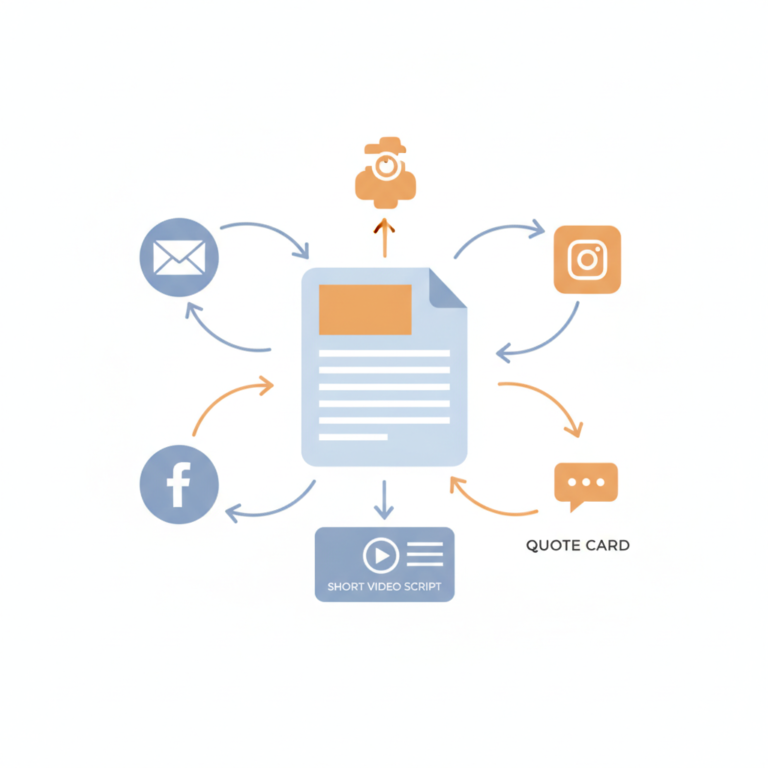
Repurpose successful posts. If a post generates inquiries, create related content that addresses adjacent problems your ideal clients face.
Implementation: Making This Blog Post Format Work for You
Understanding the format is one thing-implementing it consistently is another. Here’s how to make this approach part of your regular content creation process.
Start by listing the top 10 problems your ideal clients bring to you. These become the foundation for your next 10 blog posts using this format.
Create a template document with the Problem-Solution-Proof structure. Having a framework makes writing faster and more focused.
Set up systems for collecting proof elements. Take notes during client calls about results and challenges. Save testimonials and case study details in an easily accessible document.
Developing standard operating procedures for your blog eliminates the guesswork and makes content creation more efficient.
The most effective blog post format for service businesses isn’t complicated, but it is different from what most people expect from blog content. It prioritizes value over entertainment, specificity over broad appeal, and trust-building over quick wins.
Your potential clients are out there searching for solutions to real problems. When they find a blog post that clearly identifies their problem, explains how to solve it, and provides proof that the solution works, they’ve found what they’re looking for.
More importantly, they’ve found someone who understands their situation and can help them improve it.
Ready to start using this format to attract more qualified leads? Pick one problem your ideal clients face and write your first Problem-Solution-Proof blog post this week. Your future clients are waiting to hear from someone who gets it.