The Email List Strategy Hidden in Your Blog Posts
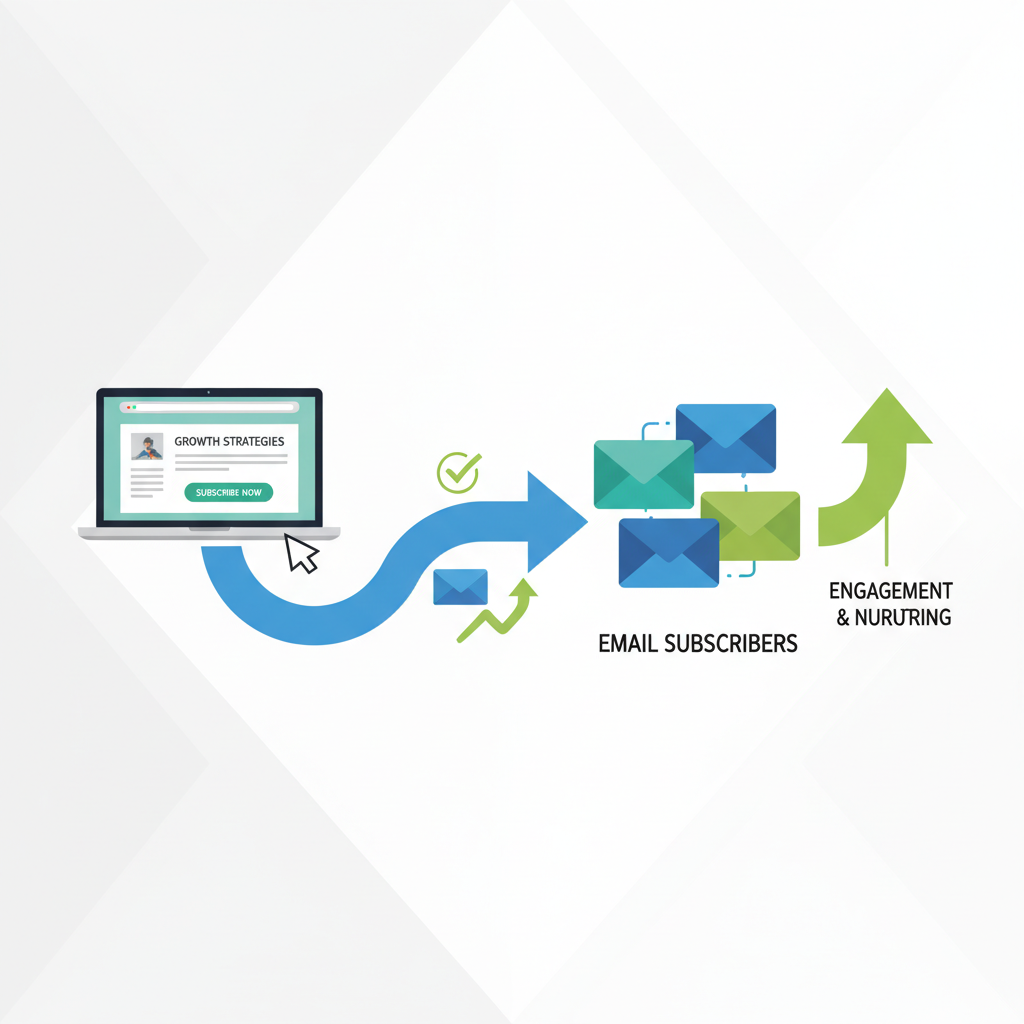
Here’s something I learned after watching countless small business owners struggle with email list strategy: every blog post you publish without a clear path to your email list is like opening your store, greeting customers warmly, then forgetting to ask for their contact information before they leave.
You’re not alone if this sounds familiar. Most business owners I talk to know they should be building an email list, but they’re not sure how to do it without sounding like a used car salesman. The good news? Your blog is already the perfect email list-building machine-you just need to know how to tune it up.
Why Your Blog Is Your Best Email List Strategy
Think about it this way: someone found your blog post, read it all the way through, and now they’re sitting there thinking, “This person gets it.” That’s the exact moment when they’re most likely to want more from you. Not tomorrow. Not next week. Right now.
But here’s where most business owners drop the ball. They either forget to ask, or they ask in a way that feels desperate. Neither works.
Your blog content already proves your expertise. It shows you understand your customers’ problems. It demonstrates that you can solve them. All you need to do is connect those dots for your readers.
The Subtle Art of List Building Without Being Pushy
Nobody likes feeling manipulated. Yet somehow, many business owners think they need to transform into carnival barkers the moment they mention their email list. Here’s the truth: the best email list strategy feels natural because it serves your reader first.
Instead of interrupting your content with desperate pleas for email addresses, weave your list-building into the natural flow of helping people. When you’ve just solved a problem in your blog post, that’s when you mention related resources. When you’ve explained a concept, that’s when you offer deeper training.
For example, if you just wrote about how often to blog for business success, you might naturally mention a planning template that helps readers stay consistent. The key is that the offer genuinely helps them implement what they just learned.
Five Places to Naturally Grow Your Email List
1. At the End of Problem-Solving Content
You just walked someone through fixing their biggest headache. They’re grateful, impressed, and wondering what other wisdom you might share. This is prime real estate for your email list strategy.
Try something like: “If this helped you tackle [specific problem], you’ll love the weekly insights I share with my email subscribers. We dig deeper into practical solutions that actually work for real businesses.”
2. After Introducing a Framework or Process
When you share a step-by-step approach, readers often want tools to help implement it. This is where lead magnets shine-checklists, templates, worksheets that make your advice actionable.
Maybe you just explained content planning for real people with real lives. Perfect time to offer a simple planning template that takes the guesswork out of execution.
3. In the Middle of “How-To” Content
Sometimes the best moment isn’t at the end. If you’re explaining a complex process, you might pause mid-way to offer a detailed guide or bonus resource. “Before we continue, grab my complete guide to [topic] so you can follow along more easily.”
4. When Referencing Related Topics
Your blog posts naturally connect to other subjects. When you mention something that deserves its own detailed explanation, that’s an opportunity. “I cover this in much more detail in my weekly emails-let me add you to the list so you don’t miss it.”
5. After Sharing Personal Stories or Case Studies
Stories build connection, and connection makes people want to stay in touch. After sharing a client success story or your own business lesson, readers are primed to hear more. “I share stories like this regularly with my email community. Want in?”
Creating Offers That Actually Matter
Here’s where many small business owners get stuck. They know they should offer something in exchange for email addresses, but they’re not sure what. The secret isn’t creating the most elaborate lead magnet ever-it’s creating something that directly helps your reader take the next logical step.
If your blog post is about writing blog posts in 15 minutes, offer a template that makes it even easier. If you’re explaining why someone’s business blog died, provide a simple revival checklist.
The best email list strategy uses what I call “next-step resources”-things that help people implement what they just learned. They’re valuable because they solve an immediate need, and they’re natural because they extend your blog content rather than diverting from it.
The Words That Work (And the Ones That Don’t)
Language matters when you’re building your email list through your blog. The wrong words can make you sound desperate or pushy. The right words feel like a natural extension of the help you’re already providing.
Words that work:
- “If this was helpful…”
- “Want more insights like this?”
- “I dive deeper into topics like this…”
- “Get practical tips that actually work…”
- “Join the conversation with other business owners…”
Words that backfire:
- “Subscribe now!”
- “Don’t miss out!”
- “Limited time offer!”
- “Free gift!” (unless it genuinely is)
- “Sign up today!”
Notice the difference? The first group focuses on value and continuation. The second group sounds like advertising copy. Your email list strategy should feel like an invitation to continue a conversation, not a sales pitch.
Making It Easy to Say Yes
Even when people want to join your email list, friction can stop them. Remove every possible obstacle between interest and action.
Keep your signup forms simple. Ask for email address and maybe first name. That’s it. Don’t request their life story, company details, or phone number unless you absolutely need it.
Tell them what to expect. “I’ll send you one practical tip every Tuesday.” Or “Expect a weekly roundup of the best content marketing strategies.” Uncertainty kills conversions.
Make the confirmation process painless. Send a welcome email that delivers immediate value-maybe a bonus resource or a personal note explaining what they can expect.
Timing Your Email List Strategy Right
The best email list building happens when your reader is most engaged with your content. That’s usually not at the very beginning of your blog post (they haven’t decided if you’re worth listening to yet) or buried in the middle where it disrupts their reading flow.
The sweet spots are:
- After you’ve delivered on your headline promise
- Following a particularly helpful section
- At the natural end of your post
- In a brief “side note” that adds value
Remember, you’re not interrupting their experience-you’re extending it. If someone just learned how to write headlines that get clicked, they’re probably interested in more marketing insights.
What to Do When It’s Not Working
Sometimes your email list strategy feels like shouting into the void. You’re asking, but nobody’s responding. Before you give up, check these common issues:
Are you solving real problems? If your blog content isn’t helpful enough to make people want more, no amount of list-building tactics will work. Focus first on blog topics that drive business results.
Is your offer relevant? A generic “newsletter” isn’t compelling. A “weekly breakdown of marketing strategies that work for small businesses” is.
Are you asking at all? Many business owners create great content but never actually invite people to join their email list. Don’t assume readers will figure it out on their own.
Is your timing off? Asking for email addresses before you’ve provided value feels premature. Waiting until the very end might be too late.
Building Systems That Work Long-Term
The best email list strategy isn’t something you bolt onto your blog-it’s woven into how you approach content creation. Every time you sit down to write, ask yourself: “What’s the natural next step for someone who finds this helpful?”
Sometimes it’s a deeper resource. Sometimes it’s an invitation to continue the conversation via email. Sometimes it’s simply letting them know that if they found this valuable, they’ll love what you share with your email community.
Remember, you’re not trying to trick people into joining your list. You’re offering a way for interested readers to get more of what they already find valuable. When you approach it from that angle, your email list strategy becomes much more natural and effective.
The Long Game of List Building Through Content
Building an email list through your blog isn’t a sprint-it’s a marathon. Every post is an opportunity, but not every reader will be ready to subscribe on their first visit. That’s okay.
Some people need to read three or four of your posts before they trust you enough to share their email address. Others will subscribe immediately if your first post solves a pressing problem. The key is consistency in both your content quality and your list-building approach.
As you implement these strategies, remember that the goal isn’t just collecting email addresses. It’s building relationships with people who find your content valuable enough to want more of it. When you focus on that relationship-building aspect, your email list strategy becomes much more sustainable and effective.
Your blog is already doing the hard work of attracting the right people and demonstrating your expertise. Now it’s time to complete the circle by giving those people a way to stay connected with you. Start with one or two of these approaches, see what works for your audience, and build from there.
After all, every reader who finds value in your content represents a potential long-term relationship. Your email list strategy is simply the bridge that turns that potential into reality.