Blog Categories That Actually Help Customers Buy
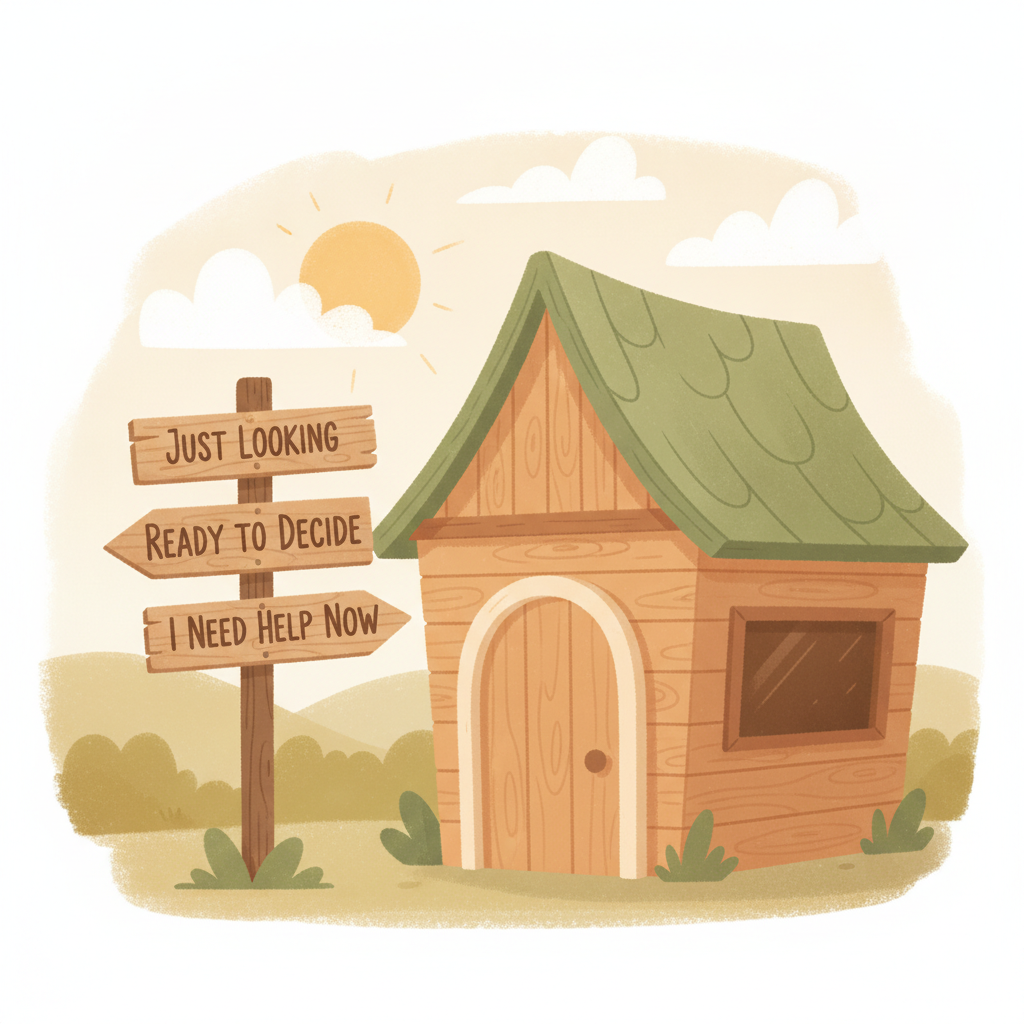
Here’s a question most small business owners never think to ask: Are your blog categories organized for you, or for your customers? If you set up your blog categories the same way most people do — by topic, by service line, or just however WordPress suggested — you probably built yourself a pretty decent filing cabinet. Neat. Logical. Completely useless to a first-time visitor who just wants to know if you’re the right fit. Good blog categories don’t file content away. They walk people somewhere.
That’s the difference we’re going to dig into today. Not just how to label your categories, but how to build a category structure around customer intent — the actual questions, feelings, and decisions your visitors are cycling through when they land on your site.
And no, this doesn’t require a marketing degree or a big team. It just requires thinking about your customer first and your organizational preferences second.
Why Most Blog Categories Are Organized Wrong
Most small business blog categories look something like this: Tips. News. Resources. Case Studies. Behind the Scenes. Industry Updates.
Sound familiar? Those labels make perfect sense to the person who created them. But to a new visitor? They’re meaningless. “Tips” about what? “Resources” for whom? “News” that matters to who, exactly?
The problem is that these categories are organized around content type or internal subject matter — not around where the reader is in their decision-making process. A category called “Tips” doesn’t tell a potential customer whether those tips are for someone just starting to research their options or someone about to sign a contract.
I wrote about this problem from a different angle in an earlier post on blog categories that help customers find you — specifically how your category structure affects whether search engines and real humans can figure out what your blog is actually about. But today we’re going a step further. We’re talking about categories that don’t just help people find you. They help people buy from you.
That’s a meaningful distinction.
The Customer Journey Your Blog Should Mirror
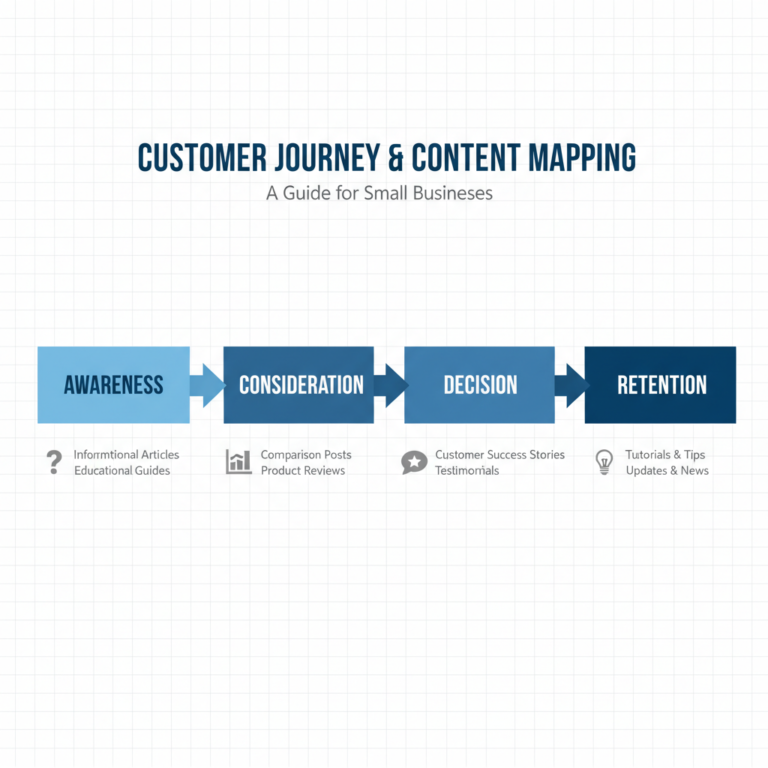
Before you touch a single category label, you need to understand something: your customers don’t all arrive at the same place in their thinking. Some are just waking up to a problem they have. Others have been researching solutions for weeks and just need one more nudge. And some already trust you — they just want to stay close.
These are what marketers call journey stages. You don’t need to memorize the fancy terminology. Just think about it in plain terms:
- Stage 1 — “I have a problem.” They know something’s not working. They’re not sure what to do about it yet.
- Stage 2 — “What are my options?” They’re researching. Comparing. Reading. Not ready to buy, but moving in that direction.
- Stage 3 — “Is this person the right fit for me?” They’ve narrowed it down. Now they’re sizing you up specifically.
- Stage 4 — “I’m a customer. What’s next?” They’ve bought. They want to get the most out of what they paid for.
Your blog categories should map to these stages — loosely, naturally, without being clinical about it. When a visitor can glance at your category list and immediately find content that matches where they are right now, you’ve built something genuinely useful.
Blog Categories Built Around Intent (With Real Examples)
Let me show you what this looks like in practice. Say you run a small landscaping company. Here’s a typical category setup:
- Lawn Care Tips
- Seasonal Updates
- Project Gallery
- Company News
And here’s what those same categories might look like when you rebuild them around customer intent:
- “Fix My Yard” — problem-aware content for people whose lawn is a mess and they don’t know where to start
- “Plan Your Project” — comparison and education content for people figuring out what they want and what it costs
- “Why We’re Different” — trust-building content: real projects, client stories, your process, your values
- “After You Hire Us” — onboarding and maintenance content for existing customers
See how that works? A visitor who lands on your blog because their lawn looks terrible can immediately spot “Fix My Yard” and click. They’re not wading through company news or seasonal updates that don’t apply to them yet.
This same framework works for a bookkeeper, a photographer, a fitness coach, a plumber — any small business with a service to sell.
How Many Blog Categories Should You Actually Have?
Here’s where I’m going to save you from yourself: fewer is better. Way better.
Most small business blogs don’t publish enough content to justify more than four or five categories. If you have eight categories with two posts each, your categories aren’t organizing anything — they’re just fragmenting your content into tiny piles no one visits.
A good rule of thumb: don’t create a category until you can commit to putting at least five or six posts in it. Otherwise, you’re just cluttering your navigation.
This also connects to something I touched on in content planning for real people with real lives — when you’re publishing as a one-person operation running a full business, you need a system that’s sustainable. That includes a category structure that you can actually fill over time without burning out.
Keep it simple. Three to five well-chosen categories will serve you far better than ten half-baked ones.
The Category Your Blog Probably Needs (And Doesn’t Have)
There’s one category that almost every small business blog is missing, and it’s the most commercially valuable one you can create.
Call it whatever fits your brand: “Work With Us,” “Is This Right for You,” “How We Help” — the name matters less than the intent. This is your decision-stage category. It’s where you put content specifically designed for people who are close to hiring you but need a little more information to pull the trigger.
What goes in here?
- Posts that explain your process step by step
- Posts that answer “how much does this cost?” honestly
- Posts that compare you to doing it yourself or hiring someone else
- Posts that address the most common objections you hear on sales calls
- Real client stories or transformations
This is the category your sales page can’t do alone. Blog posts in this category do pre-selling work that feels helpful rather than pushy. And if you’re not sure how to strike that balance, I’d point you to an earlier post on when your blog should sell and when it shouldn’t — it covers exactly that.
Naming Your Blog Categories Like a Human Being
This one’s simple but easy to overlook. Your category names should sound like something a real customer would say — not something from an internal meeting.
Avoid category names that are:
- Jargon-heavy (“B2B Lead Generation Insights”)
- Vague to outsiders (“Resources” or “General”)
- Process-oriented instead of customer-oriented (“Case Documentation” instead of “Client Stories”)
Instead, try naming categories the way you’d describe them to someone at a dinner table. “This section is for people who don’t know where to start.” “This one is for people who want to see our actual work.” That’s the voice. Translate it into a two or three word label.
If you’ve been struggling to find blog topics that drive real business results, the answer is often hiding right here — in the gaps between the content your customers actually need and the content you’ve been producing based on what felt logical to you.
What to Do With Your Existing Blog Categories Right Now
If you already have a blog with categories set up, don’t panic. You don’t have to blow everything up. Here’s a practical approach:
Step 1: Audit What You Have
Look at each existing category and ask: “Who is this for, and where are they in their decision-making?” If you can’t answer that clearly, the category isn’t serving your customers. A proper content audit can help you figure out what to keep, kill, or restructure.
Step 2: Map Your Posts to Intent Stages
Go through your existing posts — even the ones that haven’t gotten much traffic — and tag them mentally with a journey stage. Problem-aware? Research-stage? Decision-stage? You’ll probably find most of your content clusters around one stage (usually problem-aware) and leaves the others empty.
Step 3: Rebuild Around the Gaps
Now you know where the holes are. Your new blog categories should address those gaps. If you have ten problem-aware posts and zero decision-stage posts, that’s your roadmap for the next few months of content.
Step 4: Redirect and Consolidate
If you’re collapsing old categories into new ones, make sure any posts get properly reassigned. Don’t leave orphaned content sitting in deleted categories. Clean this up once, and your blog will function better from that day forward.
This is also a good moment to think about the posts themselves — not just where they live. If some of your older posts are half-finished or thin, you might find it helpful to revisit the case against perfect blog posts, which makes a solid argument for done-and-useful over polished-and-never-published.
How Blog Categories Affect SEO (Without Getting Complicated)
Here’s a quick but important note on the technical side, because blog categories do affect how search engines understand your site.
Each category creates its own archive page. If your categories are vague or too broad, those pages are thin and confusing to Google. But if your blog categories are tightly focused on specific customer needs — and you have solid content filling each one — those archive pages become genuinely useful landing pages.
A category page for “Fix My Yard Problems” filled with a dozen posts about common lawn issues is far more valuable to search engines than a category page called “Tips” with a random assortment of loosely related content.
For a broader look at the SEO side of things without the headache, blog SEO basics for small business owners who hate SEO is worth a read. It strips away the jargon and focuses on what actually moves the needle for a small operation.
A Note for the Business Owner Who Let the Blog Go Quiet
If your blog has been sitting mostly dormant for a while — and you’re feeling a little sheepish about it — that’s okay. Most small business owners have been there. Life runs the calendar more often than strategy does.
But here’s the thing: restructuring your blog categories is one of the best things you can do before you start publishing again. It’s quiet work. Nobody notices you doing it. And it sets you up so that every new post you write has a proper home that actually serves a purpose.
If any of this has you thinking about why you stopped publishing in the first place, it might be worth reading why your business blog died and how to revive it. No judgment there — just honest talk about what gets in the way and how to get moving again without making it harder than it needs to be.
The Bottom Line on Blog Categories
Your blog categories are not just an organizational tool. They are a quiet navigation system that either walks your visitors toward a buying decision — or leaves them wandering around and eventually clicking away.
The fix isn’t complicated. Think about where your customers are when they land on your blog. Build your blog categories around those mental states, not around your service menu or your content types. Give each category a name that a real human being would understand. And keep it simple enough that you can actually fill those categories with useful content over time.
That’s it. No fancy tech. No big redesign. Just a small shift in how you think about structure — and a commitment to building it around the person you’re trying to serve.
Your blog should be working for your business whether you’re in the office or not. Good categories are part of how that happens.