How Often Should You Blog for Business Success?
The question of blog posting frequency has spawned more guilt and abandoned editorial calendars than any other blogging topic. You’ve probably read the advice: “Post daily!” “Three times a week minimum!” “Consistency is everything!” And then reality hits-you’re running a business, not a media company.
Here’s the truth: most blog posting frequency advice ignores the fundamental reality of small business life. You don’t need to match HubSpot’s publishing schedule to see real results from your blog.
The Blog Posting Frequency Myth That’s Killing Your Motivation
Let’s start with what you’ve probably heard before. Marketing gurus love throwing around numbers: post five times a week, write 2,000 words per article, publish at exactly 10 AM on Tuesdays. Meanwhile, you’re trying to figure out how to write one decent post while managing payroll and putting out client fires.
The problem with most blog posting frequency advice is that it treats your business blog like a news website. It assumes you have unlimited time, endless ideas, and a team of writers. You don’t, and that’s perfectly fine.
Your blog doesn’t exist to feed the content machine. It exists to support your business goals. And those goals can be met without turning yourself into a content factory.
What Actually Matters More Than Posting Frequency
Before we talk about how often to post, let’s talk about what actually moves the needle for your business. Because frequency without purpose is just busy work.
Quality beats quantity every single time. One well-crafted post that addresses a real customer problem will outperform ten generic posts every time. Your customers don’t care if you post daily-they care if you can solve their problems when they find you.
Relevance matters more than regularity. A post that directly addresses your customers’ pain points, published once a month, will generate more leads than daily posts about random industry trends.
As I discussed in Blog Topics That Drive Business Results for Small Owners, focusing on topics that directly serve your audience beats publishing frequently about everything and nothing.
The Real Numbers: What Research Actually Says
Here’s what the data shows, stripped of the marketing hype: businesses that blog consistently (even just once a week) generate 67% more leads than those that don’t blog at all. Notice the word “consistently”-not “constantly.”
HubSpot’s research found that companies publishing 16+ posts per month got the most traffic. But here’s what they don’t mention: those companies have dedicated content teams. They’re not small business owners writing posts between customer calls.
For small businesses, the sweet spot is different. Studies specifically focused on small business blogs show that publishing once or twice a week delivers the best ROI when you factor in time investment.
But even more interesting? Businesses that post consistently once a week outperform those that post sporadically multiple times a week. Consistency trumps frequency every time.
Finding Your Personal Blog Posting Frequency Sweet Spot
Your ideal blog posting frequency isn’t determined by what some marketing guru says. It’s determined by three factors: your business goals, your available time, and your content creation capacity.
Start with your goals. Are you trying to establish thought leadership? Generate leads? Support customer service? Different goals need different approaches. Lead generation might need weekly posts addressing customer questions. Thought leadership might be better served by one deep, well-researched post per month.
Be honest about your time. How much time can you realistically dedicate to blogging each week? Not how much you think you should have, but how much you actually have. If you can carve out two hours a week, plan for that-not for some fantasy schedule where you have eight hours.
I covered this reality check in detail in Content Planning for Real People With Real Lives, because planning around your actual life is the only planning that works.
The Minimum Viable Blog Schedule
Let’s talk minimums. What’s the least you can post and still see business results? Based on working with hundreds of small business owners, here’s what I’ve found works:
One quality post per month is better than no posts at all. If this is where you’re starting, focus on making each post count. Address a major customer pain point. Make it comprehensive. Promote it well.
Two posts per month starts to show momentum. Your audience begins to expect content from you. Search engines start paying attention. You can maintain this schedule with about one hour of writing per week.
One post per week is the sweet spot for most small businesses. It’s frequent enough to stay top-of-mind, manageable enough to maintain, and substantial enough to build real authority in your field.
Anything more than weekly requires treating content creation as a major business function, not a side activity.
Quality Control: Making Every Post Count
When you’re not posting daily, every post needs to work harder. This isn’t about writing perfect prose-it’s about writing useful content.
Each post should serve a specific purpose. Answer a customer question. Address a common misconception. Provide a solution to a problem your audience faces. Vague, general content doesn’t work when you’re publishing less frequently.
Focus on evergreen content that stays valuable over time. Instead of writing about the latest industry news (which becomes irrelevant quickly), write about fundamental problems and solutions in your field.
The key is what I call “compound content”-posts that become more valuable over time as they attract links, comments, and shares. The 15-Minute Blog Post That Actually Works explains how to create this kind of lasting content without spending hours perfecting every sentence.
The Consistency Challenge (And How to Actually Win It)
Here’s where most small business blogs die: the consistency challenge. You start strong, posting weekly. Then monthly. Then whenever you remember. Then never.
This happens because most people set unrealistic blog posting frequency goals. They commit to posting three times a week when they barely have time for three times a month.
The solution? Start smaller than you think you need to. If you think you can handle weekly posts, start with bi-weekly. If you think monthly is realistic, start with every six weeks. You can always increase frequency later, but recovering from posting failure is much harder.
Build systems that support consistency. Create More, Write Less shows how to develop sustainable content creation habits that don’t depend on motivation or perfect conditions.
Remember: your audience would rather know they can count on new content from you every month than wonder if you’ll ever post again.
When Life Happens: The Flexibility Factor
Let’s be realistic about something else: life happens. You’ll get sick. You’ll have family emergencies. You’ll go through busy seasons where blogging feels impossible.
This is where having a realistic blog posting frequency saves you. If you’re committed to posting daily, missing a week feels like failure. If you’re committed to posting monthly, missing a week is just a schedule adjustment.
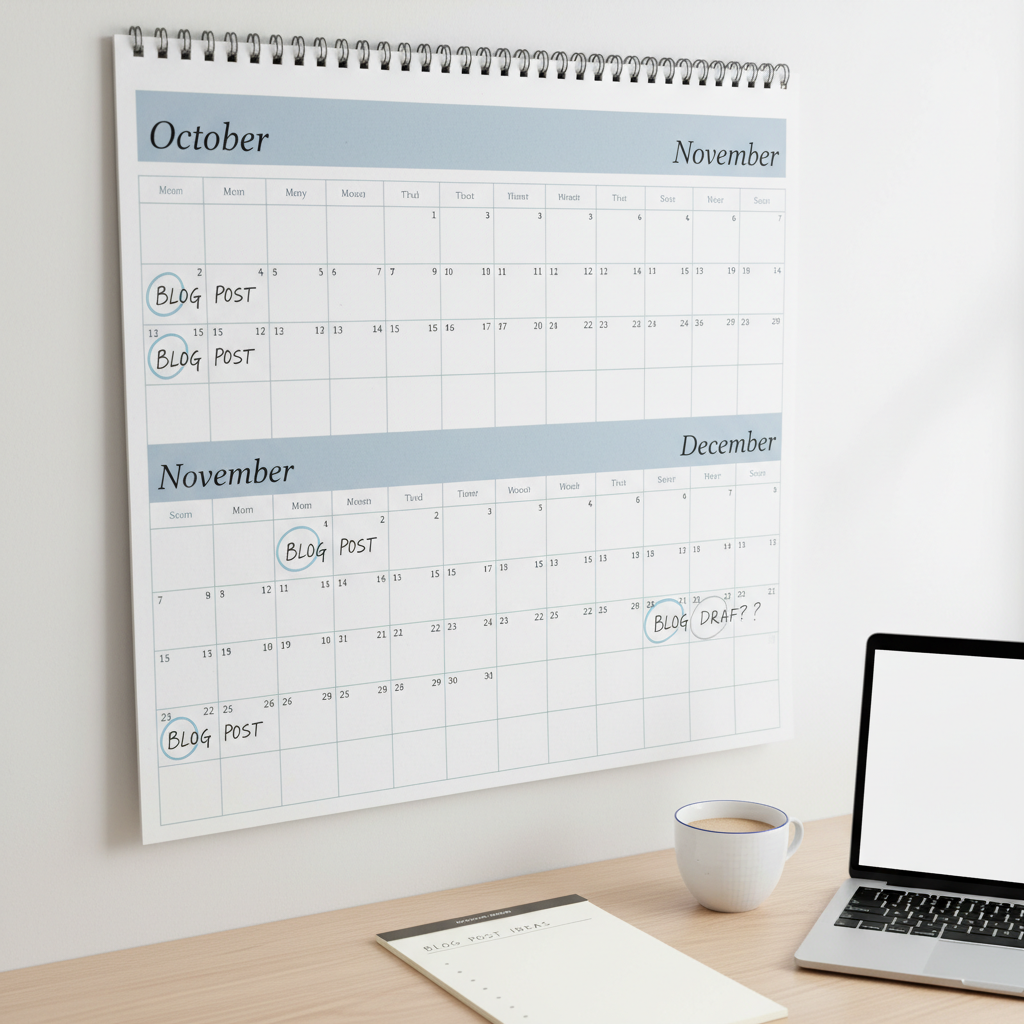
Build flexibility into your schedule from the start. If you want to post weekly, plan for 40 posts a year instead of 52. Those 12 “flex weeks” will save your sanity and your consistency record.
Keep a small buffer of evergreen posts for emergencies. Two or three posts that aren’t time-sensitive, ready to publish when life gets crazy. This lets you maintain consistency even during difficult periods.
As I explained in Why Your Business Blog Died (And How to Revive It), most blogs fail not because of lack of content ideas, but because of inflexible expectations that don’t account for real life.
Measuring What Actually Matters
How do you know if your blog posting frequency is working? Don’t just count page views-measure business impact.
Track leads generated from blog posts. Monitor which posts get referenced in sales conversations. Notice which content pieces answer customer service questions before they reach your inbox.
Pay attention to engagement quality, not just quantity. A post that generates three thoughtful comments from potential customers is more valuable than one that gets twenty likes from random strangers.
Watch your search rankings for terms that matter to your business. Consistent, quality posting (even if infrequent) improves your overall domain authority and search visibility.
Most importantly, measure sustainability. Can you maintain your current posting schedule for six months? A year? If the answer is no, your frequency is too high regardless of the results.
Your Personal Blog Posting Frequency Action Plan
Ready to find your sustainable blog posting frequency? Here’s your step-by-step plan:
Step 1: Audit your current situation. How much time do you realistically have for content creation each week? What business goals do you need your blog to support?
Step 2: Start smaller than you think. If weekly feels right, try bi-weekly. If monthly seems reasonable, try every six weeks. You can always increase later.
Step 3: Focus on systems, not inspiration. Don’t wait for the perfect idea or the perfect time. Real-Life Content Planning for Busy Business Owners walks you through creating sustainable content workflows.
Step 4: Measure what matters. Track business results, not vanity metrics. Quality engagement and lead generation matter more than posting frequency.
Step 5: Adjust based on reality. If you’re consistently missing your schedule, it’s too aggressive. If you’re easily hitting your targets and have capacity for more, consider increasing frequency.
The Bottom Line on Blog Posting Frequency
The best blog posting frequency for your business is the one you can maintain consistently while creating content that serves your audience and supports your business goals.
Whether that’s once a week, twice a month, or once a month doesn’t matter as much as doing it reliably and doing it well. Your customers don’t need you to match the publishing schedule of major media companies. They need you to show up consistently with helpful, relevant content.
Stop feeling guilty about not posting daily. Start feeling proud of posting consistently, whatever frequency works for your reality. Remember, The Case Against Perfect Blog Posts for Small Business applies here too-done consistently beats perfect occasionally.
Your blog should work for your business, not against it. Find the posting frequency that supports your goals without burning you out, then stick with it. That’s how you build a blog that actually drives business results instead of just driving you crazy.