Internal Linking Strategy That Keeps Readers Engaged
Your blog visitors arrive, read one post, then disappear into the digital void. Sound familiar? You’re not alone. Most small business blogs treat internal linking strategy like an afterthought – slapping a few random links here and there without much thought. Meanwhile, they’re missing massive opportunities to keep people reading, build trust, and actually turn browsers into buyers.
Here’s the thing: when someone lands on your blog, they’re already interested in what you have to say. The trick is giving them a clear, compelling path to stick around and explore more of your wisdom.
Why Internal Linking Strategy Matters More Than You Think
Let’s start with the basics. Internal linking is simply connecting one page on your website to another page on your website. Simple concept, right? Yet most business owners either ignore it completely or do it wrong.
Think about it this way: You’ve worked hard to create valuable content. You’ve shared your expertise, solved problems, and demonstrated your knowledge. But if each post exists in isolation, you’re essentially hiding most of your best work from the people who could benefit from it most.
Google loves websites that keep people engaged. When someone clicks from post to post, spending more time exploring your site, search engines take notice. They interpret this as a signal that your content is valuable and worth ranking higher.
But more importantly, engaged readers become customers. The person who reads three of your posts instead of one is far more likely to trust you with their business.
The Connection Problem Most Blogs Have
I see this pattern everywhere: business owners write great individual posts but fail to connect them strategically. They might mention a related topic but don’t link to their existing content about it. Or they add links randomly, without considering what would genuinely help their reader next.
It’s like having a great conversation with someone, then walking away mid-sentence instead of building on the discussion. You’ve done the hard work of creating trust and interest – why not capitalize on it?
The truth is, most small business owners don’t have a deliberate internal linking strategy. They’re too busy running their business to think about the connections between their posts. But once you understand the framework, it becomes second nature.
Building Your Internal Linking Foundation
Before diving into tactics, you need to understand what you’re working with. Start by auditing your existing content. What topics have you covered? Which posts naturally connect to others?
This is where conducting a proper content audit becomes invaluable. You’ll discover connections you never noticed and identify gaps where new content could serve as perfect bridges between existing posts.
Next, think about your reader’s journey. Someone reading about “how to choose a contractor” might naturally want to know about “red flags to avoid” or “questions to ask during estimates.” These logical progressions become your linking opportunities.
Remember, choosing blog topics that actually drive business results means understanding what your customers need to know at each stage of working with you.
Strategic Internal Linking Techniques That Work
Now for the practical stuff. Effective internal linking isn’t about cramming as many links as possible into your content. It’s about creating natural, helpful connections that enhance your reader’s experience.
The Problem-Solution Bridge: When you mention a problem in one post, link to another post that solves it. If you’re writing about common website mistakes, link to your post about website best practices.
The Depth Dive: Some topics deserve brief mentions in multiple posts but detailed exploration in one comprehensive piece. Link from the brief mentions to the deep dive.
The Sequential Learning Path: Create deliberate sequences where posts build on each other. Think “Blogging 101” linking to “Advanced Blogging Strategies” linking to “Monetizing Your Blog.”
The key is making these connections feel natural and helpful, not forced. If you’re struggling with consistency in your content creation, understanding how to create more while writing less can help you build a sustainable linking strategy.
Where and How to Place Internal Links
Link placement matters as much as the links themselves. Here’s what works best:
Within the content flow: The most powerful links happen naturally within your writing, where they add genuine value to the discussion. These feel organic because they are.
At transition points: When you’re moving from one idea to another, that’s often a perfect spot to reference related content. “Speaking of email marketing…” naturally leads to a link about email strategy.
In problem-solving moments: When you mention a challenge your readers face, link to content that addresses that specific issue. This shows you understand their complete journey, not just the narrow topic of your current post.
Avoid the temptation to dump all your links at the end of the post. By then, many readers have already left. Weave them throughout where they naturally fit.
Making Internal Links Irresistible
The difference between links that get clicked and links that get ignored often comes down to how you present them. Generic phrases like “click here” or “read more” tell your reader nothing about why they should care.
Instead, make your link text descriptive and compelling. Instead of “I wrote about this before,” try “Here’s the complete framework I use for…” or “This strategy has helped dozens of my clients…”
Context matters enormously. Explain why the linked content will help your reader right now, in their current situation. Connect it directly to what they just read.
For instance, if someone just learned about the importance of consistent blogging but feels overwhelmed, they’ll eagerly click a link promising a blog post strategy that takes just 15 minutes.
Common Internal Linking Mistakes to Avoid
Even with good intentions, it’s easy to get internal linking wrong. Here are the mistakes I see most often:
Over-linking: Cramming too many links into a single post overwhelms readers and dilutes the impact of each link. Aim for 3-5 strategic links rather than 15 random ones.
Linking to irrelevant content: Every link should add value. If it doesn’t directly help your reader understand or act on what they just read, skip it.
Using the same anchor text repeatedly: Varying your link text keeps things natural and helps search engines understand your content better.
Forgetting mobile readers: Links that work well on desktop might be hard to tap on mobile devices. Make sure your linked text is substantial enough to be easily clickable.
Remember, if you’re struggling to maintain regular posting, addressing why your blog died and how to revive it might be more important than perfecting your linking strategy right now.
Advanced Internal Linking Strategy for Better Results
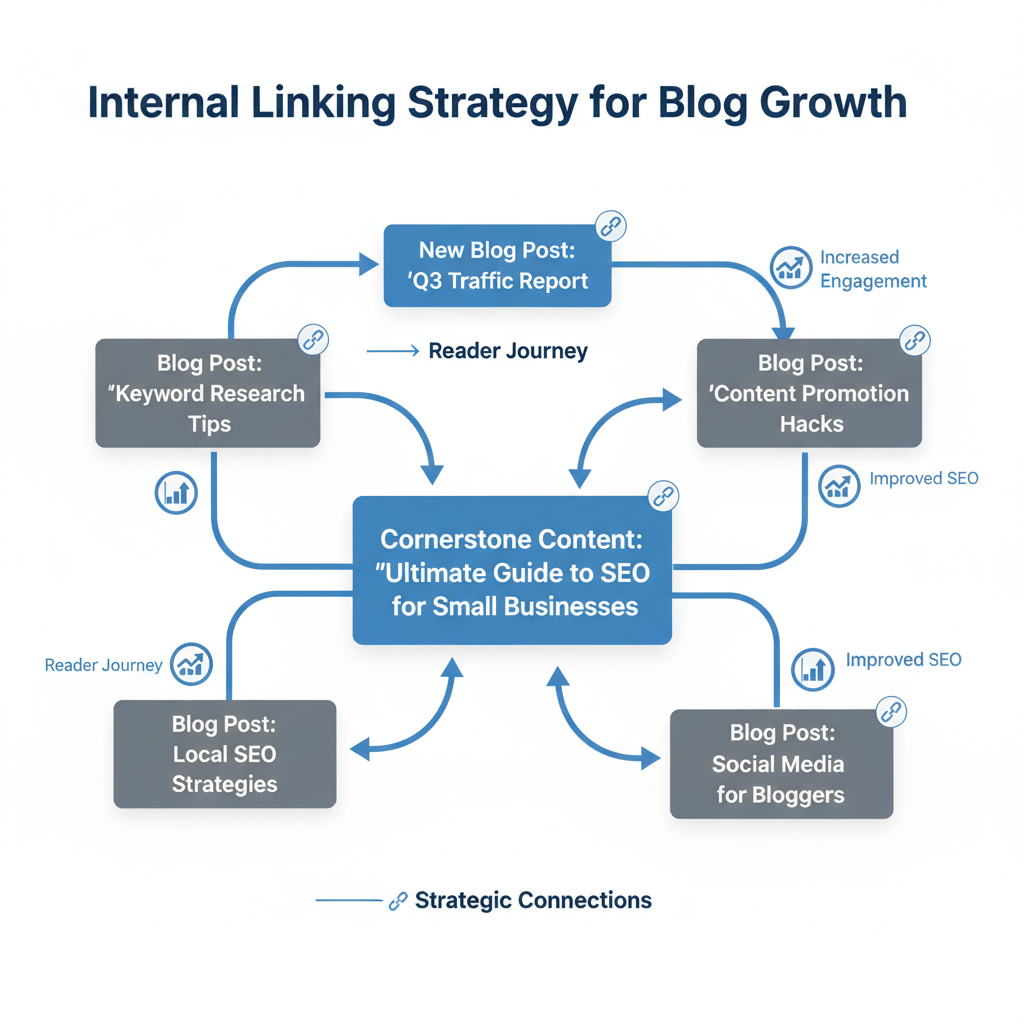
Once you’ve mastered the basics, you can get more sophisticated with your internal linking strategy. Think about creating content clusters – groups of posts that all relate to a central theme, each linking to the others in helpful ways.
For example, if you’re a marketing consultant, you might have a cluster about email marketing that includes posts on list building, writing subject lines, automation, and measuring results. Each post links to the others where relevant, creating a comprehensive resource.
This approach also helps with SEO. Search engines can better understand your expertise when they see related content linked together logically.
Consider creating “ultimate guides” or comprehensive posts that serve as hubs, linking out to more specific posts on subtopics. Then link back to these hubs from your smaller posts. This creates a natural hierarchy that both readers and search engines appreciate.
Measuring Your Internal Linking Success
How do you know if your internal linking strategy is working? Look beyond vanity metrics and focus on blog metrics that actually matter for business results.
Key indicators include:
Time on site: Are people staying longer and reading more? This suggests your links are compelling and your content is connected well.
Pages per session: An increase here means people are following your links to explore more of your content.
Bounce rate improvements: If more people are clicking to second and third pages instead of leaving immediately, your linking strategy is working.
Business inquiries: Ultimately, better engagement should lead to more people contacting you about your services.
Don’t expect overnight results. Like most content marketing strategies, internal linking pays dividends over time as you build more connections and Google recognizes your site’s improved user experience.
Making Internal Linking a Habit
The best internal linking strategy is one you actually use consistently. That means building it into your content creation process rather than treating it as an afterthought.
When you’re writing a new post, keep a list of your existing content handy. As you write, note opportunities to reference related posts. This is much easier than trying to retrofit links later.
If time is your biggest challenge – and let’s face it, it usually is – focus on realistic content planning strategies that account for your actual schedule and energy levels.
Consider creating a simple spreadsheet of your posts organized by topic. This makes it easier to spot connection opportunities and ensures you’re not always linking to the same few posts.
Remember, you don’t need perfect systems. You need workable systems that you’ll actually use week after week.
Your Next Steps
Start simple. Pick your three most popular blog posts and look for opportunities to link them to related content. Add 2-3 strategic links to each post, focusing on connections that genuinely help your readers.
Then, as you write new content, make internal linking part of your process. Ask yourself: “What else have I written that would help someone who’s interested in this topic?”
Your blog already contains more wisdom and value than you realize. Internal linking is simply about making those connections visible and accessible to the people who need them most.
The goal isn’t to trap people on your website. It’s to serve them so well that they want to stick around and learn more. When you nail that balance, everything else – better search rankings, increased trust, more business inquiries – follows naturally.