How to Write Useful Calls to Action
A call to action should help the reader choose the next useful step. It is not a demand that every visitor buy something immediately.
Match the action to the article
Start with the purpose of the page. An introductory article may lead to a checklist or comparison. A decision guide may lead to a product page. Instructions may lead to a related procedure or support resource.
Make one primary request
Pages become confusing when they simultaneously ask readers to subscribe, call, download, shop, share, and read five other posts. Choose one primary action. Secondary links can remain available without competing for attention.
Use direct language
Describe what happens next:
- Compare the two systems.
- Download the field checklist.
- Review the completed example.
- See the product details on Etsy.
- Tell us which part of the process causes trouble.
Avoid false urgency, vague buttons, and promises the destination cannot support.
Place it after sufficient context
A simple next step can appear near the beginning when the reader already understands the offer. A service inquiry or purchase request usually belongs after the article has explained the problem and method.
Check the destination
Open the link and confirm that the next page matches the wording. A clear button leading to an outdated, unrelated, or unavailable offer damages trust.
Measure the useful result
Track whether readers complete the intended action and whether that action produces a useful outcome. A high click count is not valuable if the destination confuses the visitor.
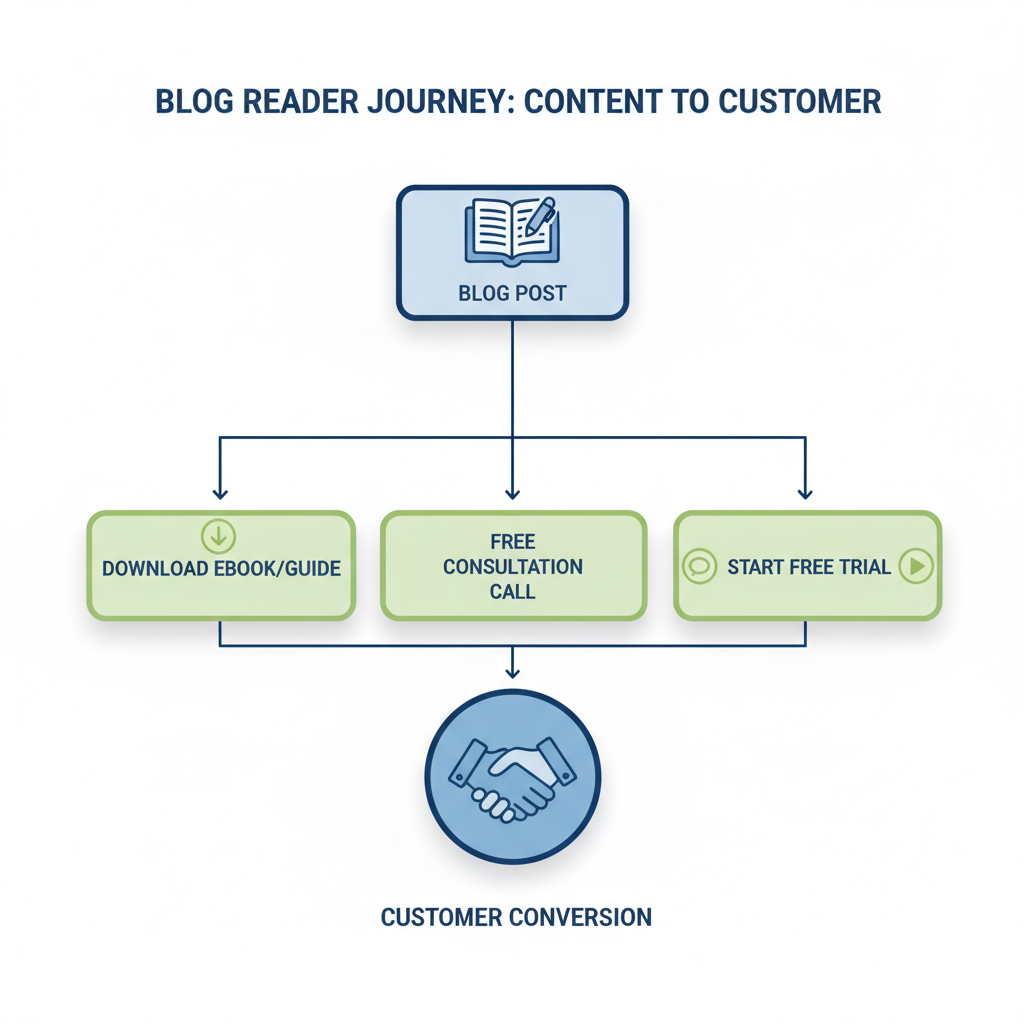
Map actions to the customer journey and record the result in the monthly content scorecard.