Content Repurposing: One Blog Post, Five Marketing Assets
You know that sinking feeling when you publish a great blog post, get a few likes, maybe a comment or two, and then… crickets? Meanwhile, you’re already stressed about what to write next week. Here’s the thing: content repurposing isn’t just smart-it’s essential for small business owners who need their marketing to work harder, not just more often.
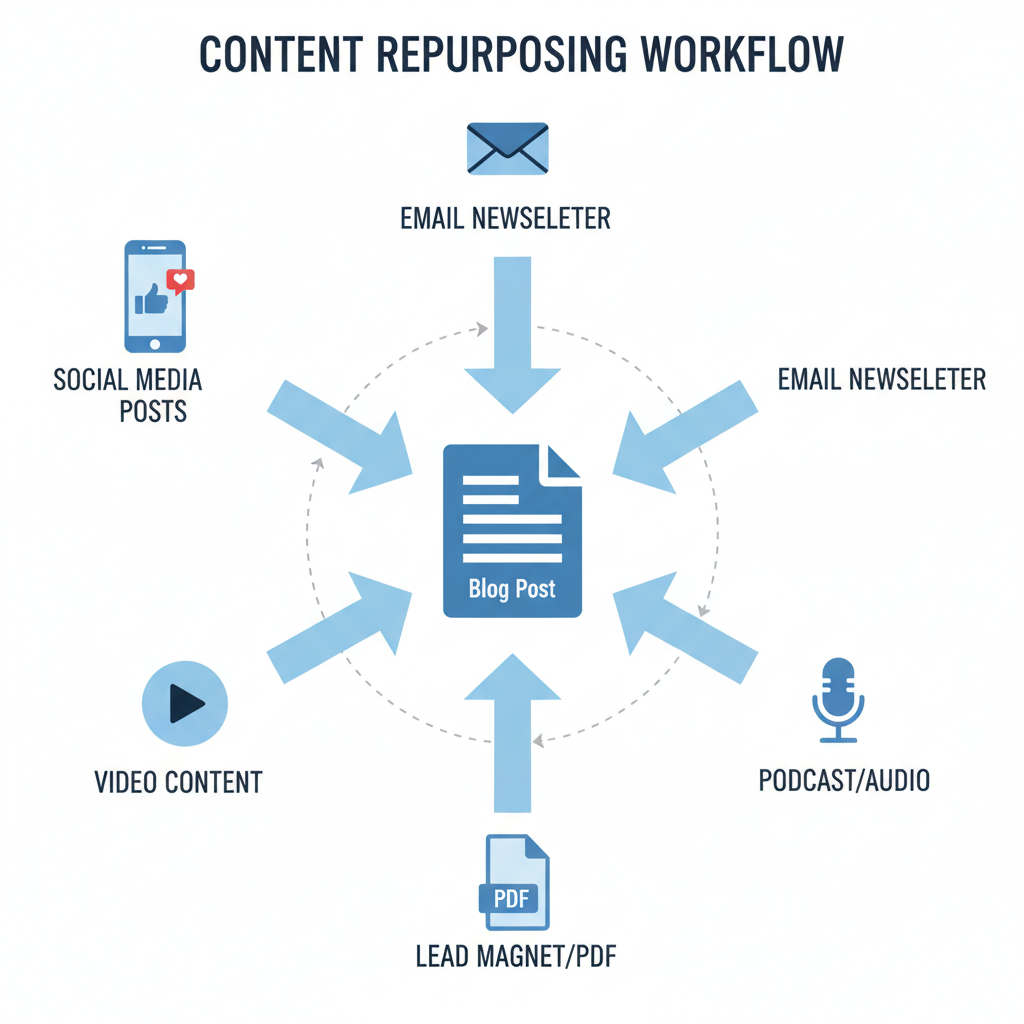
Instead of creating fresh content from scratch every single time, what if that one solid blog post could become your social media posts for the week, your next email newsletter, a video script, and more? That’s not lazy marketing-that’s strategic marketing.
Let’s dig into how to turn one piece of content into multiple marketing assets without watering down your message or losing your mind in the process.
Why Content Repurposing Makes Business Sense
Before we jump into the how-to, let’s address the elephant in the room. Some business owners worry that repurposing content is somehow cheating or that they’re being repetitive. Trust me, you’re not.
Your customers aren’t hanging on your every word across every platform. They’re busy running their own lives and businesses. The marketing rule of seven exists for a reason-people need to see your message multiple times, in multiple formats, before it really sinks in.
Moreover, different people consume information differently. Some folks love reading detailed blog posts. Others prefer quick social media updates. Some want to watch videos while others listen to podcasts during their commute.
By practicing smart content repurposing, you’re not being redundant-you’re being thorough. You’re meeting your audience where they are, when they’re ready to engage.
And frankly, as someone who’s been helping small businesses with their content for years, I can tell you that most of you are already overwhelmed trying to keep up with one content channel, let alone five. This approach gives you permission to work smarter.
The Foundation: Start With Quality Content Repurposing Material
Not every blog post makes good repurposing material. You want to start with content that has substance, provides real value, and addresses a problem your customers actually face.
Think about your business blog topics that drive real results. These are usually how-to guides, problem-solving posts, or educational content that demonstrates your expertise.
Here’s what makes a blog post ripe for repurposing:
Clear, actionable advice. Vague inspirational posts don’t translate well across formats. But a post with specific steps, tips, or strategies? That’s gold.
Multiple key points. A post with 5-7 main takeaways can easily become 5-7 separate social media posts.
Universal appeal. Content that applies to most of your audience will get more mileage than highly specialized pieces.
Evergreen value. Time-sensitive content doesn’t repurpose well. But advice that’s relevant six months from now? Perfect.
If you’re struggling to create more without writing less, this foundation approach will serve you well.
Asset #1: Social Media Content That Actually Engages
Your blog post is a goldmine of social media content waiting to be extracted. But don’t just slap a link to your post and call it a day. That’s not content repurposing-that’s just cross-posting.
Instead, pull out individual insights, tips, or quotes from your post. Turn each main point into its own social media update.
Let’s say you wrote a blog post about “5 Ways to Improve Customer Service.” Don’t just post “Here are 5 ways to improve customer service [link].” Instead:
Monday: “Customer service tip #1: Always acknowledge complaints within 24 hours. It’s not about solving everything immediately-it’s about showing you care enough to respond.”
Wednesday: “Here’s something most businesses get wrong: They focus on fixing problems instead of preventing them. The best customer service happens before there’s a problem to solve.”
Friday: “Your team can’t deliver great customer service if they don’t know what great looks like. Document your standards and train to them consistently.”
See the difference? Each post provides immediate value while building interest in the full article.
For visual platforms like Instagram or LinkedIn, pull compelling statistics or create simple graphics with your key points. The goal is to provide value first, drive traffic second.
Asset #2: Email Newsletter Content Your Subscribers Will Read
Your email list is arguably your most valuable marketing asset, and content repurposing can help you nurture it without starting from scratch every week.
Take your blog post and restructure it for email. This doesn’t mean copying and pasting-email readers have different expectations than blog readers.
Email audiences prefer shorter paragraphs, more conversational tone, and clear calls to action. They want to feel like you’re talking directly to them, not broadcasting to the masses.
Here’s how to transform your blog content for email:
Start with a personal story or observation. “I was talking to a client last week who said something that really stuck with me…” This creates intimacy that blog posts often lack.
Summarize your main points concisely. Your email subscribers might not have time for a 2,000-word deep dive, but they’ll appreciate the condensed wisdom.
Add email-exclusive insights. Mention something that didn’t make it into the blog post. This rewards your subscribers for being on your list.
Include a clear next step. Whether it’s reading the full post, booking a consultation, or replying with questions, give them something specific to do.
This approach helps you leverage the email list strategy hidden in your blog posts more effectively.
Asset #3: Video Scripts That Don’t Require Hollywood Production
Video content consistently outperforms text-based content on most platforms. But the thought of creating video scripts from scratch? That’s enough to make any busy business owner break out in a cold sweat.
Your existing blog post is already a video script-it just needs reformatting.
The key is thinking conversationally rather than academically. Blog posts can get away with longer sentences and complex paragraphs. Video scripts need to sound natural when spoken out loud.
Here’s the simple transformation process:
Read your blog post aloud. Seriously. You’ll immediately hear which sentences are too long or complex for video.
Break up long paragraphs. Each main point becomes a separate section of your video.
Add conversational bridges. Phrases like “Now, here’s where it gets interesting” or “Let me give you a real example” work better in video than in text.
Plan for visual elements. Note where you might show examples, graphics, or simply change camera angles.
A 1,500-word blog post typically translates to about 10-12 minutes of video content-perfect for platforms like YouTube or LinkedIn video posts.
Don’t worry about perfect production values. Your audience wants helpful information delivered authentically, not Hollywood-level cinematography.
Asset #4: Podcast Content and Speaking Points
Whether you have your own podcast, guest on others, or speak at industry events, your blog content can provide the foundation for engaging audio content.
The beauty of content repurposing for audio is that you’re not just reading your post-you’re having a conversation about the topic you already know well.
Use your blog post as an outline rather than a script. The main points become your talking points, but you’ll expand on them naturally as you speak.
For podcast content, consider these approaches:
Solo episodes: Walk through your blog post’s main points, adding personal stories and examples that didn’t fit in the written version.
Interview talking points: If you’re being interviewed, your blog post provides ready-made answers to common questions in your industry.
Speaking engagements: Transform your blog post into presentation slides, with each main point becoming a section of your talk.
The conversational nature of audio content allows for more personality and storytelling than written content, so don’t feel constrained by your original post’s structure.
Asset #5: Lead Magnets and Educational Resources
Your comprehensive blog posts can easily become lead magnets-those valuable free resources that encourage people to join your email list.
This is where content repurposing really shines for list building. You’re not creating something entirely new; you’re repackaging existing value in a more accessible format.
Consider these transformations:
Checklists: Turn your step-by-step blog post into a downloadable checklist your readers can follow.
Templates: If your blog post describes a process, create a template that makes it easier to implement.
Quick reference guides: Condense your detailed post into a one-page reference sheet people can keep handy.
Email courses: Break your comprehensive post into a series of daily or weekly emails that dive deeper into each point.
The key is making your repurposed content feel like an upgrade, not a rehash. Add worksheets, examples, or bonus tips that weren’t in the original post.
The Content Repurposing Workflow That Actually Works
Having a system makes all the difference between sporadically repurposing content and building it into your regular marketing routine.
Here’s a simple workflow that won’t overwhelm your already busy schedule:
Week 1: Publish your blog post. Share it once on social media and include it in your weekly newsletter.
Week 2: Create 3-5 social media posts pulling out key points from the blog post. Schedule them throughout the week.
Week 3: Transform the content into video format. This could be a quick talking-head video or a more produced piece, depending on your comfort level and resources.
Week 4: Create your lead magnet or additional resource based on the blog post content.
This approach gives you a full month of marketing content from one blog post, without the pressure of creating something new every few days.
Remember, the goal isn’t to milk every piece of content to death, but to maximize the value of the quality content you’re already creating. This ties back to the importance of content planning for real people with real lives.
Common Content Repurposing Mistakes to Avoid
Even with the best intentions, it’s easy to stumble when you’re getting started with content repurposing. Here are the mistakes I see most often:
Copy-paste syndrome. Simply copying your blog post text into an email or social media post doesn’t work. Each format has different expectations and consumption patterns.
Over-repurposing. Just because you can turn one blog post into 20 pieces of content doesn’t mean you should. Quality and relevance matter more than quantity.
Ignoring platform differences. LinkedIn audiences expect different content than Instagram audiences. Tailor your repurposed content to each platform’s culture and expectations.
Forgetting to add new value. Each repurposed piece should offer something fresh, even if it’s just a new perspective or additional example.
No clear tracking. Without measuring which repurposed content performs best, you’re missing opportunities to refine your approach.
Avoiding these pitfalls will help you get better results from your repurposing efforts and avoid the content fatigue that kills so many well-intentioned marketing plans.
Making Content Repurposing Sustainable for Your Business
The biggest challenge with any content strategy isn’t the creation-it’s the consistency. You need a system that works even when life gets busy, because life always gets busy.
Start small. Don’t try to implement all five asset types immediately. Pick two that align with where your audience spends their time and focus on those.
If your customers are active on LinkedIn and you already have an email list, start there. Master the art of turning your blog posts into LinkedIn content and email newsletters before adding video or lead magnets to the mix.
Consider batching your repurposing work. Instead of repurposing content piece by piece, set aside a few hours once a month to transform your recent blog posts into multiple formats. This approach is more efficient and helps maintain consistency in your messaging.
Also, don’t forget that repurposing works both ways. Sometimes a great social media post or email newsletter can become the foundation for a blog post. If something resonates with your audience in one format, it’s worth exploring in more depth.
This sustainable approach to content creation aligns with strategies for business owners who understand that their blog died not from lack of caring, but from lack of systems.
The truth is, content repurposing isn’t about working less-it’s about working smarter. It’s about recognizing that your expertise and insights have value worth sharing in multiple ways, to multiple audiences, through multiple channels.
Your customers aren’t going to complain that you’re being too helpful or too visible. They’re going to appreciate that when they’re ready to engage with your business, you’re there with valuable information in the format they prefer.
So take that next blog post you publish and see it not as one piece of content, but as the foundation for a week’s worth of marketing. Your future self-and your business-will thank you for it.