Strategic Guest Posts: Quality Over Quantity for Small Business
Look, I’ve been around this block enough times to know the truth about strategic guest posts. Most business owners hear “guest posting” and either run for the hills or dive headfirst into pitching every blog under the sun. Both approaches miss the mark completely.
Here’s what actually happens: You spend weeks crafting the perfect pitch, writing a stellar article, and then… crickets. Maybe a handful of visitors trickle over to your site. Maybe your post gets buried three pages deep on a blog nobody reads.
The real secret isn’t writing more guest posts. It’s writing the right ones.
Why Most Strategic Guest Posts Fail Small Businesses
Before we dig into what works, let’s talk about why most guest posting advice leads nowhere. The problem isn’t your writing-it’s your targeting.
Most guides tell you to look for “high authority” sites with massive domain authority scores. That’s fine advice if you’re running a Fortune 500 company with a dedicated content team. But for a small business owner juggling payroll, customer service, and family dinner? It’s a recipe for frustration.
These high-authority sites get hundreds of pitches daily. Your chances of landing a spot are slim, and even if you do, your article might get lost in the shuffle. Meanwhile, you’ve spent precious time that could have gone toward creating content that drives business results on your own blog.
Additionally, many business owners make the mistake of treating guest posts like advertising. They write thinly veiled sales pitches instead of valuable content. That approach fails for two reasons: editors won’t publish it, and readers won’t trust it.
The Strategic Guest Posts Formula That Actually Works
Here’s the framework I’ve seen work time and again for small businesses. It’s not about volume-it’s about precision targeting and genuine value creation.
Start With Your Customer’s Journey
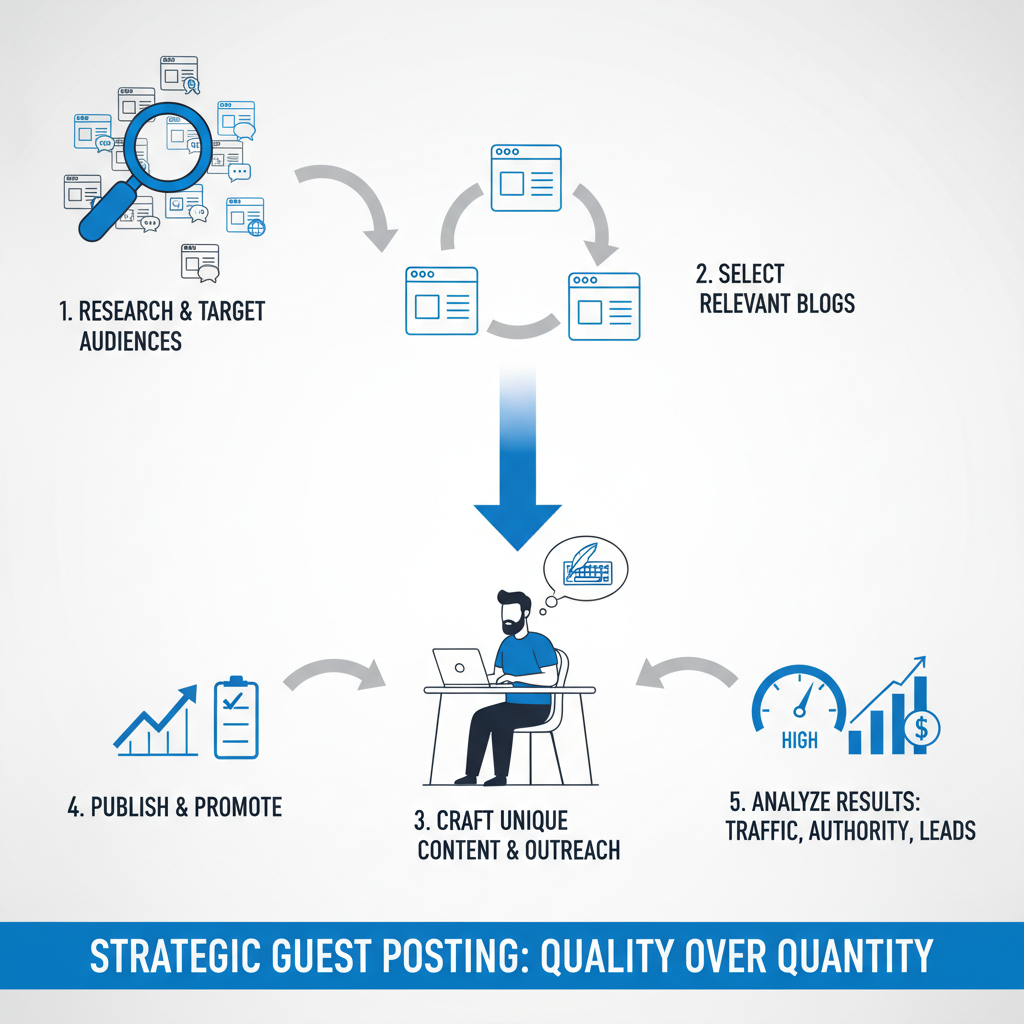
Before you pitch anyone, map out where your ideal customers spend their time online. Not where you think they should be, but where they actually are. This might be industry forums, local business publications, or niche blogs you’ve never heard of.
For example, if you run a landscaping company, your customers might read home improvement blogs, local lifestyle publications, or even real estate websites. These audiences are actively looking for solutions you provide.
The key insight here connects to something I’ve written about before: why location-based content wins for local businesses. Your guest posts should target publications where your geographic market actually reads.
Quality Over Quantity, Always
I’d rather see you write one strategic guest post that brings 50 qualified leads than ten posts that bring 500 random visitors who bounce immediately. This isn’t about ego metrics-it’s about business results.
Look for blogs with engaged audiences rather than massive reach. A local business publication with 2,000 active subscribers in your market beats a national blog with 200,000 passive readers every single time.
How to Identify Guest Post Opportunities That Move the Needle
Now let’s get practical. Here’s how to spot opportunities that actually matter for your business.
The Comment Test
Before pitching any blog, spend time reading their content and comments. Are people actually engaging? Do the comments show real questions and discussions? If you see the same few people commenting on every post, that’s a good sign-it means there’s a real community there.
Dead comment sections or obvious spam usually indicate an audience that doesn’t engage. Your guest post might get published, but it won’t drive results.
The Social Media Reality Check
Check how the blog’s content performs on social media. Not just follower counts, but actual engagement. Are people sharing their posts? Commenting meaningfully? This tells you if the audience is active and interested.
Also, look at who’s engaging. If it’s mostly other marketers and bloggers, that might not be your target audience. But if you see potential customers in the mix, you’re onto something.
The Newsletter Factor
Here’s a secret most guest posting guides miss: blogs with strong email lists often provide more value than blogs with strong SEO. Why? Because newsletter subscribers are more engaged and more likely to take action.
If a blog promotes their newsletter prominently and mentions subscriber counts, that’s usually a good sign. These readers have already shown interest by giving their email address.
Pitching Strategic Guest Posts Like a Professional
Once you’ve identified the right opportunities, your pitch determines everything. Most pitches fail because they focus on what the blogger gets, not what their audience needs.
Lead With Value, Not Credentials
Skip the lengthy bio about your business achievements. Start with a specific problem their audience faces and how you can solve it. Show that you understand their readers’ pain points.
For instance: “I noticed your recent post about small business marketing generated lots of comments from readers struggling with content consistency. I’ve helped dozens of local businesses create realistic content plans that actually stick, and I’d love to share what works.”
Propose Specific Topics
Don’t ask “Can I write for you?” Instead, propose 2-3 specific article ideas that fit their content style and audience needs. Reference recent posts to show you actually read their blog.
This approach demonstrates professionalism and makes it easier for editors to say yes. They can visualize exactly what you’ll deliver.
Writing Guest Posts That Drive Real Business Results
Getting published is just the beginning. The real challenge is writing content that brings qualified traffic back to your business.
The 80/20 Rule for Guest Content
Spend 80% of your article providing genuine value with no strings attached. Save the promotional content for a brief bio and maybe one contextual link within the article itself.
This mirrors the principle I discuss in when your blog should sell and when it shouldn’t. Trust-building content converts better than sales pitches in guest posting contexts.
Strategic Internal Linking
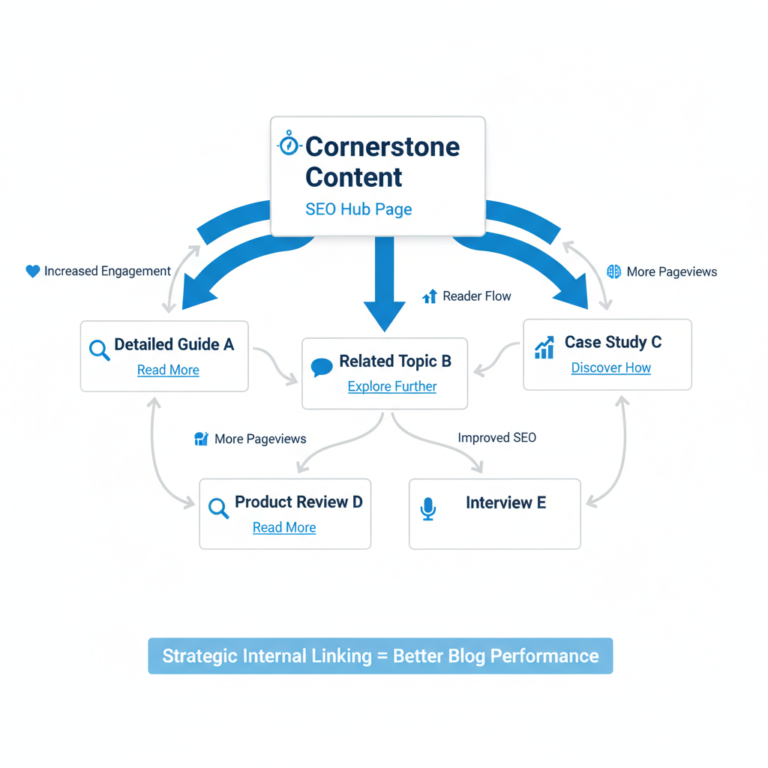
When you do include links to your content, make them genuinely helpful. Link to your best educational content, not your sales pages. A link to a detailed how-to guide will get more clicks and build more trust than a link to your services page.
Think about it from the reader’s perspective. They’re consuming educational content, so they’re more likely to click on additional educational resources than commercial ones.
The Follow-Up Strategy
Don’t disappear after your post goes live. Respond to comments, share the post on your social media, and engage with readers who reach out. This extends the life of your guest post and builds relationships with potential customers.
Many guest posting opportunities lead to ongoing relationships-both with the publication and with readers who become customers months later.
Measuring Success Beyond Vanity Metrics
Here’s where most businesses get strategic guest posts wrong: they measure the wrong things. Traffic spikes look impressive, but they don’t pay the bills.
Track Business Metrics, Not Blog Metrics
Instead of obsessing over page views, track metrics that matter to your business. How many new email subscribers did the guest post generate? How many consultation requests? How many actual customers?
This connects to the broader principle of tracking business results instead of vanity metrics on your own blog too.
The Long-Term View
Some guest posts show immediate results. Others build authority and trust that pays off months later. Don’t write off a guest post just because it doesn’t drive immediate traffic.
Keep a simple spreadsheet tracking where leads mention finding you. You might be surprised how often a guest post from six months ago still generates business.
Common Strategic Guest Posts Mistakes to Avoid
Let me save you some headaches by highlighting the mistakes I see repeatedly.
The Spray and Pray Approach
Sending the same generic pitch to 50 blogs doesn’t work. It’s obvious, impersonal, and wastes everyone’s time. Better to send five thoughtful, customized pitches than fifty generic ones.
Remember, you’re building relationships, not just getting published. A personal connection with a blog editor can lead to multiple publishing opportunities and other business relationships.
Ignoring Editorial Guidelines
Every blog has specific requirements for guest contributors. Word counts, formatting preferences, bio length, linking policies. Ignoring these guidelines screams “amateur” and guarantees rejection.
Take ten minutes to read their guest posting guidelines before pitching. It shows respect and professionalism.
Writing for Yourself Instead of Their Audience
Your guest post should sound like it belongs on their blog, not like a transplant from yours. Study their writing style, tone, and typical topics. Match their voice while bringing your unique expertise.
Making Strategic Guest Posts Part of Your Content Strategy
The most successful businesses treat guest posting as one component of a larger content strategy, not a standalone tactic.
Consider how guest posts can support your existing content efforts. Maybe you expand on topics you’ve covered briefly in your own blog, or you test new content ideas before developing them fully for your audience.
The key is integration. Your guest posts should complement your main content strategy, not compete with it for time and attention. This is especially important for busy business owners who need to create content efficiently.
Strategic guest posts work when they’re part of a thoughtful approach to content marketing, not a desperate grab for quick traffic. Focus on building genuine relationships, providing real value, and connecting with audiences that actually matter to your business.
The businesses that succeed with guest posting treat it like networking-building connections that benefit everyone involved. That approach takes more time upfront but delivers much better long-term results.