Content Seasons: Match Your Blog to Business Cycles
Every business has its own natural rhythm. You know it well – those months when your phone won’t stop ringing, and those quieter periods when you’re wondering where everyone went. These business cycles aren’t random. They’re predictable patterns that smart business owners can use to their advantage, especially when it comes to content planning.
Here’s the thing most business owners miss: your blog should dance to the same beat as your business. When you align your content with these natural business cycles, something magical happens. You stop fighting against the current and start swimming with it.
Understanding Your Business Cycles Matter for Content Strategy
Let’s start with what we mean by business cycles. These are the predictable ups and downs that happen in your industry throughout the year. Maybe you’re a landscaper who gets slammed in spring and summer but has downtime in winter. Or perhaps you run an accounting firm that goes crazy during tax season but quiets down in the fall.
These patterns aren’t accidents. They’re opportunities waiting to be leveraged through smart content planning.
Most business owners approach blogging like it’s a metronome – same pace, same intensity, all year long. That’s like trying to plant tomatoes in December or selling snow shovels in July. It works against the natural order of things.
Instead, successful businesses match their content rhythm to their business rhythm. They prepare during the quiet times and capitalize during the busy ones.
Mapping Your Business Cycles Throughout the Year
Before you can align your content with business cycles, you need to understand your specific patterns. Every business is different, even within the same industry.
Start by looking at your sales data from the past two years. When do your numbers spike? When do they dip? What external factors drive these changes?
For a local restaurant, the patterns might look like this:
High Season: Valentine’s Day, Mother’s Day, holiday parties in December
Medium Season: Summer months, back-to-school period
Low Season: January after the holidays, late February, post-summer lull
Your patterns will be unique to your business. A wedding photographer’s busiest content planning season might be January when engaged couples start researching vendors for their fall weddings.
Once you map these cycles, you can see the content opportunities hiding in plain sight.
External Factors That Drive Your Cycles
Don’t just look at your internal data. Consider the external forces that create these business cycles:
• Weather patterns and seasons
• Industry events and conferences
• Holiday shopping behaviors
• Back-to-school timing
• Tax deadlines
• Budget cycles (B2B businesses often see Q4 rushes)
Understanding these drivers helps you anticipate when content will have maximum impact.
Content Planning During Slow Business Periods
Here’s where most business owners get it backwards. They think slow business periods mean they should slow down their content too. Wrong.
Slow periods are your content goldmine. This is when you have the mental bandwidth and time to create the foundation pieces that will serve you during busy seasons.
During your slow periods, focus on:
Educational Content: Those comprehensive how-to guides that take time to research and write. The kind of content that establishes you as the go-to expert in your field.
FAQ Compilations: Turn the questions you get repeatedly into detailed blog posts. Future busy-season you will thank present-day you for having these ready.
Behind-the-Scenes Content: Share your process, your story, your team. This relationship-building content works best when you have time to make it personal and genuine.
Industry Analysis: Deep dives into trends, predictions, and insights. Content that positions you as a thought leader takes time to craft properly.
The goal isn’t just to fill time. It’s to create a content bank you can draw from when things get hectic. As we covered in Content Planning for Real People With Real Lives, having content ready to go reduces stress during busy periods.
Batch Creation Strategies
Use slow periods for content batching. Set aside dedicated blocks of time to:
• Write multiple blog posts at once
• Create social media graphics for the next few months
• Record video content in bulk
• Plan your editorial calendar for peak season
This approach, detailed in Create More, Write Less, maximizes your efficiency during downtime.
Leveraging Busy Seasons for Maximum Content Impact
When your business cycles hit high gear, your content strategy needs to shift. This isn’t the time for long-form educational pieces. It’s time for content that converts and supports your sales process.
During peak business cycles, focus on:
Customer Success Stories: Quick case studies and testimonials. Social proof works overtime during busy seasons when prospects are ready to buy.
Timely, Relevant Content: Address the specific concerns and questions that come up during your busy season. If you’re getting the same question five times a week, that’s a blog post.
Process and Expectation Content: Help prospects understand what working with you looks like. This reduces back-and-forth and qualifies leads better.
Promotional Content: Strategic sales-focused posts. But remember the wisdom from When Your Blog Should Sell (And When It Shouldn’t) – even during busy seasons, not every post should be a pitch.
The key during busy periods is efficiency. Use The 15-Minute Blog Post That Actually Works approach to create valuable content without eating up hours you don’t have.
Repurpose and Recycle Smart
Busy seasons are perfect for repurposing existing content. Take that comprehensive guide you wrote during the slow season and break it into smaller, actionable posts. Turn customer conversations into quick FAQ posts.
This isn’t being lazy – it’s being strategic. You’re meeting your audience where they are during their decision-making process.
Seasonal Content Examples Across Different Industries
Let’s look at how different businesses can align their content with business cycles:
HVAC Contractor:
• Winter prep content in fall (busy season prep)
• Energy efficiency tips in winter (value-add during peak)
• Spring maintenance guides in early spring (busy season support)
• Summer efficiency tips during peak cooling season
Wedding Planner:
• Venue selection guides in January (peak research time)
• Seasonal decoration ideas during spring (busy planning season)
• Stress management tips closer to peak wedding season
• Year-end reflection and next year’s trends in December
E-commerce Store:
• Product education during slow periods
• Gift guides before major shopping seasons
• Customer stories during peak buying times
• New year/fresh start content in January
The pattern is clear: educational content during research phases, supportive content during decision phases, and relationship content during downtime.
Tools and Systems for Business Cycles Content Planning
Managing content across different business cycles doesn’t require expensive tools. It requires smart systems.
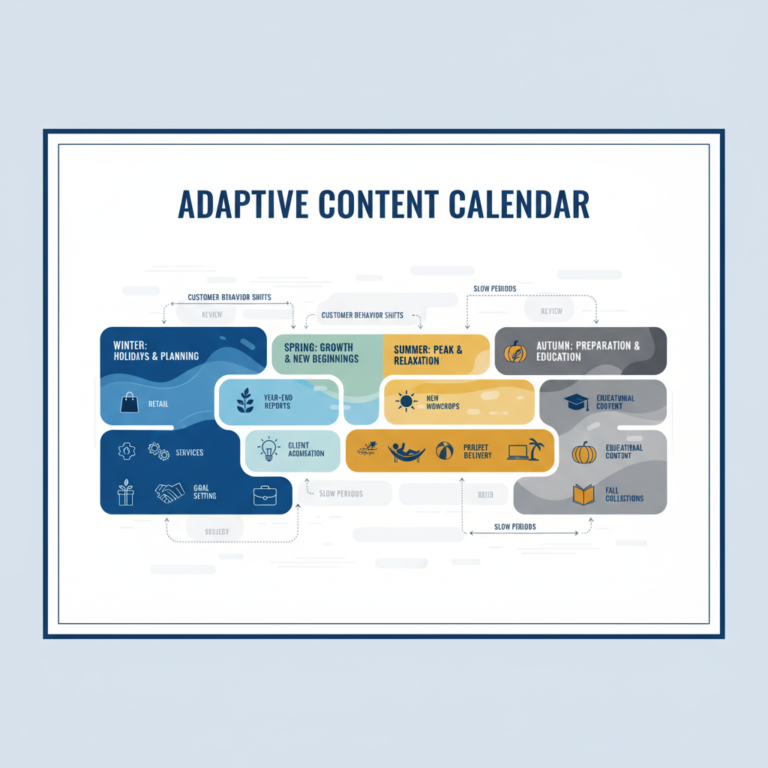
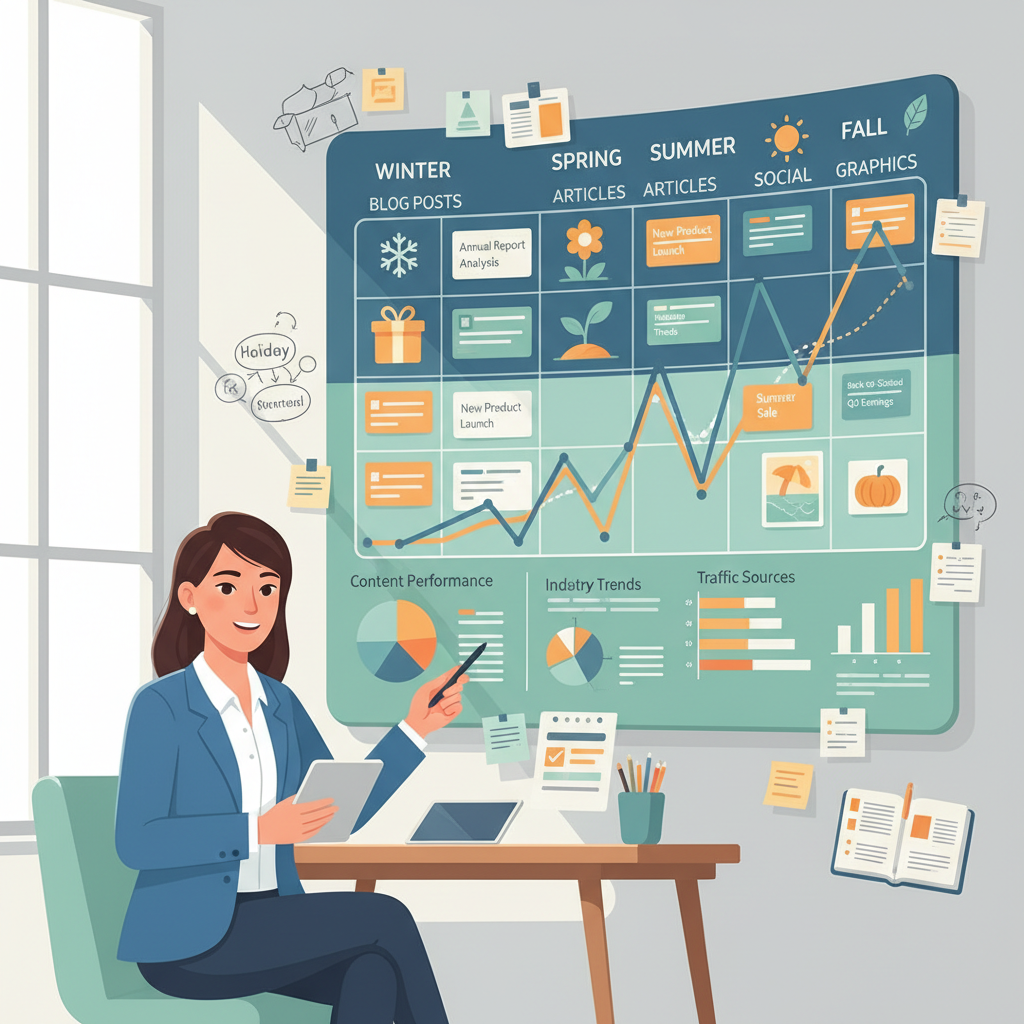
Content Calendar Approach: Use a simple spreadsheet or free tool like Google Calendar. Color-code your business cycles and plan content types accordingly.
Content Bank System: Create folders for different types of content. During slow periods, build up your bank. During busy periods, withdraw what you need.
Trigger-Based Content: Identify the events or dates that kick off each business cycle. Create content that goes live automatically based on these triggers.
As outlined in Real-Life Content Planning for Busy Business Owners, the best system is the one you’ll actually use consistently.
Measuring Success Across Business Cycles
Don’t judge all content by the same metrics. Content during slow periods might generate leads for future busy seasons. Content during peak times might focus on conversion.
Track metrics that matter for each phase, as detailed in Blog Metrics That Matter: Track Business Results, Not Vanity.
Common Mistakes When Matching Content to Business Cycles
Here are the pitfalls I see business owners fall into:
Mistake #1: Going Silent During Slow Periods
Your competition isn’t taking a break. Neither should your content. Use the downtime to build your foundation.
Mistake #2: Only Creating Sales Content During Peak Times
Bombarding prospects with sales messages during your busy season burns goodwill. Mix in valuable, non-promotional content.
Mistake #3: Ignoring Lead Time
Content needs time to work. If your busy season starts in March, you should be creating awareness content in January, not scrambling in February.
Mistake #4: One-Size-Fits-All Approach
Not all business cycles are seasonal. Some are monthly, weekly, or even daily patterns. Adjust your content rhythm accordingly.
Mistake #5: Perfectionism During Busy Periods
Remember the lesson from The Case Against Perfect Blog Posts for Small Business – done is better than perfect, especially during peak business cycles.
Getting Started With Your Content Seasons Strategy
Ready to align your content with your business cycles? Start simple:
Week 1: Map your business cycles using the past two years of data. Identify your high, medium, and low periods.
Week 2: Audit your existing content using insights from Content Audit: What to Keep, Kill, or Fix on Your Blog. See what you already have that fits different cycles.
Week 3: Create a content calendar template that aligns with your business cycles. Don’t overthink it – a simple spreadsheet works fine.
Week 4: Start creating content for your next business cycle phase, whether it’s prep content for an upcoming busy season or foundation content for a current slow period.
The goal isn’t to transform everything overnight. It’s to start working with your natural business rhythm instead of against it.
Making Business Cycles Work for Your Content Strategy
Aligning your content with business cycles isn’t just smart – it’s sustainable. You stop fighting the natural ebb and flow of your business and start leveraging it.
During slow periods, you build. During busy periods, you capitalize. During medium periods, you maintain and optimize.
This approach works because it matches how your customers think and behave. When they’re researching (often during your slow periods), you have educational content ready. When they’re ready to buy (during your busy periods), you have conversion-focused content waiting.
Most importantly, this strategy acknowledges the reality of running a business. You can’t maintain the same content intensity year-round any more than you can maintain the same business intensity. Working with your natural cycles instead of against them makes everything more manageable.
Start mapping your business cycles today. Your future self – and your content strategy – will thank you for it.