Blog Calls-to-Action That Convert Readers to Customers
You’ve poured your heart into creating helpful blog content. Your readers are engaging, commenting, and sharing your posts. But here’s the frustrating part: those engaged readers aren’t becoming customers. The problem isn’t your content-it’s your calls-to-action.
Most small business blogs get this backwards. They focus so hard on creating great content that they forget the whole point: guiding readers toward your services. Without strategic calls-to-action, even your best blog posts become dead ends.
Let’s fix that. Today, we’ll cover how to craft calls-to-action that convert readers into customers without sounding pushy or desperate.
Why Most Blog Calls-to-Action Fail
Before we dive into what works, let’s talk about what doesn’t. After reviewing hundreds of small business blogs, I see the same conversion-killing mistakes over and over.
The biggest mistake? No clear next step. Your blog post ends with “Thanks for reading!” or worse-nothing at all. Readers finish your helpful content and have no idea what to do next.
Another common problem is the generic “Contact us today!” button. This weak call-to-action tells readers nothing about what happens next or why they should bother clicking.
Then there’s the opposite extreme: being too aggressive. Some business owners panic and stuff every paragraph with sales pitches. This approach backfires because readers feel manipulated instead of helped.
The Psychology Behind Effective Calls-to-Action
Here’s what most business owners miss: effective calls-to-action work because they continue the helpful relationship you’ve already established in your blog post.
Think about it this way. Your reader just consumed 1,000 words of your expertise. They trust you. They see you as helpful. Now they’re wondering, “What’s next?”
The best calls-to-action answer that question naturally. They offer the logical next step in solving the reader’s problem.
For example, if you’re a financial advisor who just wrote about retirement planning mistakes, your call-to-action might offer a free retirement readiness checklist. It’s helpful, relevant, and moves the relationship forward without being pushy.
Strategic Placement: Where to Put Your Calls-to-Action
Location matters more than you think. The wrong placement can make even great calls-to-action invisible to readers.
The end of your post is obvious but essential. This is where readers naturally look for next steps. Don’t waste this prime real estate with weak language.
However, don’t stop there. Mid-content placement catches readers who don’t finish the entire post. Place a relevant call-to-action about halfway through, especially after making an important point.
Consider adding a sidebar call-to-action that stays visible as readers scroll. This works particularly well for lead magnets like guides or checklists.
For longer posts, try multiple calls-to-action with different offers. Maybe a mid-post CTA for a free resource and an end-post CTA for a consultation.
Language That Converts (Without Sounding Pushy)
The words you choose make or break your calls-to-action. Here’s how to craft language that converts while maintaining trust.
Start with action words that create urgency without pressure. “Download,” “Get,” “Start,” and “Discover” work better than “Submit” or “Click here.”
Be specific about what readers get. Instead of “Learn more,” try “Get the complete guide to choosing the right contractor.” Specific promises convert better than vague ones.
Address the reader’s immediate need. If your blog post identified a problem, your call-to-action should offer the solution. The connection should feel natural, not forced.
Use benefit-focused language. “Save 3 hours on your next project” converts better than “Download our template.” Focus on the outcome, not just the deliverable.
Common CTA Mistakes That Kill Conversions
Let’s talk about the conversion killers I see most often. Avoiding these mistakes alone will improve your results.
Too many options paralyze readers. When you offer five different calls-to-action in one post, readers choose none. Pick one primary action per post.
Irrelevant offers break trust. If your blog post is about social media marketing, don’t end with a call-to-action about bookkeeping services. Keep it connected to the content.
Weak value propositions get ignored. “Sign up for our newsletter” tells readers nothing about what they’ll receive. Be clear about the value.
Hidden calls-to-action don’t convert. If readers have to hunt for your CTA, they won’t find it. Make it visually obvious without being obnoxious.
No sense of urgency enables procrastination. While you don’t want false scarcity, you should give readers a reason to act now rather than later.
Types of Calls-to-Action That Work for Small Businesses
Different situations call for different approaches. Here are the most effective types of calls-to-action for small business blogs.
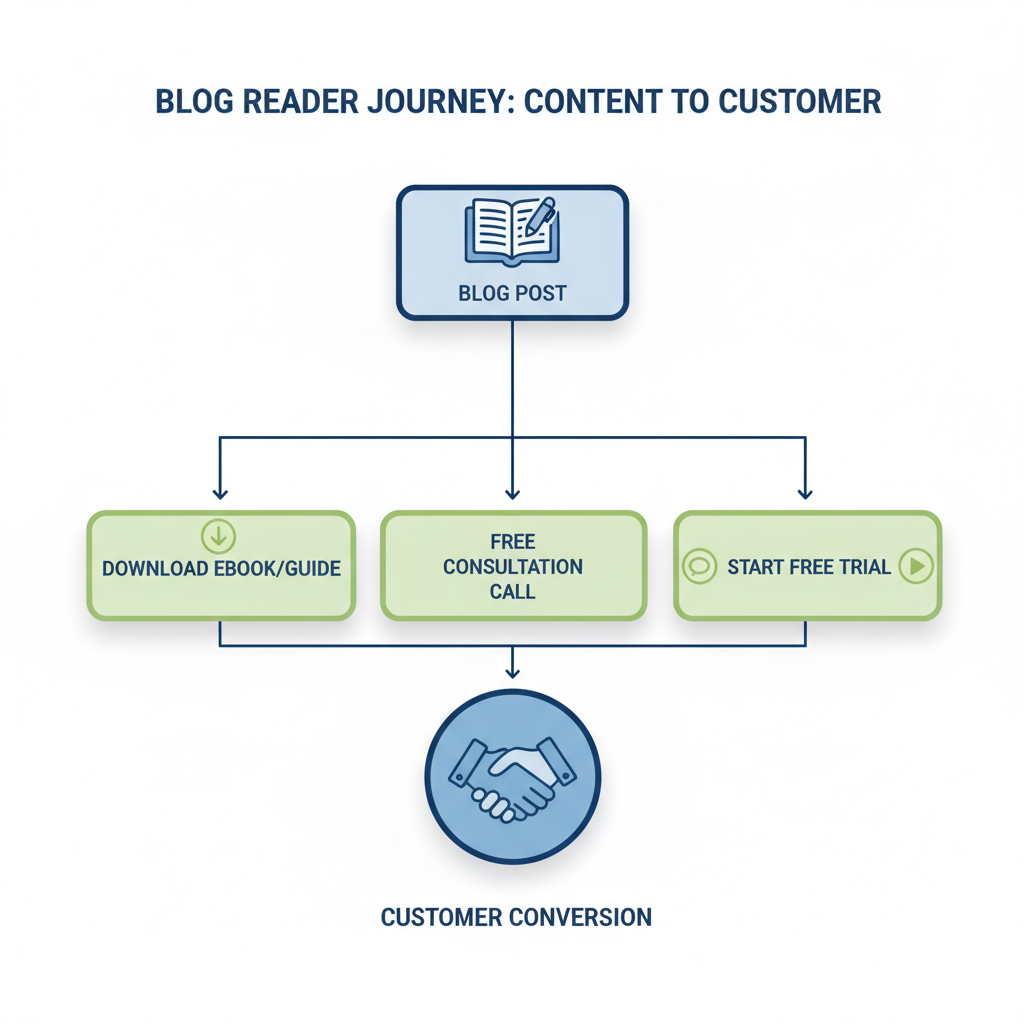
Lead magnet offers work exceptionally well. Offer something valuable in exchange for an email address. Think checklists, templates, guides, or mini-courses related to your blog topic.
Free consultations suit service-based businesses perfectly. After demonstrating expertise in your blog post, offering to discuss the reader’s specific situation feels natural.
Free trials or samples let potential customers test your offering without commitment. This works for both products and services.
Educational webinars extend the helpful relationship. If your blog post covered basics, your webinar can go deeper into advanced strategies.
Resource libraries position you as the go-to expert. Offer access to a collection of helpful tools in exchange for contact information.
Testing and Optimizing Your Calls-to-Action
Even great calls-to-action can be improved. Here’s how to test and optimize for better results.
Start by tracking your current performance. How many people click your calls-to-action? How many convert? You need baseline numbers before you can improve.
Test different headlines for the same offer. “Get Your Free Guide” might perform differently than “Download Your Instant Access Guide.” Small changes can create big improvements.
Experiment with placement. Try moving your call-to-action higher in the post or adding a second one. Track which positions generate more clicks.
Test different offers for similar content. Maybe your audience prefers checklists over video tutorials. The only way to know is by testing.
Don’t forget about design elements. Button colors, sizes, and surrounding white space all affect conversion rates.
Connecting Your Blog Strategy to Conversion Goals
Your calls-to-action should connect to your overall content strategy. This is where many business owners get disconnected from their bigger goals.
If you’re struggling with choosing blog topics that drive business results, consider working backwards from your calls-to-action. What actions do you want readers to take? What content would naturally lead to those actions?
Remember, the goal isn’t just traffic-it’s converting that traffic into business relationships. Your blog should sell, but it should do so by being genuinely helpful first.
For those who find content creation overwhelming, focusing on calls-to-action can actually simplify your approach. When you create more while writing less, having clear conversion goals helps you stay focused on what matters.
Making CTAs Work with Your Real Schedule
Let’s be honest about something: you’re busy. Between running your business and handling life, finding time for perfect calls-to-action optimization feels impossible.
Start simple. Pick one strong call-to-action and use it consistently. Perfect optimization can come later-consistency comes first.
If your business blog died because you got overwhelmed, remember that a simple call-to-action is infinitely better than no call-to-action.
Consider creating templates for your most common types of calls-to-action. This makes it easier to add them to new posts without reinventing the wheel each time.
Even when you’re writing 15-minute blog posts, always include a call-to-action. It might be simple, but it should be present.
Measuring What Matters
Finally, let’s talk about tracking the right metrics. Vanity metrics won’t grow your business-conversion metrics will.
Click-through rate on your calls-to-action tells you how compelling your offer is. Low click-through rates usually mean weak value propositions or poor placement.
Conversion rate from click to action (email signup, consultation request, etc.) reveals how well your landing page matches your call-to-action promise.
Most importantly, track how many call-to-action conversions become actual customers. This is the metric that matters most for your business.
When you’re focused on blog metrics that matter, calls-to-action performance should be near the top of your list.
Your Next Step
Here’s the thing about calls-to-action: they only work if you actually use them. You can read every conversion optimization guide ever written, but nothing happens until you start implementing.
Pick one blog post that gets decent traffic but isn’t converting readers. Add a clear, valuable call-to-action that connects naturally to the content. Track what happens over the next month.
That’s how you turn your helpful blog content into actual business growth. One strategic call-to-action at a time.
Ready to transform your blog readers into customers? Download our free “Blog CTA Template Library” – five proven call-to-action templates you can customize for any blog post. Get instant access and start converting more readers today.