The Blog Content Calendar That Actually Gets Used
Most blog content calendars sit abandoned in dusty spreadsheets, mocking small business owners with their perfect rows of unfulfilled promises. The problem isn’t your commitment-it’s that generic content calendars ignore the reality of running a business while juggling family life and everything else that comes your way.
A blog content calendar that actually gets used needs to bend with your reality, not break under the pressure of artificial deadlines and impossible expectations. Let’s build something that works with your life, not against it.
Why Traditional Blog Content Calendars Fail Small Businesses
You’ve seen them-those pristine content calendars with every day mapped out, color-coded by topic, stretching months into the future. They look impressive in screenshots and case studies, but they crash hard against the reality of small business ownership.
Here’s what happens: Your biggest client needs an emergency project. Your kid gets sick. A supplier screws up your inventory. Suddenly, that perfectly planned content about “Spring Cleaning Tips for Busy Professionals” feels ridiculous when you’re dealing with real business fires.
Traditional calendars fail because they assume you have consistent time, predictable energy, and steady business cycles. Most small business owners have none of these luxuries.
Instead of fighting this reality, let’s work with it. Content planning for real people starts with accepting that flexibility beats perfection every single time.
The Three-Layer Blog Content Calendar System
A blog content calendar that actually works needs three layers: seasonal themes, flexible topics, and emergency backup content. Think of it like a well-stocked kitchen-you’ve got planned meals, ingredients for quick dishes, and frozen pizza for those nights when everything goes sideways.
Layer 1: Seasonal Business Rhythms
Your business has natural rhythms. Maybe you’re slammed in Q4, quiet in January, and busy again before summer. Your content calendar should mirror these patterns, not fight them.
During busy seasons, plan lighter content that leverages existing expertise. Think quick tips, client success stories, or FAQ posts that you can knock out quickly. Save the heavy research pieces for slower periods when you actually have time to think.
Map out your year honestly. When are you typically overwhelmed? When do you have breathing room? When do your customers need the most help? This becomes your content calendar backbone.
Layer 2: Topic Buckets, Not Rigid Schedules
Instead of assigning specific topics to specific dates, create topic buckets for each season. Fill these buckets with blog topics that drive business results but keep them loose enough to grab whatever fits your current situation.
For example, your spring bucket might include:
- Customer success stories from winter projects
- Seasonal service tips
- Behind-the-scenes updates
- Industry trend observations
When you sit down to write, pick from the bucket based on what you’re dealing with right now, not what you planned three months ago.
Layer 3: Emergency Content Arsenal
This is your secret weapon: a collection of evergreen posts that you can polish and publish when life gets crazy. These might include:
- Your business origin story
- Common customer questions
- Industry myth-busting posts
- Simple how-to guides
Draft these during slow periods, then stash them away. When chaos strikes, you can quickly update and publish instead of stressing about creating something from scratch.
Building Your Realistic Blog Content Calendar
Let’s get practical. Your blog content calendar needs to account for the unpredictable nature of small business life while still maintaining some structure that keeps you moving forward.
Start With Your Business Calendar
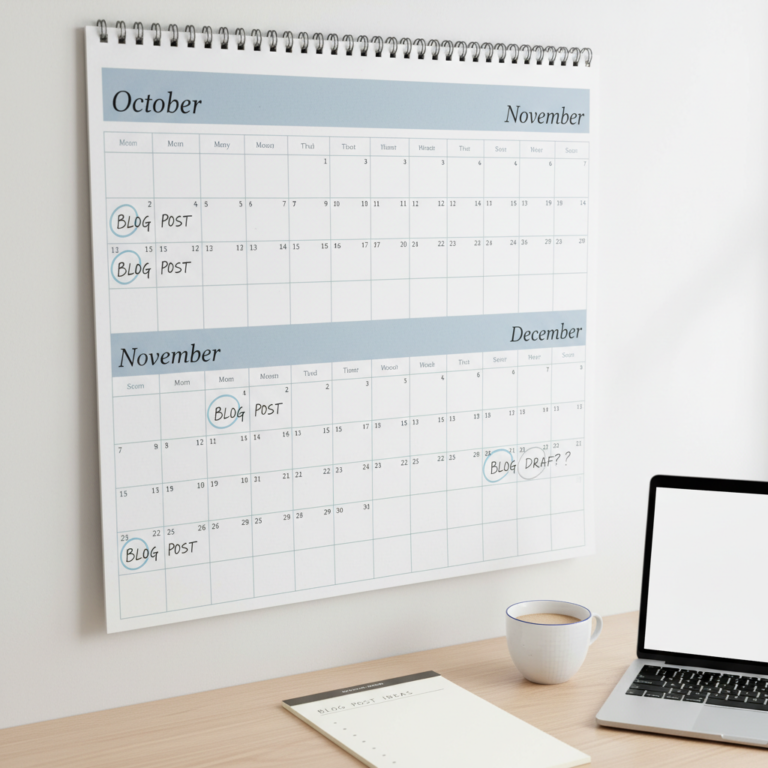
Before you plan a single blog post, map out your business year. Mark busy seasons, slow periods, industry events, and personal commitments. This becomes your content planning foundation.
If you know February is always crazy, don’t plan elaborate content series for February. If summer is slow, that’s when you can tackle those ambitious pieces you’ve been thinking about.
Your content calendar should support your business goals, not create additional stress during already challenging times.
Create Publishing Rhythms, Not Rigid Schedules
Instead of committing to “every Tuesday at 9 AM,” think in terms of sustainable rhythms. Maybe it’s “twice a week during slow seasons, once a week during busy periods, and emergency posts only during chaos.”
How often you blog matters less than consistency over time. Better to publish reliably once a week than to aim for daily posts and flame out after two weeks.
Build buffers into your system. If you’re planning weekly posts, create two weeks of content in advance. This cushion saves you when unexpected opportunities or challenges arise.
Use Time Blocks, Not Time Slots
Don’t schedule “Write blog post about customer service” for Tuesday at 2 PM. Instead, block out content creation time and keep a running list of ready-to-write topics.
When your content time arrives, pick the topic that matches your energy and available time. Feeling analytical? Tackle that industry trend piece. Exhausted but need to publish something? Polish one of your emergency posts.
The 15-minute blog post approach works perfectly here-you always have options that fit your available time and mental bandwidth.
Content Calendar Tools That Work for Real Life
Forget complex project management software with seventeen features you’ll never use. Your blog content calendar should be simple enough to update quickly and flexible enough to change course without rebuilding everything.
The Simple Spreadsheet System
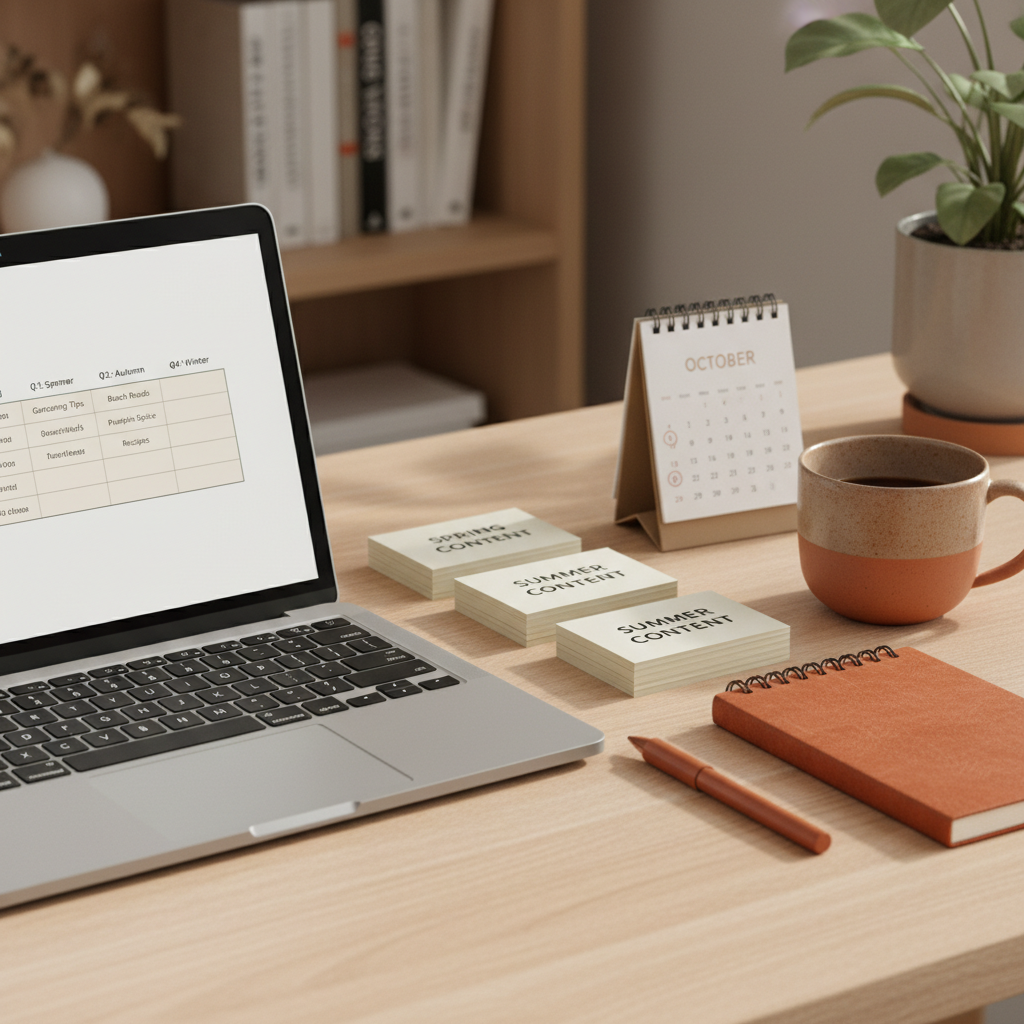
A basic Google Sheet with columns for month, topic bucket, status, and notes often works better than fancy tools. You can access it anywhere, share it with team members, and modify it without learning new software.
Create tabs for each quarter or season. List potential topics without assigning specific dates. Mark posts as “drafted,” “ready to publish,” or “published.” That’s often all the tracking you need.
The Index Card Method
Some small business owners swear by physical index cards. Write one topic per card, organize them into seasonal stacks, and grab whatever fits when it’s time to write.
This tangible system works especially well for visual thinkers who like to physically manipulate their content plans. Plus, it’s impossible to over-engineer a stack of index cards.
Hybrid Digital-Analog Systems
Many successful small business bloggers use a combination approach: digital tools for storage and tracking, physical tools for daily planning. Keep your master list digital, but use a simple notebook or whiteboard for weekly content decisions.
The key is finding what you’ll actually use consistently, not what looks most professional or sophisticated.
Making Your Blog Content Calendar Sustainable
A sustainable blog content calendar grows with your business and adapts to changing circumstances. It should feel like a helpful framework, not a demanding taskmaster.
Build in Review and Adjustment Periods
Schedule quarterly reviews of your content calendar. What topics performed well? Which ones felt forced? How did your actual publishing rhythm compare to your planned one?
Use these reviews to adjust your approach, not to beat yourself up for not following the original plan perfectly. Your content calendar should evolve as you learn what works for your business and audience.
Sometimes you’ll discover that certain topics consistently drive business results while others fall flat. Focus on metrics that matter and adjust your content buckets accordingly.
Create Content Series That Build on Each Other
Instead of treating each post as a standalone project, develop series that build momentum. A three-part series on customer service can be easier to write than three unrelated posts, and it creates anticipation among readers.
Plan these series during your slower periods, then spread the publishing across busier times. You get the benefit of in-depth coverage without the pressure of creating completely new content when you’re stretched thin.
Repurpose Ruthlessly
Your blog content calendar should account for repurposing existing content, not just creating new pieces. That customer workshop you led? It’s probably three blog posts. The FAQ document you created? That’s a content goldmine.
Creating more while writing less keeps your content calendar full without overwhelming your schedule. Look for opportunities to present the same valuable information in different formats or from different angles.
When Your Blog Content Calendar Goes Off Track
Your blog content calendar will go off track. Count on it. The question isn’t whether it will happen, but how quickly you’ll get back on course when it does.
Have a Recovery Plan
When you miss publishing deadlines or fall behind on content creation, resist the urge to abandon your calendar entirely. Instead, have a recovery plan ready.
This might mean publishing your emergency content, reducing your posting frequency temporarily, or combining planned topics into longer, more comprehensive posts. The goal is to maintain momentum, not to catch up to an arbitrary schedule.
Remember why business blogs die-it’s usually perfectionism and unrealistic expectations, not lack of good intentions.
Adjust Expectations, Not Standards
When your calendar goes sideways, adjust your expectations while maintaining quality standards. Better to publish one excellent post per month than four mediocre ones that you rushed to meet an arbitrary schedule.
Your audience would rather wait for valuable content than receive filler just to maintain a publishing cadence. Perfect blog posts aren’t necessary, but valuable ones are non-negotiable.
Your Blog Content Calendar Action Plan
Ready to build a blog content calendar that actually gets used? Start simple and build from there.
First, map your business seasons and identify realistic content creation windows. Then, create your topic buckets and emergency content stash. Choose simple tools you’ll actually use, and build in flexibility from day one.
Most importantly, remember that your content calendar serves your business goals, not the other way around. It should make blogging easier, not harder.
The best blog content calendar is the one you’ll actually follow, adjust when necessary, and return to when life gets in the way. Because it will get in the way-that’s just life as a small business owner.
Start with what works for you right now, then refine as you go. Your future self will thank you for building something sustainable instead of something impressive.