Blog Content Calendar Templates That Actually Work
Most blog content calendar templates you’ll find online were built by content marketers who’ve never run a real business. They assume you have unlimited time, perfect consistency, and customers who behave predictably year-round. That’s not how the real world works.
If you’ve downloaded those pretty calendar templates only to abandon them after two weeks, you’re not alone. Generic calendars fail because they ignore how actual businesses operate – with busy seasons, slow periods, family obligations, and the unpredictable rhythm of entrepreneurial life.
Let me share calendar templates that work with your business cycles, not against them.
Why Generic Blog Content Calendar Templates Fail
The problem with most content calendars isn’t the concept – it’s the execution. Designed by people who’ve never had to choose between writing a blog post and paying bills, attending a kid’s soccer game, or handling a customer emergency.
Standard templates typically assume:
- You have the same amount of time every week
- Customers behave consistently year-round
- Content can be planned months in advance
- Every business has the same priorities
That’s why your business blog died – not because you didn’t care, but because the system wasn’t built for real life.
The Seasonal Reality Check
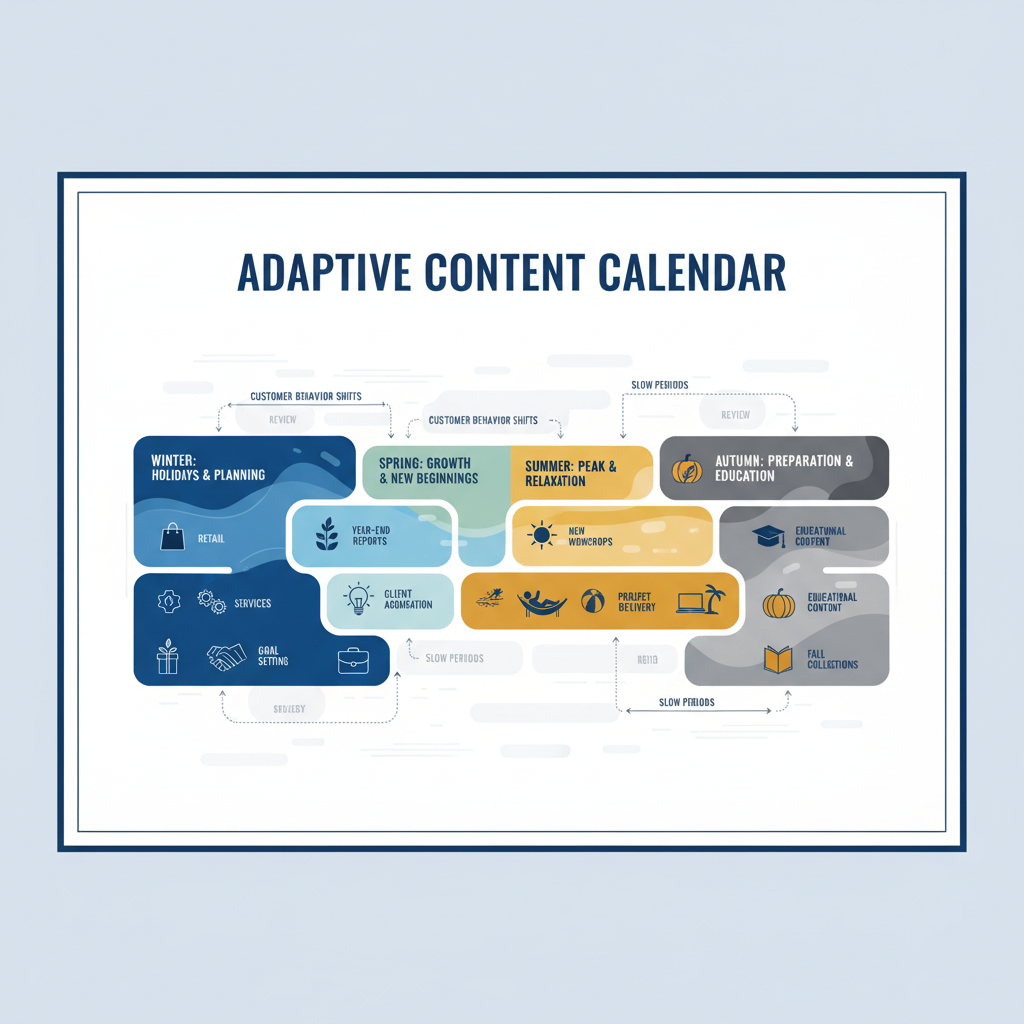
HVAC businesses gets slammed in summer and winter. Retail shops go crazy before holidays. Your consulting practice slows down in July when everyone’s on vacation. Yet most content calendars treat January and December identically.
Real businesses have natural rhythms. Your content calendar should respect those patterns, not fight them.
Business Cycle-Based Blog Content Calendar Templates
Instead of forcing your content into artificial monthly grids, let’s build calendars around how your business actually operates. Here are templates that account for real business patterns.
The Service Business Template
Service businesses typically have busy seasons when everyone needs you and quiet periods when the phone stops ringing. This template adapts to that reality:
Busy Season Strategy:
- Pre-write content during slow periods
- Focus on quick, helpful posts during busy times
- Use customer questions as immediate blog topics
- Keep a running list of common issues for later expansion
Slow Season Strategy:
- Create in-depth educational content
- Plan ahead for the next busy period
- Build evergreen resources
- Document processes and case studies
This approach acknowledges that 15-minute blog posts might be all you can manage during your peak season – and that’s perfectly fine.
The Retail Template
Retail businesses live and die by seasonal cycles. Your content calendar should amplify these natural patterns, not ignore them:
Pre-Holiday Planning (8 weeks out):
- Gift guides and product features
- Behind-the-scenes preparation content
- Customer testimonials and reviews
Holiday Rush (2-4 weeks):
- Quick tips and immediate solutions
- Last-minute gift ideas
- Store hours and logistics updates
Post-Holiday Recovery:
- Thank you posts
- Care and maintenance guides
- Planning content for next season
The key is matching your content planning to your business energy, not fighting against natural cycles.
The Professional Services Template
If you’re a lawyer, accountant, consultant, or other professional, your calendar needs to account for industry-specific busy periods:
Tax Season (for accountants):
- Quick FAQ posts
- Deadline reminders
- Common mistake prevention
Back-to-School (for family lawyers):
- Custody schedule adjustments
- School-related legal issues
- Planning for new school year
Year-End (for business consultants):
- Planning and goal-setting content
- Industry trend analysis
- Resource roundups
Your content calendar should make you look prescient, not behind the curve.
Customer Behavior Pattern Templates
Smart business owners know their customers don’t behave randomly. People search for different things at different times. Your blog content calendar should anticipate and serve these patterns.
The Problem-Solution Cycle
Most industries see predictable problem cycles. HVAC repair spikes with extreme weather. Diet content peaks in January and May. Back-to-school searches start in July.
Build your calendar around these cycles:
- Create problem-awareness content before issues peak
- Publish solution content when people are actively searching
- Follow up with maintenance and prevention afterward
The Research-to-Purchase Journey
B2B customers typically spend months researching before buying. Consumer purchases might happen in days or weeks. Your calendar should match these timelines:
For Long Sales Cycles:
- Educational content throughout the year
- Case studies showing long-term results
- Process and methodology explanations
For Quick Purchases:
- Immediate problem-solving content
- Quick comparison guides
- Local availability and timing information
Understanding these patterns helps you publish the right content at the right time, not just any content consistently.
The Reality-Based Planning System
Here’s a planning system that works with real life instead of against it. This isn’t about being perfect – it’s about being sustainable.
The Three-Horizon Approach
#1 Horizon: This Week (Operational Focus)
- What customer questions came up this week?
- Which problems are you solving right now?
- What’s happening in your industry today?
#2 Horizon: Next Month (Tactical Planning)
- What seasonal changes are coming?
- Which events or holidays affect your customers?
- What educational content would help right now?
#3 Horizon: Next Quarter (Strategic Thinking)
- Are there major industry changes coming?
- Do content gaps need filling?
- What foundational pieces would serve you long-term?
This system lets you plan without over-planning, and adapt without starting from scratch every week.
The Energy-Based Schedule
Instead of forcing yourself to publish every Tuesday, match your posting frequency to your natural energy patterns:
- High energy periods: Create multiple posts, schedule ahead
- Medium energy: Focus on one quality post per week
- Low energy: Repurpose existing content, answer customer questions
This approach acknowledges that content planning for real people means working with your life, not against it.
Template Customization for Your Industry
Every business is different, but most fall into recognizable patterns. Here’s how to customize these templates for your specific situation.
Local vs. National Focus
If you serve local customers, your calendar should reflect local patterns:
- School calendars affecting family businesses
- Local events and festivals
- Weather patterns specific to your area
- Regional economic cycles
Local business blog strategy requires understanding your community’s rhythm, not just national trends.
B2B vs. B2C Timing
B2B content calendars should account for:
- Business travel seasons
- Quarter-end budget cycles
- Conference and trade show schedules
- Holiday slowdowns
B2C calendars need to consider:
- Paycheck cycles
- School schedules
- Shopping seasons
- Family vacation patterns
Tools and Systems That Support Real Planning
You don’t need fancy software to make this work. Simple tools often work better than complex ones.
The Running List Method
Keep three running lists:
- Customer Questions: Every question a customer asks is potential content
- Seasonal Observations: Note what works when, patterns you notice
- Content Ideas: Random thoughts, competitor observations, industry news
These lists become your content source when you’re stuck or short on time.
The Batch and Bank System
When you have energy and time:
- Write multiple posts in one session
- Create templates for common topics
- Develop standard formats for different content types
- Build a bank of evergreen content
This system lets you create more while writing less, banking content for busy periods.
Measuring What Matters
Your blog content calendar success isn’t measured by perfect consistency – it’s measured by business results.
Track metrics that matter:
- Customer questions that decrease (your content is working)
- Sales conversations that reference your blog
- Time saved on repetitive explanations
- Customer confidence and trust levels
Blog metrics that matter focus on business outcomes, not vanity numbers.
Making Your Calendar Sustainable
The best content calendar is the one you’ll actually use six months from now. Here’s how to make it sustainable:
Start Smaller Than You Think
Most people plan too ambitiously. Start with:
- One post every two weeks
- Simple formats you can execute quickly
- Topics you know well
You can always increase frequency later. You can’t recover from early burnout.
Build in Flexibility
Life happens. Your calendar should accommodate:
- Emergency content (crisis response, urgent customer needs)
- Opportunity content (industry news, trending topics)
- Energy shifts (busy periods, slow periods, personal situations)
Rigid calendars break. Flexible ones bend and keep working.
Develop Standard Operating Procedures
Standard operating procedures for your blog make content creation faster and more consistent:
- Research and writing processes
- Publishing and promotion checklists
- Content repurposing workflows
- Quality control standards
When blogging becomes systematized, it becomes sustainable.
The Long Game Perspective
Remember, your blog isn’t a sprint – it’s endurance training for your business. The goal isn’t perfect execution; it’s consistent value creation over time.
Your content calendar should make blogging easier, not harder. It should work with your business rhythms, not against them. And it should grow your business while respecting your life.
The templates I’ve shared aren’t perfect solutions – they’re starting points. Customize them for your industry, your customers, and your reality. Test what works, drop what doesn’t, and keep refining.
Most importantly, remember that perfect blog posts aren’t the goal. Helpful, consistent, business-building content is.
Your customers need what you know. Your blog content calendar is simply the system that ensures they get it, when they need it, in a way that works for your real business and your real life.
Start with one template. Adapt it to your situation. Use it for a month. Then refine and improve.
That’s how real content calendars are born – not from generic templates, but from understanding your business, your customers, and yourself.