The Blog Footer Strategy Most Small Businesses Miss
You spend hours crafting the perfect headline, agonizing over your opening paragraph. You polish every word in your blog footer strategy like it’s going to be carved in marble.
But here’s what I’ve learned after helping hundreds of small business owners with their blogs: while you’re obsessing over the top of your posts, you’re completely ignoring the goldmine at the bottom.
Your blog footer isn’t an afterthought. It’s where conversions actually happen.
Think about it. Someone just read your entire post. They made it all the way to the end. That means they’re interested. They’re engaged. There are warm leads sitting right there in your digital hands.
And what do most businesses do? They let these readers disappear into the internet ether with a simple “Thanks for reading!”
That’s like opening your store, helping a customer find exactly what they need, then walking away when they’re ready to buy.
Why Your Blog Footer Strategy Matters More Than You Think
Let’s get real for a minute. You’re not running a blog for fun. You are running a business.
Every piece of content you publish should serve a purpose. And if someone reads your entire post, that’s the warmest lead you’re going to get from content marketing.
These aren’t random visitors who bounced after three seconds. These are people who invested their time in consuming your content. They’ve demonstrated interest. They trust you enough to read what you have to say.
Yet most small business owners treat the end of their blog posts like the end of a movie. Credits roll, lights come up, everyone goes home.
Here’s the thing though: your blog post ending isn’t the credits. It’s the moment when your ideal customer is most primed to take action.
When I audit blogs for small businesses, I see the same pattern over and over. Great content that just… stops. A missing call to action. No next step. Not capturing that momentum and turn it into business results
It’s like letting your business blog die a slow death, one missed opportunity at a time.
The Three Blog Footer Elements That Convert Readers to Customers
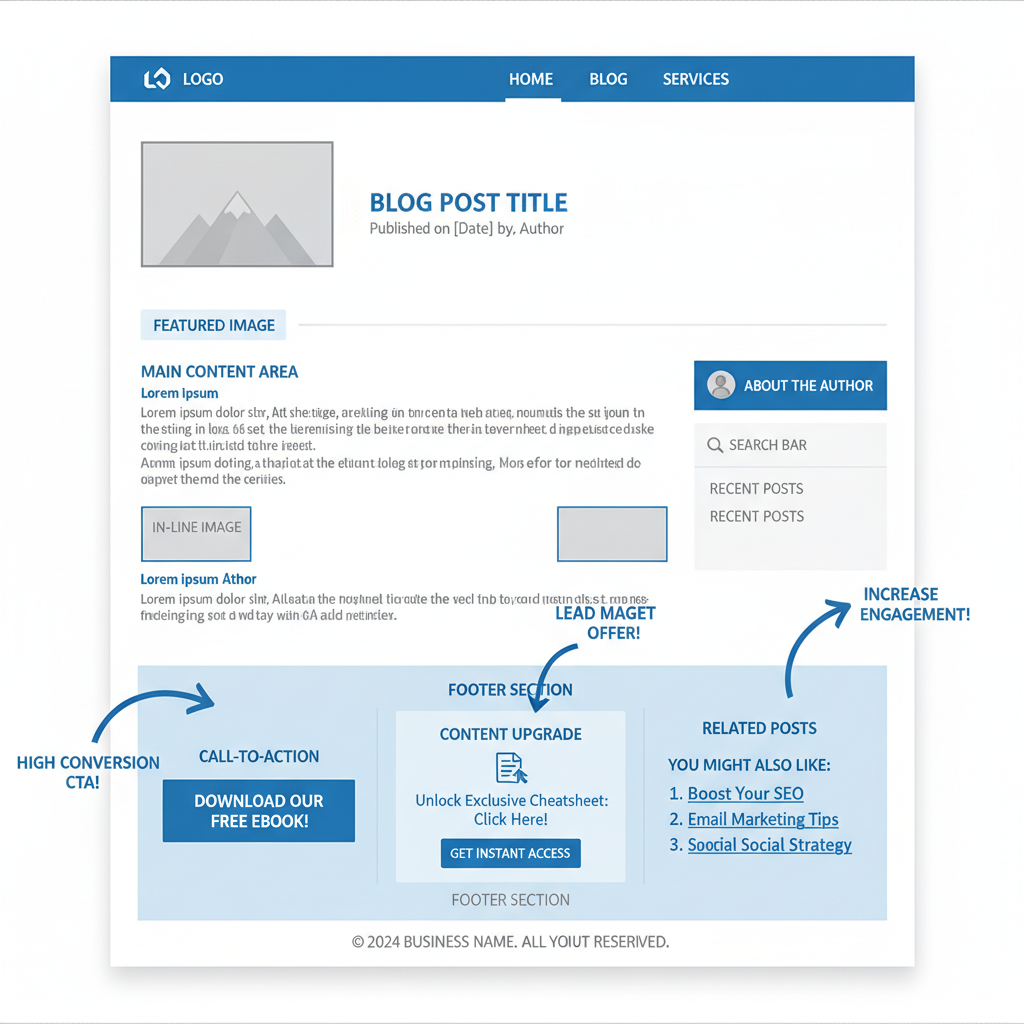
After analyzing hundreds of successful blog strategies, three elements consistently show up in the footers of posts that actually drive business results.
These aren’t complicated. They don’t require fancy plugins or technical wizardry. They’re simple additions that can double or triple the business value you get from every post you publish.
Element #1: The Relevant Next Step Call-to-Action
This isn’t about slapping “Buy Now!” at the end of every post. That’s amateur hour.
Your call-to-action needs to match the intent and interest level of someone who just consumed your content.
If they read a post about solving a specific problem, offer them a free resource that goes deeper into that solution. If they read about a service you provide, invite them to schedule a consultation.
The key word here is “relevant.” Your footer CTA should feel like a natural next step, not a jarring sales pitch.
For example, if you write a post about common plumbing problems, don’t immediately ask them to book a $500 service call. Instead, offer a free checklist of “10 Things Every Homeowner Should Check Before Calling a Plumber.”
This approach respects where they are in their customer journey while giving you a way to capture their contact information and continue the conversation.
Remember, knowing when your blog should sell is just as important as knowing how to sell.
Element #2: The Strategic Content Upgrade
Content upgrades are lead magnets specifically created for individual blog posts. They take the topic you just covered and offer something extra, something downloadable, something valuable.
This is where your blog footer strategy gets surgical in its precision.
Every post should have its own upgrade that directly relates to what you just taught. This isn’t a generic newsletter signup. It’s a specific resource that enhances the post they just read.
The beauty of content upgrades is that they convert at much higher rates than generic opt-ins because they’re contextually relevant.
Someone who just read your post about social media marketing for restaurants is much more likely to download “The 30-Day Social Media Content Calendar for Restaurants” than they are to subscribe to your general marketing newsletter.
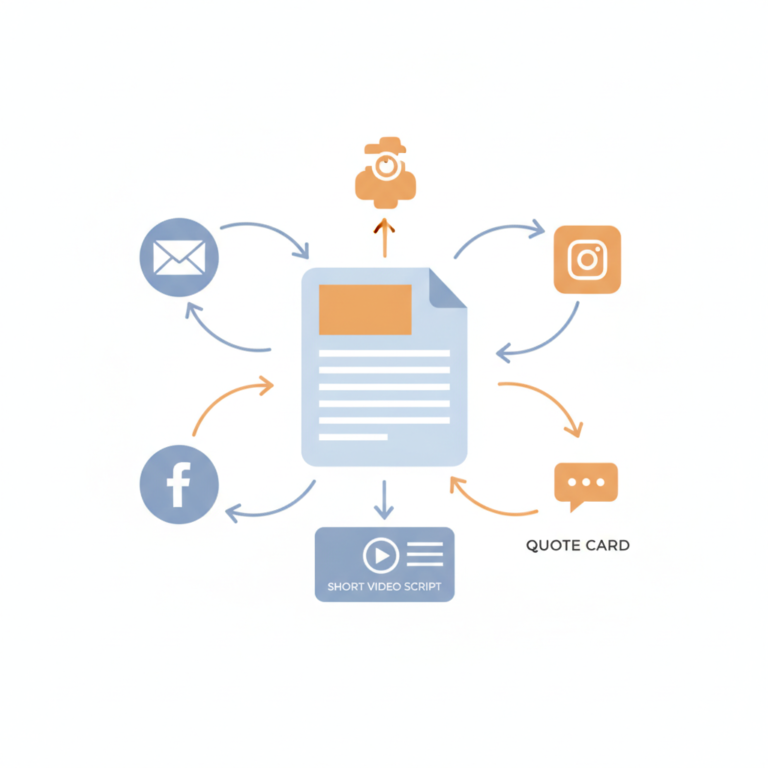
Creating these doesn’t have to be overwhelming. You can create more while writing less by repurposing and expanding on the content you’ve already created.
Turn your blog post into a checklist. Expand it into a worksheet. Create a template based on your examples.
Element #3: The Smart Cross-Promotion Section
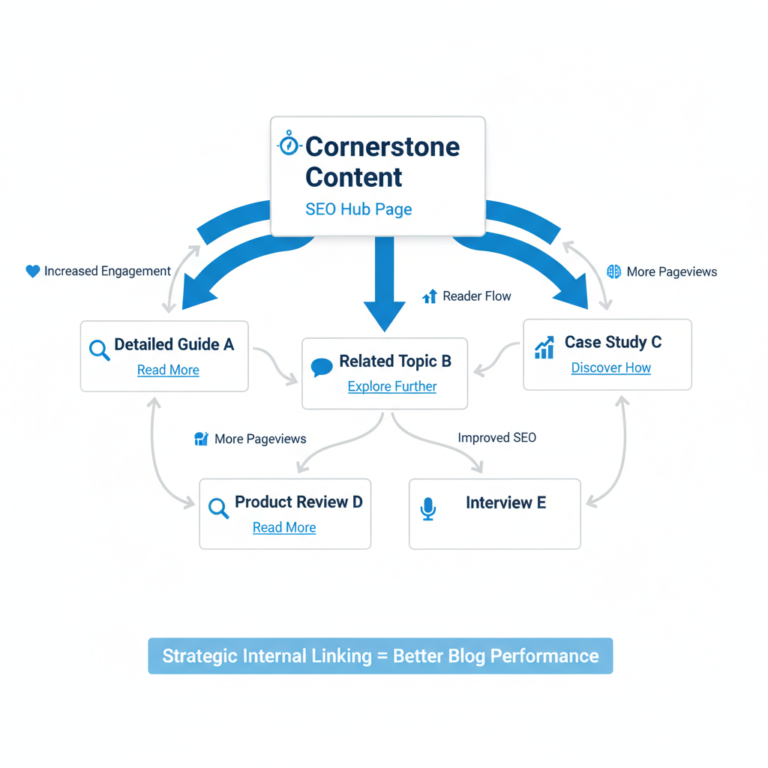
This is where you guide interested readers to other relevant content on your site. But here’s where most people mess it up: they just throw in a “Related Posts” widget and call it a day.
Smart cross-promotion is strategic. You’re not just suggesting random posts. You’re creating a pathway that leads deeper into your expertise and closer to a purchasing decision.
Think of it as building a content funnel within your blog. Someone interested in this topic would logically be interested in that topic next. Someone who has this problem probably also struggles with that related issue.
For instance, if someone just read about email marketing, they might benefit from your post about the email list strategy hidden in your blog posts. It’s a natural progression that keeps them engaged with your content.
The goal is to turn a single-post visitor into a multi-post reader. And multi-post readers are much more likely to become customers than drive-by visitors.
How to Implement Your Blog Footer Strategy Without Overwhelming Yourself
I know what you’re thinking. This sounds like a lot of extra work added to an already challenging content creation process.
You’re busy running a business. You’re already struggling to plan content for real life, and now I’m telling you to add more elements to every post?
Here’s the thing: once you set up the framework, it becomes automatic.
Start simple. Pick one element and implement it across all your future posts. Get comfortable with that before adding the next layer.
Most small business owners try to do everything at once and end up doing nothing well. Perfect is the enemy of good when it comes to blog content.
Begin with relevant calls-to-action. Every post should end with a clear next step for interested readers. That alone will improve your results significantly.
Once that becomes habit, add content upgrades to your most popular posts. You don’t need to create 50 lead magnets overnight. Start with your top-performing content and work backward.
Finally, implement smart cross-promotion by manually selecting 2-3 related posts for each new article you publish. This takes two minutes and can dramatically increase your average time on site.
Common Blog Footer Strategy Mistakes That Kill Conversions
Even when small business owners try to optimize their post endings, they often make mistakes that actually hurt their conversion rates.
The biggest mistake? Offering too many options. Decision paralysis is real. When you give readers five different calls-to-action, they’re more likely to choose none of them.
Keep it simple. One primary action per post.
Another common error is generic messaging. “Subscribe to our newsletter” doesn’t tell me what I’ll get or why I should care. “Get weekly marketing tips that actually work for small businesses” is much more compelling.
And please, stop asking people to “like and share” your content unless you’re running a high school social media club. Business readers want value, not engagement theater.
Your footer should feel professional and purposeful, not desperate for attention.
Measuring the Success of Your Blog Footer Strategy
You can’t improve what you don’t measure. But don’t get caught up in vanity metrics that don’t drive business results.
Focus on metrics that actually matter for your business goals. Click-through rates on your calls-to-action. Email signups from content upgrades. Traffic to related posts.
Most importantly, track how blog readers convert to customers. Use your analytics to see which posts generate leads that turn into sales.
This data will help you understand which topics resonate most with your ideal customers and inform your future content topic strategy.
Set up simple tracking for each element of your footer strategy. You don’t need complex attribution modeling. Just basic data to see what’s working and what isn’t.
Making Your Blog Footer Strategy Work Long-Term
The key to long-term success with any content strategy is consistency. You can’t implement these elements on three posts and expect miraculous results.
But you also can’t treat every post like a special snowflake that needs its own custom footer strategy. That’s not sustainable for busy business owners.
Create templates and systems. Standard operating procedures for your blog will help you maintain quality without burning out.
Develop a few different footer templates for different types of posts. Service-focused posts get one type of CTA. Educational posts get another. Problem-solving posts get a third option.
This systematic approach means you’re not starting from scratch every time you publish. You’re following a proven framework that you can execute quickly and consistently.
Remember, you can create effective content in 15 minutes when you have good systems in place.
Your Next Steps for Better Blog Footer Strategy
Here’s what I want you to do right now: go look at your three most recent blog posts. What happens at the end of each one?
If the answer is “nothing much,” you’re leaving money on the table.
Start with your next post. Add one clear, relevant call-to-action that offers genuine value to someone who just consumed your content.
Don’t overthink it. Don’t make it perfect. Just make it better than doing nothing.
Your blog footer strategy doesn’t have to be revolutionary. It just has to be intentional.
Because here’s the truth: the readers who make it to the end of your posts are already convinced you know what you’re talking about. They’re already interested in what you offer.
Your job is simply to make it easy for them to take the next step.