Blog SEO Basics for Small Business Owners Who Hate SEO

Look, I get it. You started your business blog with good intentions, but somewhere between wrestling with keywords and trying to decode Google’s latest algorithm update, you threw in the towel. The whole blog SEO thing feels like learning a foreign language you never wanted to speak.

But here’s the thing: you don’t need to become an SEO wizard to get your blog working for your business. You just need to nail a handful of basics that actually matter. Think of this as blog SEO for people who’d rather focus on running their business than gaming search engines.

Why Blog SEO Matters (Even When You Hate It)

Before we dive into the how, let’s talk about the why. Your blog posts are like little fishing lines cast into the vast ocean of Google searches. Without basic SEO, those lines don’t have bait.

Every day, your potential customers are typing questions into search boxes. Questions about problems you solve, services you offer, and expertise you have. If your blog posts aren’t optimized for those searches, you’re invisible.

The good news? You don’t need to master every SEO trick in the book. Most small businesses can see real results by focusing on just five core areas.

The Five Blog SEO Basics That Actually Move the Needle

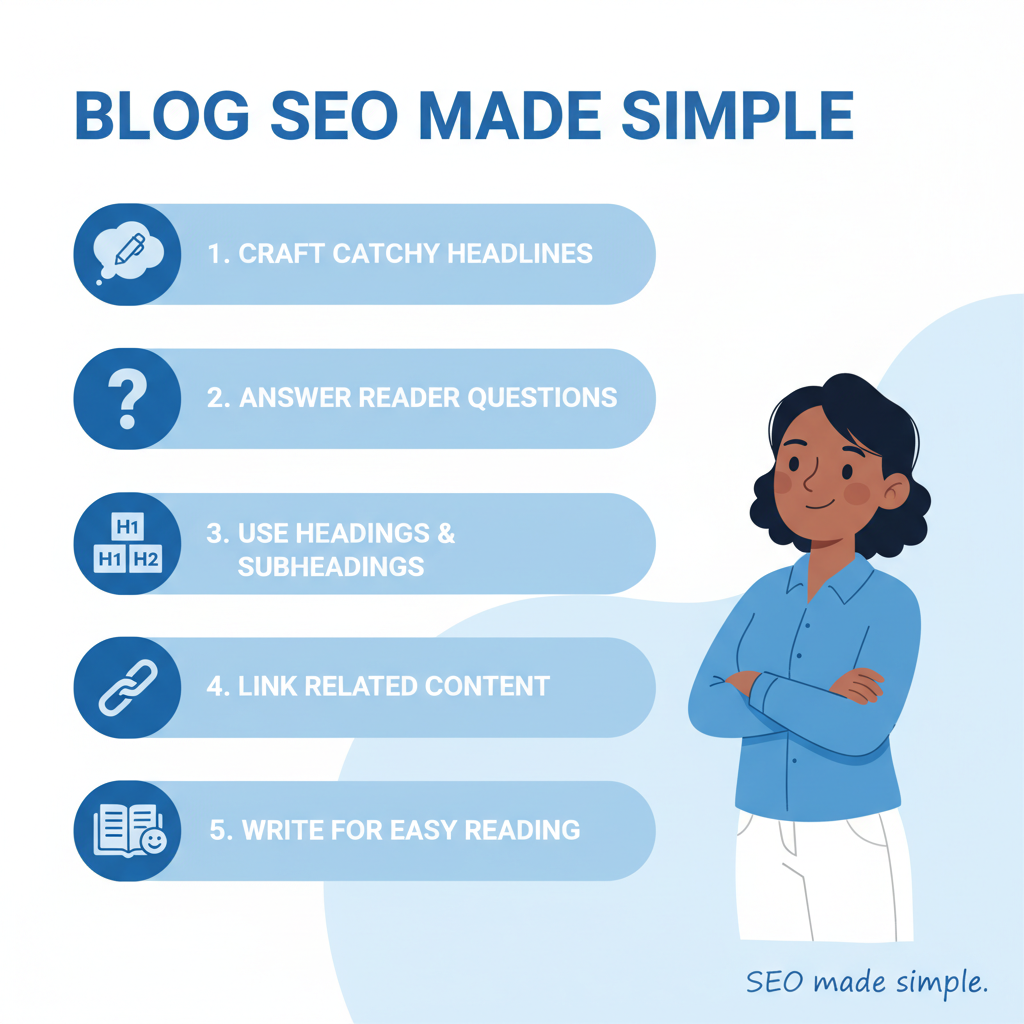
Forget everything you’ve heard about complex SEO strategies. These five fundamentals will handle 90% of what you need.

1. Write Headlines That Match What People Search

Your headline is your blog post’s first impression with both readers and search engines. But too many business owners write clever headlines that nobody searches for.

Instead of “Revolutionizing Your Morning Routine,” try “5 Simple Morning Habits for Busy Entrepreneurs.” The second version uses words people actually type into Google.

Here’s a simple test: before publishing, ask yourself if your headline sounds like something a customer would search for. If you’re unsure, check out our guide to writing blog headlines that actually get clicked.

2. Answer Real Questions in Your First Paragraph

Google has gotten scary good at understanding what people want. When someone searches “how to choose accounting software,” Google wants to serve up content that actually answers that question.

Your first paragraph should clearly state what problem you’re solving or question you’re answering. No fluff, no beating around the bush. Just straight talk about what readers will learn.

This approach aligns perfectly with choosing blog topics that drive business results – you’re focusing on what your customers actually need to know.

3. Use Headings Like a Table of Contents

Those H2 and H3 headings aren’t just for show. They’re like a roadmap that helps both readers and search engines understand your content structure.

Break your content into logical sections with descriptive headings. “Common Mistakes” works better than “Don’t Do This.” “Pricing Options” beats “What It Costs.”

Think of headings as the chapter titles in a book. They should give readers a clear idea of what’s coming next.

4. Link to Your Other Helpful Content

When you mention a topic you’ve written about before, link to it. This helps readers find more value and shows search engines that your site has depth.

For example, if you’re writing about content planning, naturally link to your post about content planning for real people with real lives. It’s helpful for readers and good for SEO.

The key word here is “naturally.” Don’t force links where they don’t belong.

5. Make Your Content Easy to Read

Google cares about user experience. If people bounce off your blog because it’s hard to read, that hurts your search rankings.

Keep paragraphs short. Use bullet points. Break up walls of text. Write like you’re explaining something to a friend over coffee.

Remember, even a quick 15-minute blog post can be effective if it’s well-structured and easy to consume.

The Blog SEO Mistakes That Kill Small Business Results

Now that we’ve covered what to do, let’s talk about what not to do. These common mistakes can torpedo your SEO efforts.

Keyword Stuffing (Still a Thing, Unfortunately)

Some business owners think SEO means cramming their main keyword into every other sentence. This makes your writing sound robotic and actually hurts your rankings.

Instead, write naturally and let keywords flow organically. If you’re writing about “small business accounting tips,” that phrase might appear 3-4 times in a 2000-word post. That’s plenty.

Ignoring Your Local Market

If you serve customers in specific locations, your blog should reflect that. A post about “Best Marketing Strategies” is good, but “Best Marketing Strategies for Denver Restaurants” is better for local search.

This is especially important for service-based businesses. Check out our thoughts on local business blog strategy for more insights.

Publishing Perfect Posts Rarely

Here’s a truth that might surprise you: a good blog post published today beats a perfect blog post published never. Consistency matters more than perfection in the SEO game.

Google rewards sites that publish helpful content regularly. The case against perfect blog posts makes this point beautifully – done is better than perfect.

Technical SEO You Can’t Ignore (But Can Handle Quickly)

I promised to keep this simple, but there are a few technical elements you can’t completely ignore. The good news? Most can be handled in minutes, not hours.

Page Loading Speed

Slow websites kill conversions and search rankings. If your blog takes forever to load, people leave before reading your brilliant insights.

Keep images optimized (compress them before uploading), choose a decent hosting provider, and avoid loading your pages with unnecessary plugins.

Mobile-Friendly Design

More than half of web traffic comes from mobile devices. If your blog looks terrible on phones, you’re losing potential customers and search rankings.

Most modern WordPress themes handle this automatically, but test your site on your phone to make sure everything looks good.

Basic Site Structure

Your blog should be easy to navigate. Use categories that make sense to your customers, not just to you. Blog categories that actually help customers find you covers this in detail.

Think about how a first-time visitor would explore your content. Can they easily find related posts? Is your navigation logical?

Measuring Success Without Losing Your Mind

Here’s where many business owners get overwhelmed. They start tracking every possible metric and lose sight of what actually matters for their business.

Focus on these key indicators:

  • Organic traffic growth over time
  • Which posts bring in the most visitors
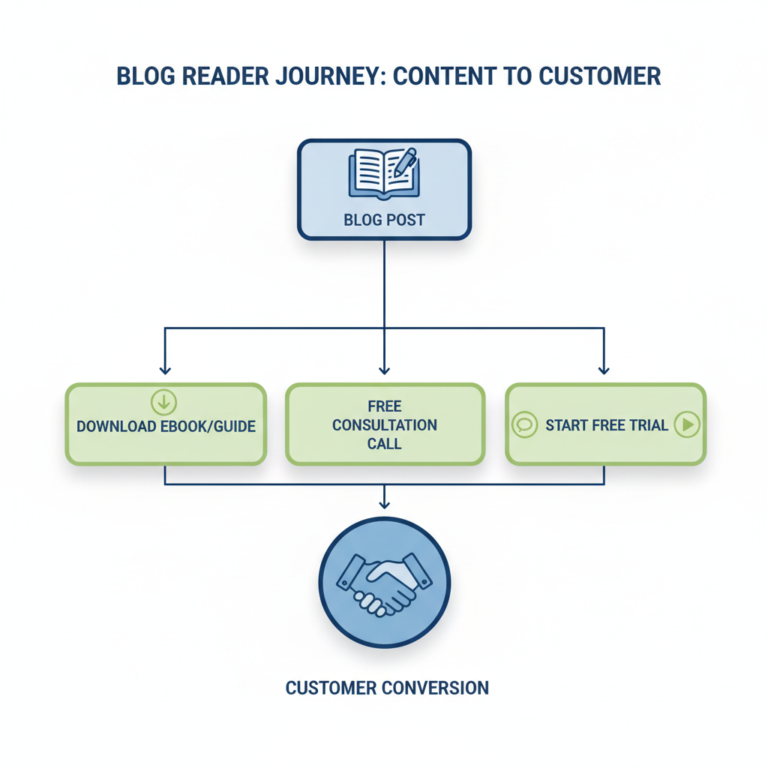
  • How blog visitors convert to leads or customers
  • Time people spend reading your posts

For a deeper dive into this topic, our post on blog metrics that matter breaks down exactly what to track and why.

Don’t obsess over daily fluctuations. Look at trends over months, not days. SEO is a marathon, not a sprint.

Creating Your Sustainable Blog SEO System

The best blog SEO strategy is one you can actually stick with. Here’s how to build a system that works with your real life, not against it.

Start With a Content Plan

Random blog posts don’t build SEO momentum. You need a plan that aligns with what your customers search for and what your business offers.

Real-life content planning doesn’t have to be complicated. Even a simple monthly calendar of topics helps you stay consistent and focused.

Batch Your SEO Tasks

Instead of agonizing over SEO for every post, batch these tasks:

  • Research 10-15 headline ideas at once
  • Optimize images in batches
  • Add internal links during monthly content reviews
  • Update old posts quarterly, not constantly

This approach aligns with the create more, write less philosophy – work smarter, not harder.

Focus on Consistency Over Perfection

Publishing one helpful blog post per week with basic SEO beats publishing one “perfect” post per month. Google rewards consistent publishers.

If weekly feels overwhelming, start with twice monthly. The key is picking a schedule you can maintain. How often should you blog for business success covers this decision in detail.

When to Stop Worrying About SEO

Here’s something most SEO guides won’t tell you: sometimes you should ignore SEO entirely.

If you’re writing a post specifically for your email subscribers or addressing a customer service issue, don’t force SEO into it. Know when your blog should sell and when it shouldn’t.

Some content serves your existing customers, not search engines. That’s perfectly fine. Not every post needs to be an SEO play.

Getting Started Without the Overwhelm

If you’re feeling overwhelmed, start here:

  1. Pick your next blog post topic based on a question customers ask
  2. Write a headline that includes words people would search
  3. Structure your post with clear headings
  4. Link to one other relevant post on your site
  5. Publish it and move on

That’s it. No keyword research tools, no competitor analysis, no technical audits. Just good content that serves your readers and follows basic SEO principles.

Over time, you can layer on more sophisticated techniques. But these basics will take you surprisingly far.

Remember, the goal isn’t to become an SEO expert. The goal is to make your blog work for your business without consuming your life. Focus on the fundamentals, stay consistent, and let the results build over time.

Most importantly, don’t let SEO kill your authentic voice. Your personality and expertise are what make your blog valuable. Blog SEO should enhance that value, not replace it.

Similar Posts

Leave a Reply

Your email address will not be published. Required fields are marked *