Mastering AI-Driven Field Ops: Automations That Save Time in the Field
Winter-Ready Field Ops: AI Automations for Proactive Maintenance and Time Savings
Winter challenges and the case for AI-powered field operations
Winter puts maintenance teams under pressure. Freezing temperatures, snow, ice, and limited daylight slow response times and conceal emerging problems. Equipment that runs hot in summer can fail when the temperature drops, and remote sites become harder to monitor. The result is more trips, longer dispatch times, and higher repair costs.
Against these headwinds, AI-powered field operations offer a way to stay ahead of faults, reduce time in the field, and optimize every mile you drive. By pairing sensors, weather data, and intelligent workflows, your team can predict failures, detect anomalies early, and automate routine tasks. The payoff is not just fewer trips, but more predictable maintenance windows, safer operations, and happier customers.
The AI toolkit for winter-ready field ops
To build winter-ready workflows, assemble an AI toolkit that combines predictive power, real-time visibility, and automated decisioning. These components work together to reduce reactive trips and keep assets healthy all season long.
- Predictive maintenance models that forecast component wear, battery health, and hydraulic or fluid integrity before setbacks occur.
- Remote sensing and edge computing to collect data at the source and flag anomalies without sending technicians to site unnecessarily.
- Automated alerts and fault codes tied to clear maintenance actions, so dispatch knows what to fix and when.
- Weather-aware scheduling that adapts plans to forecasted storms, road closures, and daylight hours.
- Smart dispatch and route optimization that minimize fuel use and exposure to dangerous conditions.
- Computer vision and mobile data capture for remote inspections, enabling technicians to assess equipment via photos or video before a visit.
Together, these elements empower a proactive maintenance posture. They also create a feedback loop: the more you learn from winter-driven data, the sharper your predictions become, and the more efficient your field ops can be.
Proactive maintenance workflows you can deploy now
Proactive workflows transform reactive responses into scheduled, risk-based maintenance. Start with a few high-impact use cases and scale as you learn.
- Asset health baselines: establish seasonal baselines for critical equipment (e.g., heating systems, pumps, electrical panels) and set alert thresholds that reflect winter operating reality.
- Predictive triggers: configure models to predict imminent failures (like battery degradation or lubrication issues) and auto-create maintenance tickets before breakdowns occur.
- Seasonal maintenance windows: align maintenance calendars with expected weather patterns to minimize downtime and maximize throughput when conditions permit.
- Inventory readiness: link predictive outputs to spare parts stock levels, ensuring you have the right components on hand for likely winter failures.
- Remote troubleshooting playbooks: assemble step-by-step instructions and automation for common issues that technicians can complete from the field or remotely.
Practical tip: start with three to five prioritized assets and measure a defined improvement in MTTR (mean time to repair) and on-site time within the first quarter. This keeps early pilots focused and yields tangible ROI faster.
Remote monitoring: catching issues before they become trips
Remote monitoring shines in winter when travel is limited or hazardous. With the right sensors and dashboards, you can spot signs of trouble without sending a crew into a snowstorm.
- Real-time sensor data: monitor temperature, vibration, current, voltage, and fluid levels to detect early warnings of overheating, misalignment, or leaks.
- Alarms and escalation rules: configure tiered alerts so frontline teams receive actionable insights and higher-level alerts trigger proactive dispatch.
- Do-not-travel thresholds: automatically trigger a remote diagnostic check or a safe, scheduled site visit when conditions allow.
- Digital twin snapshots: create lightweight, cloud-hosted models of critical assets that managers can review remotely to understand health at a glance.
- Remote inspections: enable technicians to capture photos, videos, or sensor readings from afar, reducing the need for recurring site visits during severe weather.
The goal is to convert data into confidence. When you can see a problem brewing in a heater circuit or a hydraulic pump before it fails, you can intervene with a planned, low-risk maintenance action rather than a costly emergency repair.
Smarter dispatch and route planning in winter
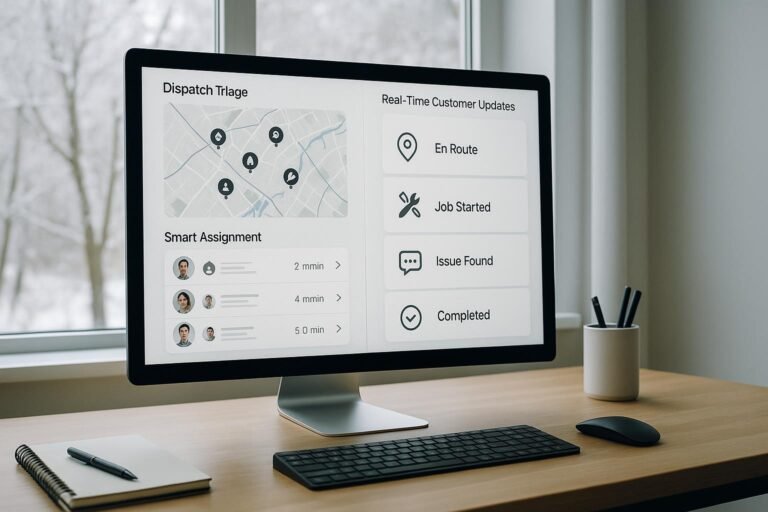
Winter conditions demand smarter dispatch. AI-powered routing considers weather, road conditions, daylight, and crew availability to minimize risk and maximize service levels.
- Weather-aware routes: factor snow plows, ice, or wind gusts into travel times and select safer or faster options accordingly.
- Dynamic dispatch: reallocate personnel and assets automatically when new issues arise or when some sites become inaccessible.
- Priority-driven scheduling: prioritize critical customer sites or high-risk assets, ensuring essential services are kept running even during storms.
- Truck and crew pairing: optimize for energy efficiency and equipment readiness, aligning the best crew with the most urgent task.
- ETA transparency: share realistic arrival times with customers to manage expectations and improve satisfaction during winter disruptions.
When dispatch is guided by AI-powered field operations insights, you reduce travel time, limit exposure to dangerous conditions, and lower fuel consumption. The result is quicker problem resolution and more predictable service windows for clients.
Measuring ROI and success metrics
ROI from AI-powered field operations in winter isn’t just about savings on fuel or fewer trips. It’s about measurable improvements in reliability, safety, and customer experience.
- Reduced field visits: track the decrease in non-essential trips tied to remote monitoring alerts and predictive maintenance triggers.
- MTTR and MTBF improvements: quantify faster repairs and longer asset life after preventive interventions.
- On-time completion rate: monitor jobs completed within the planned window, especially during storms or heavy snow days.
- Fuel and emissions: calculate savings from smarter routing and fewer empty miles.
- Asset uptime during winter: measure the percentage of time critical assets stay online in adverse conditions.
- Customer impact: collect customer feedback and measure service level improvements during peak winter periods.
Link the metrics to a clear business case: define a baseline, set quarterly targets, and publish a simple dashboard that translates AI outputs into actionable performance signals for field managers.
Practical steps to implement winter-ready AI workflows
A practical, phased approach reduces risk and speeds time to value. Here’s a straightforward playbook you can adapt.
- Asset inventory and criticality mapping: list all field assets, assign risk scores for winter operation, and identify top targets for AI intervention.
- Data foundation: ensure sensor coverage, data quality, and reliable connectivity. Prioritize data that correlates with winter risk (temperature, moisture, vibration, and battery health).
- Platform choice: select tools that support predictive maintenance, remote monitoring, and automated workflow orchestration. Ensure compatibility with existing ERP or field service management systems.
- Model development: train simple predictive models first (e.g., battery health degradation) and expand to multi-sensor anomaly detection as you gain data.
- Rule-driven automation: pair AI outputs with automated actions—generate work orders, adjust dispatch, or trigger remote troubleshooting steps.
- Pilot and learn: run a 60- to 90-day pilot on a small set of assets, track ROI, and refine thresholds based on ground results.
- Scale with governance: build standardized playbooks, escalation paths, and change-control processes to support broader rollout.
For best results, align winter-ready AI workflows with your organization’s service-level commitments and safety protocols. The combined effect is a resilient operation that keeps customers serviced and crews safer in difficult conditions.
Keep data secure and compliant
As you deploy AI-powered field operations, safeguard sensitive data and follow industry standards for security and privacy. Encrypt data in transit and at rest, apply role-based access controls, and audit usage regularly. When you share dashboards with customers or partners, use secure portals and ensure data minimization by exposing only what’s necessary.
Conclusion and next steps
Winter can threaten uptime, but it also presents an opportunity to rethink field operations with AI-powered field operations at the center of proactive maintenance. By combining predictive maintenance, remote monitoring, and intelligent dispatch, teams can cut unnecessary trips, shorten repair times, and keep essential services running even when the weather turns harsh.
Start small, anchor your efforts in measurable outcomes, and scale as you learn. With the right data, tools, and playbooks, your winter strategy becomes less about scrambling through storms and more about predictable, efficient, and safer field operations all season long.