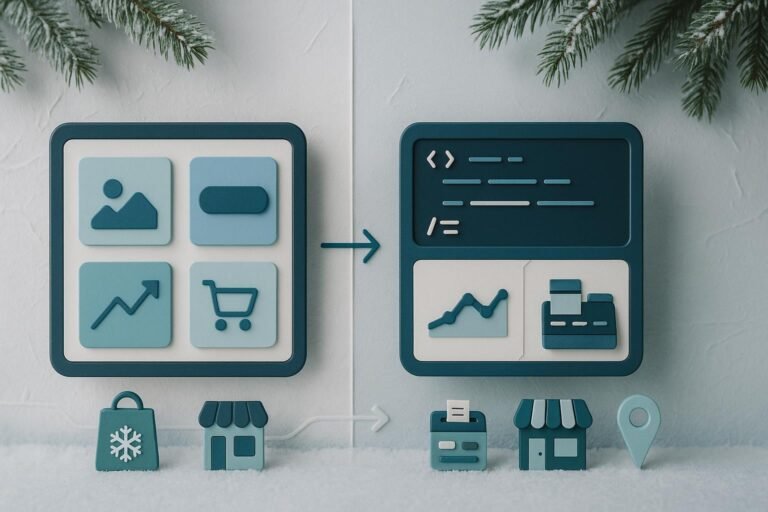
Building a Resilient Automation Stack: Integrating Apps Without Headaches
Winter-Proofing Your Automation Stack: Why Resilience Matters in Q4
As year-end goals approach, organizations face a surge of activity: promotions, seasonal launches, and heavier workloads across critical apps. A winter-proof automation stack is essential for seamless app integrations and reliable workflows when demand peaks. This guide outlines core principles, patterns, and observability practices to design a resilient integration layer, with practical steps you can implement in your Q4 deployments. By focusing on resilience, you build a resilient automation stack that absorbs stress, recovers quickly from failures, and keeps business processes moving.
Q4 pressures and why resilience matters
- Higher traffic across APIs, queues, and integration points as customers shop during holidays.
- Coordinated launches and batch jobs that can clash if dependencies fail.
- Finite windows for testing and rollback during peak periods.
- Vendor and cloud resource contention around end-of-year budgets and maintenance cycles.
- Increased risk of cascading failures if one integration breaks downstream processes.
In this environment, resilience is not a feature but a design principle. A resilient automation stack minimizes blast radius, reduces manual intervention, and sustains service levels even when components behave imperfectly.
Defining a resilient automation stack
A resilient automation stack is an ecosystem where integrations, workflows, and orchestration pieces operate with fault tolerance, graceful degradation, and fast recovery. Key characteristics include:
- Idempotency and safe retries to prevent duplicate actions during failures.
- Clear boundaries between services to prevent a fault in one area from spreading.
- Observability that turns incidents into actionable insights.
- Deterministic failure handling with well-defined fallbacks.
- Adaptive performance under variable loads, with backpressure and rate limiting.
When these traits are built in from the start, teams gain predictability and responsiveness—core aspects of a truly resilient automation stack.
Core principles for winter-proofing
Modularity and clear interfaces
Design boundaries between services with explicit contracts, versioned interfaces, and explicit data contracts. Isolate critical workflows from non-critical ones so a fault in peripheral paths cannot derail core processes. Use well-defined service boundaries, clear ownership, and decoupled event schemas to reduce blast radius.
- Strong service boundaries with explicit interfaces
- Explicit data contracts and versioning
- Loose coupling through events and messaging
- Clear ownership and containment of failures
Idempotent workflows and graceful degradation
Ensure retries do not duplicate actions and that the system can continue with partial functionality when some components are slow or unavailable. Techniques include:
- Idempotent endpoints and operations
- Graceful degradation and feature toggles
- Backpressure and adaptive rate limiting
- Deterministic compensation paths for failed transactions
Observability that actually helps debugging
Structured logging, cross-service tracing, and unified dashboards
Implement rich, contextual logs with correlation identifiers across services, distributed tracing to visualize call graphs, and unified dashboards that synthesize metrics, traces, and logs for quick triage during Q4 spikes.
Practical integration patterns to avoid headaches
Retry strategies, backoff, circuit breakers, and timeouts
Adopt controlled retry loops with exponential backoff and jitter to avoid thundering herds. Use circuit breakers to protect downstream systems, and enforce timeouts to prevent stalled calls from holding resources indefinitely.
- Event-driven architecture to reduce tight coupling
- Orchestrated vs choreographed workflows for visibility and control
- Dead-letter queues and compensating transactions for failed messages
- Bulkheads to prevent cascading failures
- Feature flags and canary releases for safe deployments
- Load shedding and graceful fallbacks during stress
Roadmap to implement a winter-ready automation stack
Follow a practical, phased plan that proves stability before peak season. The steps below guide you from assessment to production readiness.
- Assess critical paths now: identify end-to-end flows and map dependencies, including third-party services.
- Design for failure from the start: introduce circuit breakers, timeouts, and retries in high-risk paths.
- Implement dead-lettering and compensating actions: ensure failures are visible and remediable.
- Adopt idempotent patterns: audit operations to confirm safe retries without duplicates.
- Introduce gradual rollout: use feature flags and canaries to push changes to a subset of users and monitor effects.
- Improve observability ahead of peak: instrument critical flows, enable tracing, and tune alerting for Q4 anomalies.
- Test under realistic loads: run load and soak tests that mimic holiday traffic, including spikes and plateaus.
- Prepare runbooks and escalation paths: document incident response steps, ownership, and recovery procedures.
Implementation checklist for winter resilience
- Map critical integrations and data contracts
- Introduce idempotent endpoints and operations
- Enable timeouts, circuit breakers, and exponential backoff with jitter
- Set up queues with backpressure and dead-letter routing
- Instrument metrics, traces, and structured logs for all critical paths
- Define SLOs and error budgets for key workflows
- Deploy feature toggles and canary releases for risk-managed updates
- Establish runbooks, alert thresholds, and incident response playbooks
- Conduct end-to-end tests that simulate peak Q4 conditions
- Review vendor SLAs, contingencies, and support coverage for peak periods
Closing thoughts: bake resilience into every release
Winter-proofing your automation stack is about anticipating failures, designing for partial functionality, and maintaining business continuity when volumes surge. By embracing the core principles, patterns, and observability practices outlined here, you create a resilient automation stack that not only survives Q4 stress but enables faster recovery and better customer experiences. Start with a focused assessment of your critical paths, layer in robust fault-handling mechanisms, and elevate visibility across your integration layer. The result is a more predictable, more reliable automation layer that powers success through the holiday season and beyond.