Vertical Playbooks: Custom AI Automations for Retail, Services, and Manufacturing SMBs
Why SMBs need vertical AI playbooks for Retail, Services, and Manufacturing
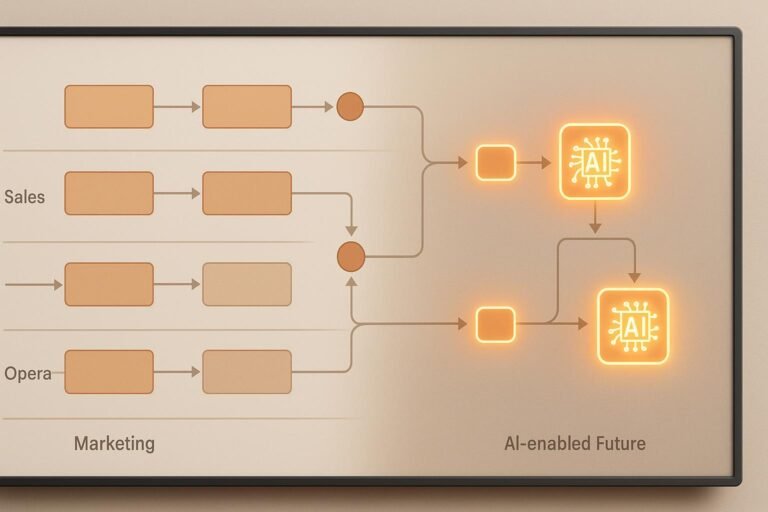
Small and mid-sized businesses operate in fast-changing markets where automation can unlock significant value, but generic AI projects often miss the mark. Vertical AI playbooks for SMBs provide a planning-first, modular approach that ties AI capabilities to the unique workflows of Retail, Services, and Manufacturing. By standardizing how you plan, pilot, and measure automation, these playbooks shorten time-to-value and make ROI detectable early. This guide shows how to design and use vertical playbooks to help SMBs prioritize, align stakeholders, and track impact with clear KPIs.
Plan-first mindset: why strategy matters
Start with a clear problem statement, a defined success metric, and a realistic path to value. Rather than chasing every new AI feature, select a few high-leverage use cases aligned to strategic goals. A planning-first approach surfaces data, governance, and change-management needs before you invest, reducing risk and waste. Vertical playbooks give SMBs a repeatable planning rhythm that scales across departments.
What are vertical AI playbooks for SMBs?
Vertical AI playbooks are industry-focused templates guiding discovery, design, and delivery of AI automations tailored to Retail, Services, or Manufacturing. They combine:
- A prioritized catalog of use cases aligned to common workflows
- Data readiness and integration guidelines
- Decision criteria for selecting vendors and tools
- Change-management and stakeholder engagement plans
- A modular roadmap with quick wins and milestones
Rather than a one-size-fits-all blueprint, these playbooks provide a repeatable framework you can adapt to your organization’s size, data maturity, and goals. The result is a predictable path from idea to impact with governance and measurable outcomes.
Industry focus: Retail, Services, and Manufacturing
Each vertical presents distinct processes and data signals that drive automation opportunities. Here’s where AI can make the biggest difference in each domain.
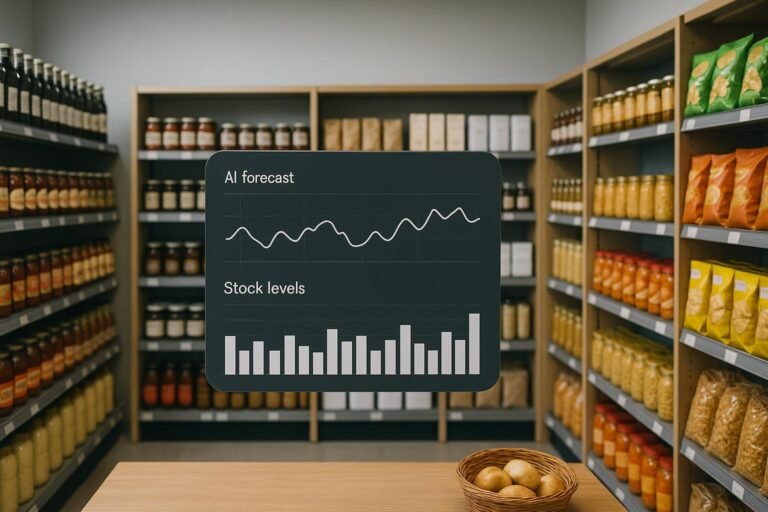
- Retail: inventory planning, demand forecasting, dynamic pricing, checkout and queuing optimization, personalized promotions, and automated customer support. AI helps reduce stockouts, improve margins, and speed the customer journey.
- Services: appointment scheduling, inquiries, billing and invoicing, service routing, and post-service follow-up. AI enhances experience, reduces manual work, and improves utilization.
- Manufacturing: predictive maintenance, quality inspection, supply-chain visibility, energy optimization, and yield analytics. AI drives uptime, reduces scrap, and speeds time-to-market.
Tailoring playbooks to these verticals helps SMBs prioritize use cases that align with core operations and data realities, turning AI opportunities into manageable programs.
Planning and alignment: a practical process
To secure buy-in and momentum, follow a planning sequence that captures inputs from across the organization and translates them into an actionable roadmap.
- Problem framing: write concise problem statements tied to measurable outcomes (time saved, cost reduction, revenue uplift).
- Baseline metrics: identify current performance levels and establish a credible ROI baseline.
- Data readiness: inventory data sources, quality, privacy considerations, and needed integrations.
- Stakeholder map: sponsors, owners, and champions across departments; plan governance rituals.
- Feasibility and impact: estimate effort, risk, and potential value; rank by impact and ease.
- Roadmap alignment: assemble a phased plan with quick wins, mid-term bets, and longer-term capabilities.
This sequence helps SMBs align leadership around a shared vision, limit scope creep, and set expectations for pilots-to-production journeys.
Modular playbook design
Modularity is the core strength of vertical playbooks. Each playbook includes repeatable modules you can mix and match to fit your context and capacity.
- Strategy and governance: guiding principles, success criteria, risk management, and executive sponsorship.
- Use-case catalog: an industry-specific list of prioritized automation opportunities with problem statements, data requirements, and expected outcomes.
- Data readiness: data maps, quality checks, privacy and compliance requirements, and integration pathways.
- Platform and vendor: criteria for tool selection, deployment patterns, and evaluation checklists.
- Delivery and change management: sprint templates, training plans, and stakeholder communication playbooks.
- Measurement and ROI: KPIs, dashboards, and an ROI calculator tailored to each vertical.
- Roadmap and milestones: time-bound milestones, dependency trackers, and review cadences.
With a modular design, SMBs can start small, reuse components, and expand the playbook as data quality improves and new capabilities emerge.
Quick wins by vertical
Fast, tangible wins build credibility and momentum. These practical targets can be pursued in 4–12 weeks per vertical and demonstrate ROI early.
- Retail quick wins:
- Automated price and promotion testing in a limited product group to improve margins
- Inventory reconciliation automation to flag stock-record mismatches
- Chat or SMS bot handling common questions to free agents for complex inquiries
- Checkout optimization with automated upsell prompts
- Services quick wins:
- Automated scheduling and waitlist management to reduce no-shows and improve utilization
- AI-assisted billing reminders and dispute resolution to reduce overdue payments
- FAQ auto-responses or chatbots for common service questions
- Automated routing of requests to the right technician to shorten cycle times
- Manufacturing quick wins:
- Predictive maintenance alerts for high-risk equipment to prevent downtime
- Automated quality checks using image or sensor data to catch defects early
- Energy usage analytics to identify savings opportunities without sacrificing throughput
- Supplier risk indicators and order-dispatch optimization for supply chain stability
These quick wins are intentionally scoped and aligned with planning-first principles, delivering measurable improvements quickly. As you prove value, layer in more ambitious, longer-horizon initiatives.
KPIs and ROI tracking
Clear metrics justify investments and guide optimization. Align KPIs with problem statements and expected outcomes for each use case.
- Time-to-value: days to first measurable impact after a pilot starts
- Cost savings: reductions in manual labor, errors, or waste
- Revenue impact: incremental sales, cart size, or conversion rate improvements
- Operational efficiency: uptime, MTTR, cycle time, throughput
- Customer experience: response time, first-contact resolution, satisfaction
- Data health and compliance: data completeness, accuracy, privacy risk indicators
For each vertical, build a lightweight ROI model that tracks benefits, costs, and payback. Use dashboards for an executive view with drill-downs for operations. Regular reviews help you adjust, retire low-value initiatives, and scale the strongest ROI programs.
Roadmap and governance
A practical roadmap and governance model keep vertical AI programs on track. Structure governance to balance speed with safety, experimentation with reliability, and innovation with compliance.
- Roadmap cadence: quarterly planning cycles, with monthly check-ins and weekly stand-ups.
- Milestone structure: discovery, pilot, production, and scale phases for each use case.
- Executive sponsorship: leadership sponsorship to unblock dependencies and align priorities.
- Cross-functional teams: small squads that include operations, IT, data science, and frontline staff.
- Data and security governance: access controls, auditability, and privacy protections across pilots and deployments.
The governance model balances rapid experimentation with risk management, ensuring each automation earns its place in the broader strategy.
Getting started: a practical checklist
Use this starter checklist to move from planning to action.
- Assemble a cross-functional pilot team with clear roles
- Choose one vertical to start based on pain points and data readiness
- Run a 6–8 week validation sprint testing a high-impact use case
- Develop a one-page ROI case and a lightweight data map for the pilot
- Launch a dashboard to track defined KPIs and share progress with stakeholders
- Document learnings and refine playbook modules for future iterations
Vertical AI playbooks for SMBs are a practical framework you can apply today to drive automation across Retail, Services, and Manufacturing. Start with careful planning, reuse modular components, and pursue a few high-value quick wins to prove the concept. As you scale, the playbook grows with you, helping your SMB stay competitive in an increasingly automated world.