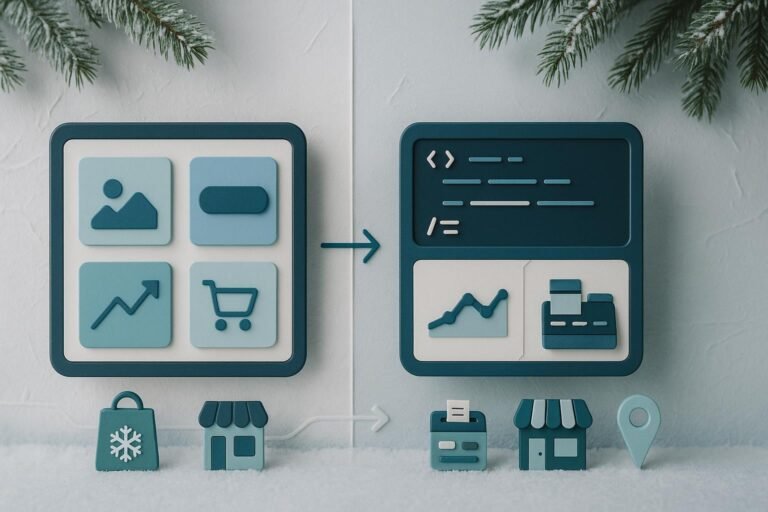
Seasonal AI Playbooks: Simple Automations SMBs Can Deploy Before Peak Buying Seasons
Why SMBs need seasonal AI playbooks before peak buying seasons
The months before the holiday rush bring high demand, tight resources, and the need for efficient marketing and operations. Fall is the ideal window to implement practical AI automations that scale fast and deliver measurable ROI. A seasonal AI playbook helps SMBs anticipate surge requests, align operations with shopper intent, and maintain momentum when demand peaks.
Why fall is the right time to act
- Test and refine high-impact automations before traffic spikes.
- Seasonalize messaging and offers to match gift-buying intent.
- Set up data funnels that reveal ROI early for Q4 iteration.
- Integrate tools with CRM, ecommerce, and helpdesk to minimize disruption.
By front-loading these capabilities, SMBs can finish strong with smoother operations, clearer insights, and stronger conversion momentum during peak weeks.
What a seasonal AI playbook looks like for SMBs
A seasonal AI playbook is a compact, repeatable set of automations aligned to your calendar, built for speed, low risk, and measurable ROI. It emphasizes quick wins, minimal setup, and clear success metrics. It should adapt to your industry, channels, and customer expectations while remaining lightweight enough to implement without a full-scale tech overhaul.
- Goals and KPIs tied to seasonal objectives (revenue lift, order value, renewal rate, support deflection).
- Loosely coupled automations that can be enabled or disabled independently.
- Templates and playbooks that reduce setup time for new campaigns and channels.
- Clear data requirements, privacy safeguards, and governance rules.
- Tracking plans that connect automation actions to business outcomes.
The 4 simplest automations to deploy now
These four quick-win automations deliver impact with minimal setup.
- AI-powered email and SMS campaigns: segmentation, smart send-times, and copy variations to lift open rates and conversions. Prebuilt templates can be customized in minutes, and performance dashboards show which variants outperform others.
- Personalized product recommendations on product pages and in emails
- Holiday landing pages and dynamic content: AI can tailor banners, hero images, and copy to visitor segments, increasing relevance and engagement.
- Smart chatbots for holiday shoppers: deploy ready-to-use chat templates that answer questions, capture leads, and route complex inquiries to humans when needed.
Step-by-step deployment plan: from assessment to automation
- Days 1–2: select 1–2 automations with the highest near-term impact. Confirm success metrics and owners.
- Days 3–5: gather necessary data, connect required tools, and set up basic templates and prompts.
- Days 6–8: configure automation flows, implement guardrails, and ensure privacy compliance.
- Days 9–11: run internal tests and a soft pilot with a small segment of customers or products.
- Days 12–13: measure early results, adjust parameters, and document lessons learned.
- Day 14: launch publicly with a clear opt-out or escalation path and a simple ROI dashboard.
Minimal setup, maximum ROI
The most powerful fall automations are those you can deploy with minimal friction. Focus on 1–3 automations at a time and scale once you prove value.
- Start with tools you already use (CRM, ecommerce platform, email marketing, helpdesk). This reduces integration time and risk.
- Leverage templates and presets from your vendors or community playbooks to accelerate setup.
- Implement guardrails and data privacy checks from day one to avoid compliance issues.
- Set a clear success metric for each automation (for example, a lift in email CTR, time saved per support ticket, or inventory turnover).
- Schedule a quarterly review to refine, retire, or replace underperforming automations.
How to measure ROI and track impact
ROI in a seasonal context should combine top-line impact with efficiency gains. Track both to understand true value and to justify continued investment.
- Revenue lift and conversion rate changes per channel or campaign.
- Average order value and cart abandonment rate improvements.
- Open rates, click-through rates, and engagement scores for automated campaigns.
- Support ticket deflection, average handling time, and customer satisfaction scores.
- Time-to-value and cost per automation deployment.
- Year-over-year improvements in seasonality metrics, including peak day performance and total holiday revenue.
Q4 planning checklist
- Define clear seasonal goals (revenue, customer retention, support efficiency).
- Audit data quality and privacy safeguards to ensure reliable AI outputs.
- Map customer journeys to identify where automations will have the strongest impact.
- Prioritize 1–2 automations for Q4 launch, with a plan to add more in subsequent weeks.
- Prepare content calendars, templates, and prompts for fall campaigns.
- Test integrations with existing systems for a smooth rollout.
- Establish a measurement framework and dashboards to monitor progress in real time.
Common pitfalls and how to avoid them
- Over-automation: preserve human touch in critical moments such as high-value inquiries or post-purchase support.
- Poor data quality: invest in data hygiene and governance before relying on AI outputs.
- Vendor lock-in: choose modular tools that allow you to swap components without rebuilding everything.
- Underestimating training time: allocate time for quick training on prompts, templates, and workflows.
- Misalignment with customer experience: test in a controlled segment to ensure messaging and responses feel authentic.
Conclusion
Fall is the ideal season to establish seasonal AI playbooks for SMBs. By focusing on a tight set of automations, you create a repeatable framework that scales with your holiday goals and beyond. Start small, measure diligently, and iterate quickly to maximize ROI as you ride the holiday wave. If you’re ready to turn AI into a practical competitive advantage this fall, begin with one ready-to-run automation and let results guide the rest. Seasonal AI playbooks for SMBs aren’t optional—they’re a strategic necessity for profitable Q4 performance.