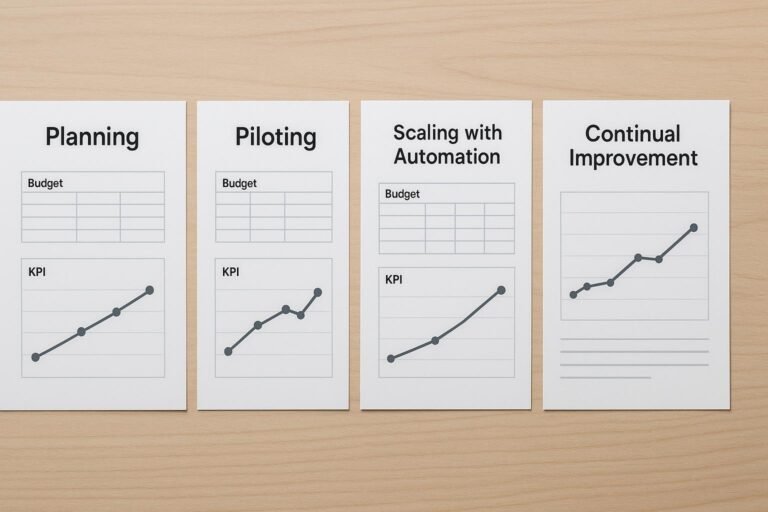
Automation Security Playbook: Detecting and Responding to AI-Driven Threats in SMB Workflows
Introduction: Why SMBs Need an Automation Security Playbook for AI Threats
In many SMBs, security is an afterthought. The rise of AI-powered threats means automated processes can be exploited in real time. This practical, step-by-step playbook weaves security into automation workflows from the start, not after incidents.
This guide is designed for businesses with limited budgets and lean IT teams that rely on automated workflows across HR, finance, sales, and operations. It covers identifying AI-driven threats, practical detection techniques, incident response, and a ready-to-implement rollout plan.
What this playbook is and who it’s for
This automation security playbook for SMBs provides a practical framework you can adopt without a large security budget. It focuses on the unique risks of automation in small and mid-size organizations and offers actionable steps you can implement today.
Understanding AI-Driven Threats in SMB Automation
AI accelerates both legitimate tasks and attacks. In SMB environments, automation touches identities, data, and vendor integrations. Threats include compromised credentials used by automation bots, rogue scripts that exfiltrate data, and AI-generated phishing targeting employees or customers. Because automation operates at scale, a small misconfiguration can cascade across systems.
Common attack vectors in automation pipelines
- Credential abuse in automated pipelines
- Data exfiltration via automated connectors
- Supply chain and vendor integration risks
- Phishing and social engineering amplified by AI
- Insider threats amplified by automation access
Indicators of compromise and early warning signs
- Unusual authentication attempts or credential reuse in automation tools
- Unexplained data access or anomalous data transfers by bots
- New or modified automation scripts with no approved change
- Unexpected asset creation or disconnections in critical integrations
- Unusual login patterns or elevated privileges for automation accounts
Automation as a Security Force Multiplier
Automation can enforce security best practices consistently, reduce manual errors, and enable rapid containment. A well-designed playbook helps teams detect anomalies, respond faster, and demonstrate compliance while leveraging existing tools and cloud services rather than expensive on-premises solutions.
Key Components of an Automation Security Playbook for SMBs
- Asset and workflow inventory
- Identity and access management with least privilege
- Secrets management and secure automation credentials
- Threat detection for automation events
- Incident response playbooks and runbooks
- Change control and rollback procedures
- Logging, auditing, and monitoring
- Vendor and data privacy considerations
- Training, drills, and tabletop exercises
- Zero-trust automation practices
A Practical, Ready-to-Implement Rollout Plan
Follow these phases to roll out the playbook without overwhelming teams or budgets.
- Phase 1 — Discover and baseline (2–4 weeks)
- Inventory all automated processes, bots, and data flows.
- Map data sensitivity and critical assets.
- Identify current security gaps and quick wins.
- Phase 2 — Control foundations (2–6 weeks)
- Implement centralized identity and MFA for critical systems.
- Enforce least-privilege access and role-based controls.
- Set up secure credential storage and rotation (passwordless options if possible).
- Phase 3 — Detection and response in automation (4–8 weeks)
- Enable basic logging across automation tools and data flows.
- Establish alerting for unusual automation activity and access anomalies.
- Develop simple runbooks for common AI-driven threat scenarios.
- Phase 4 — Orchestration of response (2–4 weeks)
- Automate containment where safe (disable risky automation, isolate compromised accounts).
- Create automated recovery steps (rollback to last known good state).
- Coordinate with business continuity plans.
- Phase 5 — Rollout and training (ongoing)
- Publish concise playbooks and runbooks for the team.
- Conduct tabletop exercises and drills with IT and business units.
- Provide user-friendly summaries for leadership on risk and ROI.
- Phase 6 — Review and continuous improvement (monthly)
- Track metrics: mean time to detect (MTTD), mean time to respond (MTTR), number of automation-related incidents.
- Iterate controls based on lessons learned.
- Refresh third-party risk assessments and data flow approvals.
In practice, this rollout plan emphasizes gradual adoption, reuse of existing tools, and a culture of security baked into automation workflows. This is the SMB Automation Security Playbook teams can implement today for tangible results in weeks rather than months.
The Practical Playbook: Detect, Respond, and Recover
Detection techniques and tools for SMB environments
Adopt practical, budget-friendly monitoring that spans automation tools, data flows, and access events. Focus on central logging, alerting for unusual automation activity, and baseline behavior for critical pipelines.
- Centralized logging across automation platforms
- Baseline anomaly detection and simple alerting
- Integrity checks for scripts and connectors
- Short, actionable runbooks for common AI-driven threats
Incident response, containment, and recovery workflows
Containment should be automated where safe, followed by recovery and restoration to a known good state. Align with business continuity plans and communicate status to leadership.
- Containment actions: pause or disable suspicious automation
- Account isolation and credential rotation
- Rollback to last known good configuration
- Documentation and post-incident review
Season-aware Implementation Roadmap for SMBs
Q1 planning and pilot deployment
Translate the rollout phases into a practical, phased implementation. Start with discovery, baseline, and pilot automation in a controlled environment.
Year-round governance and optimization
- Track key metrics: MTTD, MTTR, and automation-related incidents
- Iterate controls based on lessons learned and evolving AI threats
- Refresh vendor risk assessments and confirm data flow approvals
- Provide ongoing training and leadership briefings on risk and ROI