Voice of the Customer to Velocity: Building an AI-Driven Feedback Loop that Cuts Response Time and Improves Products
Introduction — The value of an AI-driven VoC loop for faster product iterations
Organizations that treat customer feedback as a moving target can fall behind. The AI-driven Voice of the Customer feedback loop turns noisy signals into a steady stream of actionable insights, enabling faster, evidence-based product iterations. By automating data collection, interpretation, and prioritization, teams can shorten the time from insight to experiment to impact. In this way, they move from listening passively to acting with velocity.
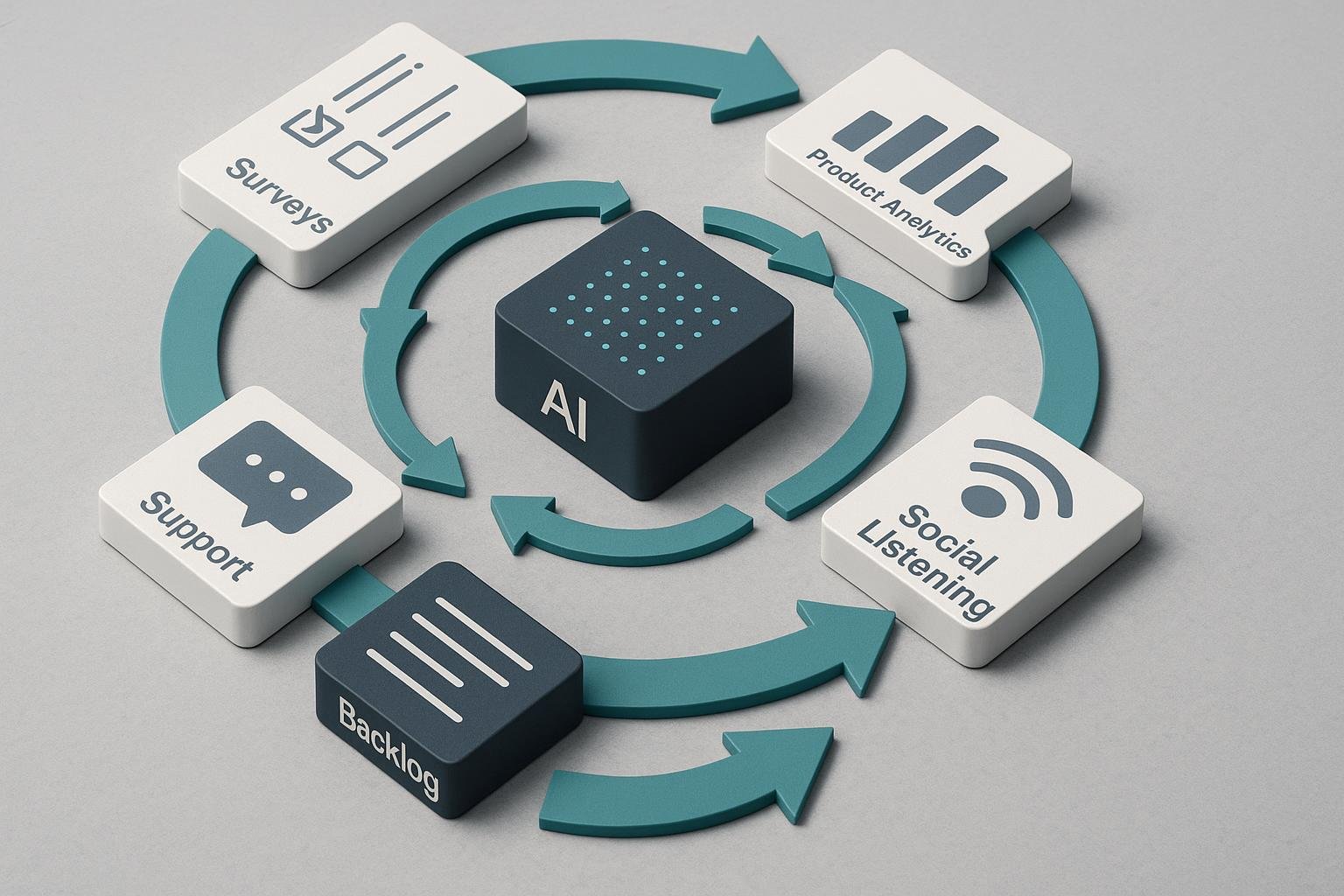
Think of the AI-driven VoC loop as a living system that connects customers, data, and decisions. It continuously gathers inputs from multiple sources, runs AI-enabled analysis to surface patterns, and translates those patterns into concrete backlog work, prototypes, and experiments. The result is a faster cadence of validated changes, reduced guesswork, and a clearer link between customer needs and product outcomes.
In this guide, you will find a practical blueprint for turning VoC data into rapid, data-driven product iterations. We cover strategic alignment, governance, data sources, and an end-to-end pipeline from collection to action, plus a concrete 90-day plan to start delivering faster decisions and measurable impact.
Strategic alignment and governance
Strategy and execution must move in lockstep for an AI-driven VoC loop to deliver real value. Without alignment, insights float above the backlog, and teams chase noise rather than outcomes.
- Define the north star. Tie VoC objectives to product metrics such as time to value, feature adoption, churn reduction, and customer satisfaction.
- Establish cross-functional ownership. Include product management, engineering, design, data science, analytics, customer care, and marketing in a shared governance model.
- Set guardrails for data use. Clarify privacy, ethics, and regulatory considerations. Create dos and don’ts for AI-generated recommendations.
- Create a transparent decision process. Document how insights become actions, who approves them, and how success is measured.
- Prioritize speed with discipline. Balance rapid iteration with quality checks, ensuring that AI outputs are explainable and testable.
When governance is clear, teams move from ad hoc reactions to a repeatable cycle that scales. You’ll avoid the trap of perfecting the process and instead create a reliable rhythm of learning and delivering customer-centric value.
Data sources and data quality
A robust AI-driven VoC loop relies on diverse, high-quality inputs. The more complete your signal set, the more reliable your insights.
- Direct customer feedback. Surveys (CSAT, NPS, product-specific questions), interview notes, and user research transcripts.
- Support and success signals. Tickets, chat transcripts, escalation notes, and knowledge-base interactions.
- Product usage signals. In-app events, feature flags, funnels, drop-off points, and telemetry data.
- Public and owned reviews. App store reviews, social channels, community posts, and product forums.
- Beta and pilot feedback. Early adopter notes, beta-test surveys, and closed-loop experiments.
To maintain data quality, standardize data formats, timestamps, and attribution. Implement data cleansing, deduplication, and schema harmonization. Invest in linking feedback to product context (version, feature, and user segment) so your AI can surface relevant, actionable insights quickly.
End-to-end pipeline: from collection to action
Think of the pipeline as a flow with clear handoffs from data to decisions to delivery. Each stage adds value and reduces friction between customer signal and product impact.
- Collection and ingestion. Stream data from multiple sources into a centralized repository with consistent metadata tagging and time alignment.
- Normalization and enrichment. Cleanse text, normalize sentiment scales, and enrich data with user segments, product context, and telemetry overlays.
- AI-informed insight generation. Use NLP, topic modeling, sentiment analysis, and intent detection to surface patterns, priorities, and root causes.
- Prioritization and triage. Translate insights into actionable backlog items, experiments, or feature tweaks with estimated impact and confidence.
- Experimentation and delivery. Link each action to a hypothesis, assign owners, and plan rapid tests or releases.
- Feedback loop and learning. Measure outcomes, capture learning, and feed results back into the VoC data pool to close the loop.
Automation accelerates the cycle, but human oversight keeps the loop grounded. The goal is not to remove people from decision-making but to enable faster, data-backed decisions with clear accountability and auditable results.
90-day plan to start delivering faster decisions and measurable impact
The following concrete plan is designed to jump-start the AI-driven VoC loop, deliver early wins, and establish a scalable foundation. Each phase builds on the last, with clear milestones and success criteria.
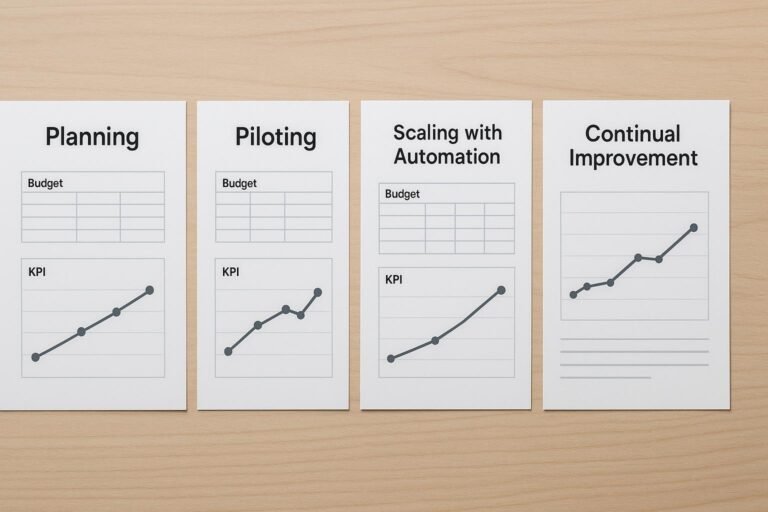
- Weeks 1-4: Foundation and alignment
- Audit data sources and establish a single source of truth for VoC data with consistent schemas and tagging.
- Define governance roles, approvals, and guardrails. Document privacy and ethical guidelines.
- Select core AI tools and establish a lightweight analytics platform for sentiment, topic, and impact analysis.
- Define 3-5 high-impact product areas to pilot the loop against, tied to top business goals.
- Set initial KPIs: time-to-insight, number of actionable insights per week, and early backlog-to-delivery velocity.
- Weeks 5-8: Build and pilot the loop
- Implement the end-to-end pipeline for at least two data streams (e.g., surveys and in-app behavior).
- Deploy AI models for topic extraction, sentiment signals, and intent recognition with explainable outputs.
- Create a triage workflow that converts insights into backlog items or experiments within a standard sprint cadence.
- Run 2-3 pilot experiments tied to the prioritized product areas. Track hypothesis, outcome, and learning.
- Publish lightweight dashboards showing velocity, impact, and confidence across pilots.
- Weeks 9-12: Scale and demonstrate impact
- Scale the pipeline to additional products or features, expanding data sources where needed.
- Refine models, governance, and processes based on pilot feedback and measured outcomes.
- Link VoC-driven decisions to business metrics (retention, activation, revenue) where possible.
- Document case studies of decisions that accelerated delivery and improved outcomes.
- Solidify a repeatable 2-week cadence from insight to prioritized item and action.
By the end of 90 days, you should have a functioning AI-driven VoC loop that routinely surfaces high-priority insights, closes the loop with concrete actions, and demonstrates initial impact on product velocity and customer outcomes.
Metrics to track success
Concrete metrics show whether the loop is delivering on its promise. Track at both process and outcomes levels.
- Process metrics
- Time-to-insight: average time from data collection to a surfaced insight.
- Insight-to-action cycle time: time from insight to backlog item or experiment.
- Backlog throughput: number of items processed per sprint tied to VoC inputs.
- Model performance: precision/recall for topic and sentiment classification; confidence levels.
- Outcome metrics
- Feature adoption and usage lift after targeted changes.
- Net new customers or reduced churn after actions informed by VoC insights.
- Customer satisfaction uplift (CSAT/NPS) attributable to implemented iterations.
- Business impact: quantified improvements in retention, activation, or revenue related to VoC-driven changes.
Choose a small set of leading indicators for rapid feedback, and establish a quarterly review to adjust strategy and governance as you scale the loop.
Operational tips for sustaining an AI-driven VoC feedback loop
To keep the loop healthy and productive, embed practical operating practices into your workflow.
- Start simple, then progressively augment. Begin with a tight scope and proven data sources, then add complexity as confidence grows.
- Prioritize explainability. Ensure AI outputs come with rationale that product teams can act on and communicate to stakeholders.
- Automate where possible, but validate. Use automation for data collection and routing while requiring human checks for high-risk recommendations.
- Align incentives. Tie rewards to learning speed and customer impact, not just feature delivery.
- Document learnings. Maintain a living playbook of decisions, experiments, and outcomes to accelerate future cycles.
The journey from VoC signals to velocity is not magic. It is a disciplined, AI-enabled workflow that connects customer truth to product action with speed and clarity. By investing in strategic alignment, governance, robust data sources, and a repeatable pipeline, your organization can move faster while staying grounded in real customer needs. The AI-driven Voice of the Customer feedback loop is more than a technology stack—it is a way to turn listening into doing, and doing into measurable impact.