AI-Driven Inventory Optimization for Local Retailers: A Hands-On Playbook for Reducing Stockouts
The Case for AI-driven Inventory Optimization in Local Retail
Local shops compete on product availability and speed. AI-driven inventory optimization helps you turn data into smarter stock decisions, reducing stockouts, improving service levels, and freeing time for customer engagement. This guide shows how even smaller inventories can benefit from practical AI, with steps you can implement today.
Laying the Foundation: Data, Goals, and Technology
A reliable AI program starts with clean data, clear goals, and a lightweight tech stack. In local retail, data typically lives in POS systems, supplier records, and promotions. Start by aligning on service level targets and fill-rate goals, then design a simple data architecture that feeds both forecasting and replenishment workflows.
Data you need: sales history, stockouts, lead times, promotions
- Sales history by item, store, and time period
- Stockouts and backorders by item and location
- Lead times and their variability by supplier and season
- Promotions, price changes, and planograms
Tip: aim for a 12–26 week history where possible and document stockout reasons to separate demand gaps from supply gaps.
Forecasting Demand with AI: Models, Inputs, and Integration
AI-driven forecasting combines demand signals from sales history, promotions, seasonality, and external factors. Connect forecasts to replenishment workflows so you can align orders with service targets and supplier constraints.
How to choose and validate an AI forecasting model
- Define forecast horizon and granularity (daily or weekly)
- Backtest models on historical data and compare accuracy (MAPE, or similar metrics)
- Start with simple, interpretable models; escalate to advanced AI if needed
- Ensure forecasting outputs feed replenishment rules and dashboards
Tip: validate forecasts across promotions and seasonal peaks to avoid blind spots.
Replenishment Strategy: Safety Stock, Reorder Points, and Service Levels
Guardrails help stores meet demand despite supplier variability. Replenishment should balance service levels with inventory investment while staying aligned to your goals.
Setting reorder points, pack sizes, and safety stock rules
- Reorder Point = expected demand during lead time plus safety stock
- Safety stock depends on desired service level and lead-time variability
- Pack sizes should reflect supplier constraints and in-store handling
- Apply category-specific rules: fast movers get tighter controls; slow movers stay lean
The Weekly Execution Playbook
A sustainable AI program requires a repeatable weekly rhythm. Use dashboards, alerts, and a clear decision workflow to keep momentum across stores.
Dashboards, alerts, and decision workflows
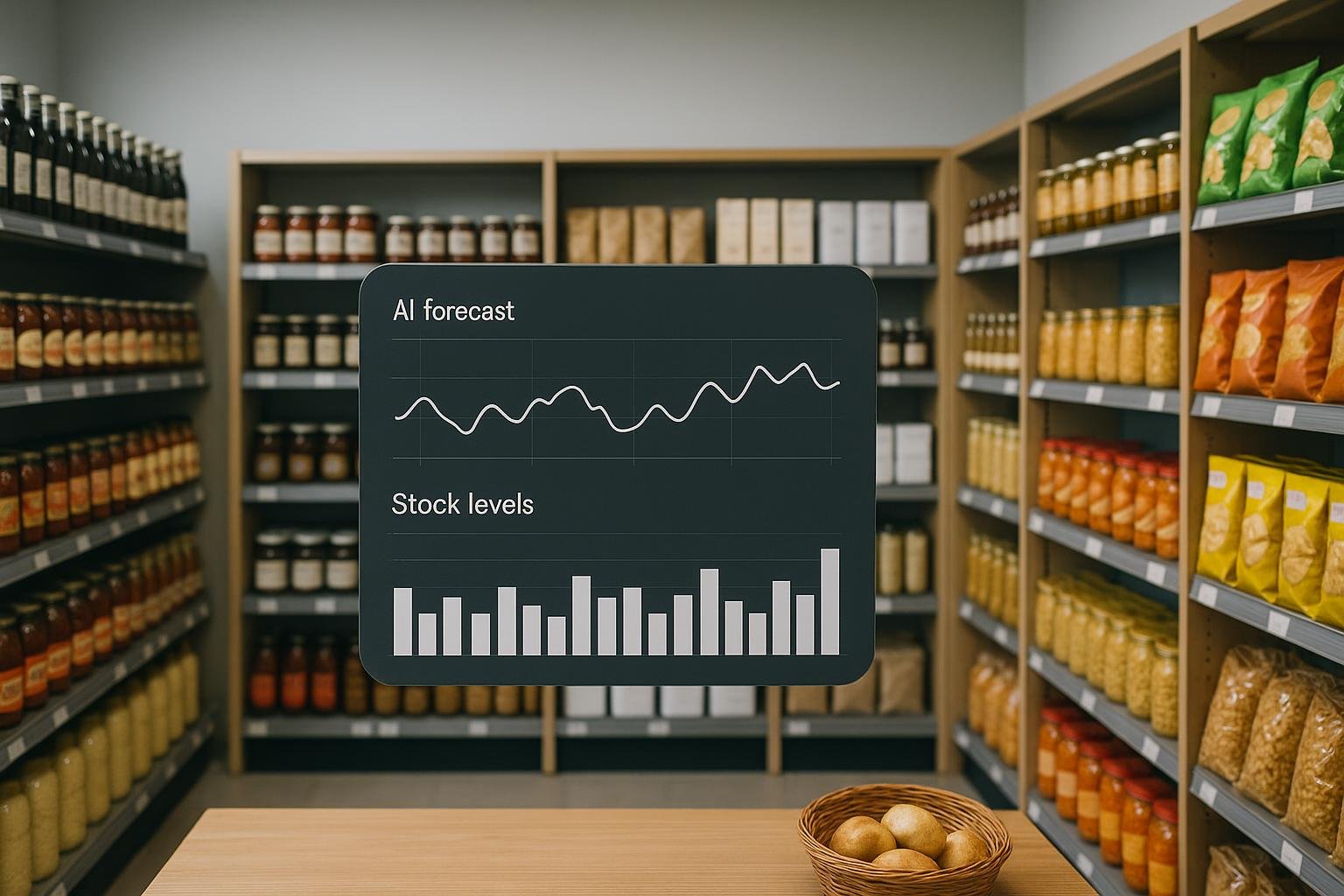
- Dashboards show stock levels, forecast vs actual, and on-order status
- Alerts flag stockouts, overstock risk, and urgent replenishment needs
- Weekly review checklist: top stockouts, upcoming promotions, and supplier lead times
Measuring Impact: KPIs, Case Studies, and Quick Wins
Track improvements with practical metrics and real-world examples. Quick wins include establishing a baseline, implementing basic reorder rules, and automating routine alerts.
- Stockout rate and fill rate
- Service level against targets (e.g., 95% in-store availability)
- Forecast accuracy (MAPE) and inventory turns
- GMROI or GMROII as a profitability lens