Smart Budgeting for SMB AI: Lean ROI Framework with Templates
Introduction: Why SMB Budgets Need a Lean ROI Framework
For small and midsize businesses, AI initiatives offer faster decision-making, cost savings, and new revenue opportunities. Without a disciplined budgeting approach, smart ideas can slip into waste, miss milestones, or stall adoption. A lean ROI framework for SMB AI budgeting provides just enough structure to move quickly while keeping teams focused on measurable value.
The goal is to plan with guardrails, pilot with speed, scale with governance, and review with learning. By treating budgeting as a living element of the AI journey, you can align finance, operations, and technology around a shared definition of value—and you can do it in days, not months. This guide presents a four-phase approach plus ready-to-use templates to help small teams maximize ROI while minimizing waste.
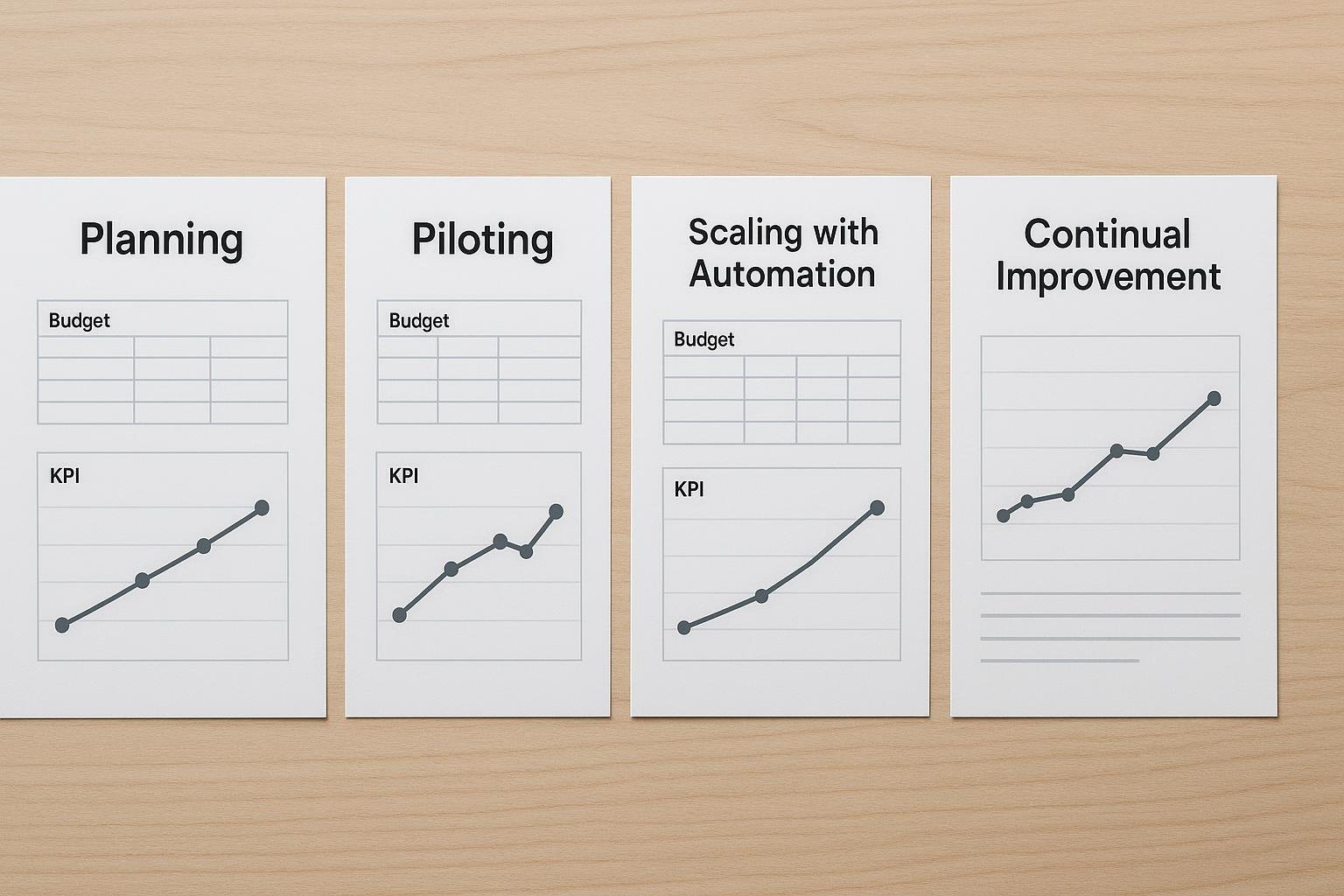
The 4-Phase Lean ROI Budgeting Framework
Phase 1 — Planning and Definition
The planning phase builds the foundation for a disciplined AI program. It clarifies what success looks like, how much you’re willing to spend, and how you’ll measure impact before committing to bigger bets.
- What to include in the Planning template: objective, defined use case or problem to solve, estimated business value (revenue impact or cost savings), high-level data requirements, budget cap, timeline, owner, and risk assumptions.
- Deliverables you’ll produce: a Lean ROI plan, defined go/no-go criteria, a lightweight budget envelope, and a risk register tailored to SMB budgeting realities.
- Template resources you can use: Planning template, risk and governance brief, success-metrics sheet, and a simple SMB-focused ROI calculator.
- ROI mindset: specify what “return” means in concrete terms (e.g., time saved per week, error rate reduction, or incremental revenue) and how you’ll verify it during the pilot.
Phase 2 — Pilot, Benchmarking, and Template Setup
The pilot phase validates the core value proposition on a small, controlled scale. It emphasizes fast learning over perfection, confirming value, feasibility, and integration needs before broader rollout. Benchmarking helps compare against baselines and refine the approach.
- What to deliver in the Pilot plan: a compact objective, defined success criteria, scope, data and tooling requirements, and a lightweight implementation timeline (typically weeks, not months).
- Key template elements: Pilot objective and success criteria, data readiness checklist, pilot data sample and privacy considerations, and a cost tracker aligned to the Planning template.
- Measurable ROI in the pilot: track actual vs. expected benefits, capture time-to-value, and document blockers or rework needed to achieve scale.
- Common pitfalls to avoid: scope creep, over-engineering the pilot, ownership gaps, and insufficient data quality checks.
Phase 3 — Scale, Automation, and ROI Tracking
When a pilot demonstrates value, the scale phase translates learnings into a repeatable, governed rollout. This phase introduces clearer governance, extended budgets, and automation where feasible to prevent ad hoc spending.
- Scale plan deliverables: a rollout blueprint, resource plan, vendor and data governance rules, and a revised ROI forecast reflecting broader impact.
- Template you’ll use: Scale plan worksheet, governance and approvals checklist, and a benefits realization map that links each new deployment to the original business value.
- ROI tracking during scale: monitor cumulative savings or revenue lift, measure adoption rates, and adjust the budget envelope as you expand to new use cases.
- Governance tips: assign a value owner, establish a lightweight change-control process, and set periodic checkpoints to review progress against the Lean ROI plan.
Phase 4 — Review, Forecast, and Continual Improvement
The review phase turns experience into ongoing improvement. Regular reviews ensure AI investments continue delivering value, with quick adjustments in response to results and changing conditions.
- Review cadence and scope: establish monthly or quarterly reviews that assess ROI, adoption, data quality, and operational impact across all AI efforts.
- Template you’ll use: ROI review rubric, lessons-learned log, and a plan for the next iteration of use cases based on evidence from current deployments.
- What to measure in reviews: cumulative ROI, time-to-value improvements, adoption growth, and any cost variances against plan.
- Continual improvement approach: reallocate budget to high-value use cases, sunset underperforming pilots, and document best practices for future SMB AI budgeting cycles.
Included Templates and How to Use Them
Explore ready-to-use templates designed for SMB budgets. Each template is sized for small teams, with clear guidance on how to tailor inputs, assign owners, and track ROI across phases.
Quick-Start 14-Day Action Plan
If you need results fast, this 14-day sprint translates the four phases into a practical plan you can run with a small team and limited data.
- Day 1: Identify a single, high-impact use case with a clear business impact and a short time horizon.
- Day 2: Define the objective, expected value, threshold for success, and a maximum budget in the Planning template.
- Day 3–4: Design a lightweight Pilot plan: scope, data needs, tooling, and a two-week execution window.
- Day 5–7: Prepare data readiness checks and privacy considerations; set up the pilot environment.
- Day 8–9: Implement the lean pilot with real users and required data quality checks.
- Day 10–11: Run pilot measurements; record actual vs. expected benefits and early blockers.
- Day 12–13: Review outcomes with stakeholders; update ROI dashboard and plan for scaling.
- Day 14: Decide on go/no-go for scaling; draft the next iteration plan and communicate next steps.
Throughout these steps, the focus remains realistic for SMB budgets: small, clearly defined investments, fast feedback loops, and a verifiable path to payoff. The four-phase framework and its templates help ensure every dollar spent is tied to measurable value while keeping waste to a minimum.
By adopting this lean ROI approach, you can move from vision to value in days rather than quarters. It provides a practical, repeatable process for SMB AI budgeting that aligns stakeholders, accelerates learning, and makes ROI visible early and often. If you’re ready to start, use the templates as a living toolkit—adaptable to your team, your data, and your constraints—and watch your AI investments pay off with clarity and confidence.