AI Lead Intake and Scheduling for Home Services
AI powered lead intake for home services
In the home services space, missed calls and slow replies cost real money. Techs juggle voice messages, texts, and calendars, and opportunities slip through the cracks. An AI-powered lead intake and scheduling system can change that by acting 24/7 across phone, chat, and SMS to capture every inquiry, qualify the lead, and move it toward booking.
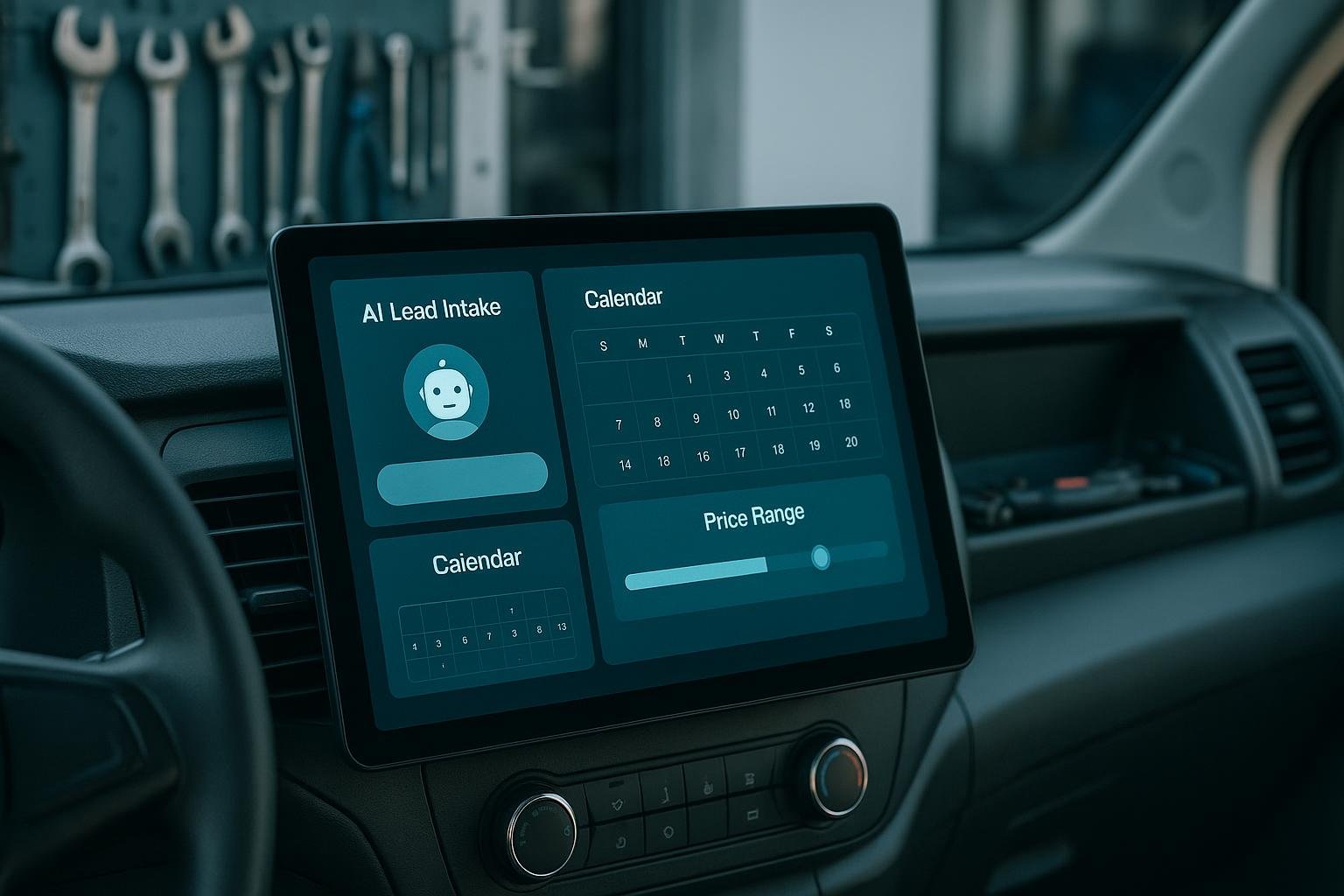
With smart routing and natural language understanding, the system asks the right questions: service type, location, date and time windows, and contact method. It can present a ballpark quote when pricing rules are loaded, so prospects get a sense of cost without a live estimator. If a live agent is needed, the AI hands off seamlessly or schedules a tentative appointment for human follow-up.
For businesses that want to see a quick win, consider this scenario: a homeowner requests a sprinkler system service on a Saturday morning. The AI assistant greets the caller, gathers the property address and preferred times, shares a price range based on your pricing rules, and books a 10:00 AM slot on the calendar. The customer receives a confirmation text, and you receive a calendar event automatically. That single interaction can reduce response times from minutes to under a minute and dramatically increase your chance of capturing the job.
Across channels, the AI handles phone calls with voice prompts, chat on your website, and SMS conversations on messaging apps. This multi-channel presence ensures no inquiry goes unanswered, which is especially critical for home services where urgency matters.
Qualification is key. The AI asks clarifying questions—whether the job is preventive maintenance, emergency repair, or a new installation—and uses your programmed rules to decide if the lead is ready to book or should be routed to a human for a quick follow-up. If a price quote is appropriate, it presents a ballpark figure and moves toward a booking, rather than forcing the customer into a back-and-forth negotiation. This reduces friction and shortens the path from inquiry to appointment.
Automated scheduling and confirmations
Once a lead is qualified, appointments are booked directly into your calendar. The system sends instant confirmations via email, phone, or text, depending on the client’s preference. Reminders go out ahead of the visit, with options for rescheduling if plans change. In practice, this means fewer no-shows and smoother day-of operations because you know exactly who is showing up and when.
For example, a technician charged with managing multiple active projects can rely on the AI to keep the day organized. If a conflict arises, the system can propose alternative slots and automatically update the customer with the new time. By removing repetitive scheduling tasks, your team gains time to focus on service quality and upsell opportunities where appropriate.
Pricing rules, ballpark quotes, and escalation
Your pricing rules are the backbone of the AI’s quotes. By loading service categories, base prices, travel fees, and typical install or repair windows, you give the AI a framework to offer credible ballpark quotes. The goal is not to replace human pricing judgments but to accelerate the early stages of conversation. If the customer needs a precise estimate, the AI can escalate to a human estimator and provide a summary of the questions asked and data gathered so far, ensuring a smooth handoff.
Over time, your pricing and rule sets can be refined based on actual job costs and closing rates. The AI records outcomes and can flag quotes that routinely under- or overestimate, prompting a review of your pricing sheets. This kind of continuous improvement helps you protect margins while staying competitive.
Emergency routing and escalation
With home services, emergencies happen. The AI can detect urgency (for example, a burst pipe or heating failure) and route the lead to an on-call technician or a live agent immediately. Escalation rules ensure critical requests get priority, while less urgent inquiries receive standard follow-up. This balance keeps your service levels high without overwhelming your staff.
Implementation steps to get started
- Define service categories and pricing rules that the AI will reference for ballpark quotes.
- Choose an AI lead intake and scheduling platform that integrates with your calendar and phone/SMS channels.
- Draft a few conversation templates for common home service scenarios and test across channels (phone, chat, SMS).
- Set up escalation paths and routing so urgent matters reach the right person fast.
- Connect the AI to your calendar, appointment reminders, and confirmation workflows.
- Run a pilot with a small subset of inquiries, measure response times, booking rates, and no-shows, then iterate.
As you monitor performance, you’ll want to track key metrics like average response time, qualified lead rate, booking conversion, and no-show rate. For many home service businesses, sub-1-minute responses become a standard within the first month, and the admin burden drops by several hours per week. A practical way to gauge impact is to compare a week before deployment to a week after and watch for changes in booking velocity and no-show trends.
For a related look at how AI can sharpen conversions across e-commerce and service businesses, you can read our piece on Recover Abandoned Carts with AI and Boost AOV. It offers insights into how automated engagement helps recover opportunities that might otherwise slip away, a principle you can apply to lead nurture as well. abandoned carts with AI.
Measuring success and ROI
To determine ROI, track the time saved on admin tasks, the increase in booked appointments, and the reduction in no-shows. A useful rule of thumb is that every minute saved in scheduling and follow-up compounds into more availability for high-margin jobs. When you combine faster responses with accurate qualification and smoother bookings, the impact shows up in higher customer satisfaction scores and repeat business. If you run a weekly report, you can spot trends like which service types most often convert after an AI-led inquiry and where you should adjust pricing or scripts.
Lastly, a note on setup: start with a lean configuration focusing on your most common services and most frequent inquiry paths. As you gather data, you can expand the AI’s capabilities—adding more questions, refining quotes, and increasing automation across channels. The end result is a scalable system that grows with your business and frees your team to focus on delivering exceptional service.