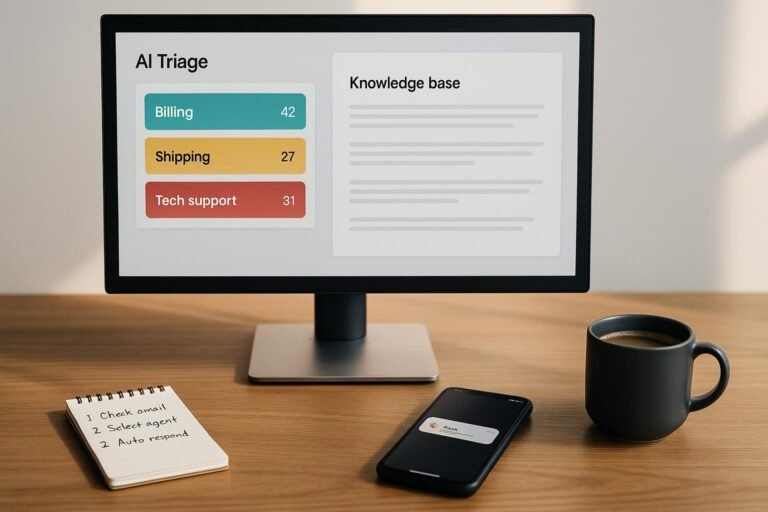
The AI Agency Content Engine
Automate Thought Leadership with Post Forge
For AI agencies, consistent thought leadership is currency. It builds trust, demonstrates expertise, and attracts higher-value clients. The AI Agency Content Engine is a disciplined approach that blends AI-assisted writing with human editing to scale your content without sacrificing quality. When you treat content as a system, you publish more often, keep a consistent voice, and prove your capability across platforms.
What makes the engine practical is its repeatable workflow: research, outline, draft, edit, and publish. Start with a few pillar topics your clients care about, then map each topic to a sequence of posts that educate, demonstrate results, and invite inquiries. For real-world context, look at how Post Forge for real estate agents demonstrates the practical value of powering a content pipeline at scale.
To boost visibility and credibility, you can align posts with search intent through automated content ranking. This helps you surface the right questions, plan more relevant content, and publish with confidence. Learn more in Ranking Faster with Automated Content.
Quality content also benefits from a broader content ecosystem. The engine supports repurposing for newsletters, case studies, and short-form video scripts, all while preserving a single source of truth. For monetization and scale, consider SEO-optimized affiliate content at scale, which shows how to structure posts for search and conversions (SEO-Optimized Affiliate Content at Scale).
When you’re pursuing new clients, pairing thought leadership with efficient proposals can shorten the win cycle. The AI proposal automation thread demonstrates how to package a compelling narrative and a concrete plan for potential clients (AI Proposal Automation for Agencies & Consultants).
4 steps to launch your AI agency content engine
- Define your pillars: identify 4–6 topics that matter to your target clients and tie to measurable outcomes.
- Create repeatable outlines: generate skeletons with sections, subpoints, and audience questions using the engine.
- Editorial guardrails: assign a reviewer for tone, accuracy, and brand voice; iterate until it reads clearly.
- Publish and repurpose: post to your blog, then slice into newsletters, social posts, and guide materials.
In practice, small teams can sustain a consistent cadence: one focused research block, one drafting block, and a short editing pass each week. The result is a predictable stream of quality content that builds authority over time, not overnight. With time, you’ll find your ideas resonate more deeply with your audience, and conversations with prospective clients become more productive as your expertise shines through.
Audience segmentation matters. Before you publish, define two or three personas (for example, an owner-operator, a growth-focused marketing lead, and a tech-curious freelancer) and tailor topics to their pains and outcomes. The engine allows you to create templates that map each persona’s questions to a short-form article plus a longer deep-dive, ensuring you reach everyone with consistent messaging.
Voice and tone guidelines help maintain consistency. A simple rubric—clear, confident, and practical—lets editors quickly judge drafts. You can create a one-page guide and copy it into your Post Forge templates so every piece follows the same rhythm without micromanagement.
Real-world results come from measuring the right things. Track time-to-publish, reader engagement, and inquiry quality. If your cadence is weekly, you should see a steady stream of comments and messages from prospective clients who recognize your expertise. In practice, these signals translate into more qualified leads and faster onboarding.
Finally, think multi-channel. Convert a long post into a 5‑minute video script, five social posts, and a downloadable resource. The AI Agency Content Engine shines when you treat content as a system rather than a single artifact. A well-structured pipeline reduces burnout and makes it easier to sustain momentum across months and quarters.
Getting started quickly is about setting a minimum viable cadence. Reserve one 60-minute block a week for research and outline generation, then another 60 minutes for editing. Use templates for intros, conclusions, and calls-to-action so your team can focus on quality rather than reinventing the wheel. You’ll be surprised at how fast you can publish if you remove friction and standardize the process.
To keep your content relevant, establish a simple metrics framework. Track readership, engagement, qualified inquiries, and time to publish. If your readers linger on a long-form deep-dive or download a resource, that signals you’re delivering value. Over time, your content becomes a dependable source of lead generation rather than a one-off marketing effort.
Beyond blog posts, the engine powers other formats: newsletters, case studies, and short-form video scripts. By reusing outlines and drafts, you can maintain a single source of truth across channels, saving time and ensuring messaging alignment. A weekly or biweekly review helps you adjust the topics to changing client needs and industry developments.
For agencies pursuing new clients, pairing thought leadership with efficient proposals helps close deals faster. The AI proposal automation thread demonstrates how to package a compelling narrative and a concrete plan for potential clients (AI Proposal Automation for Agencies & Consultants).